 Whalesbook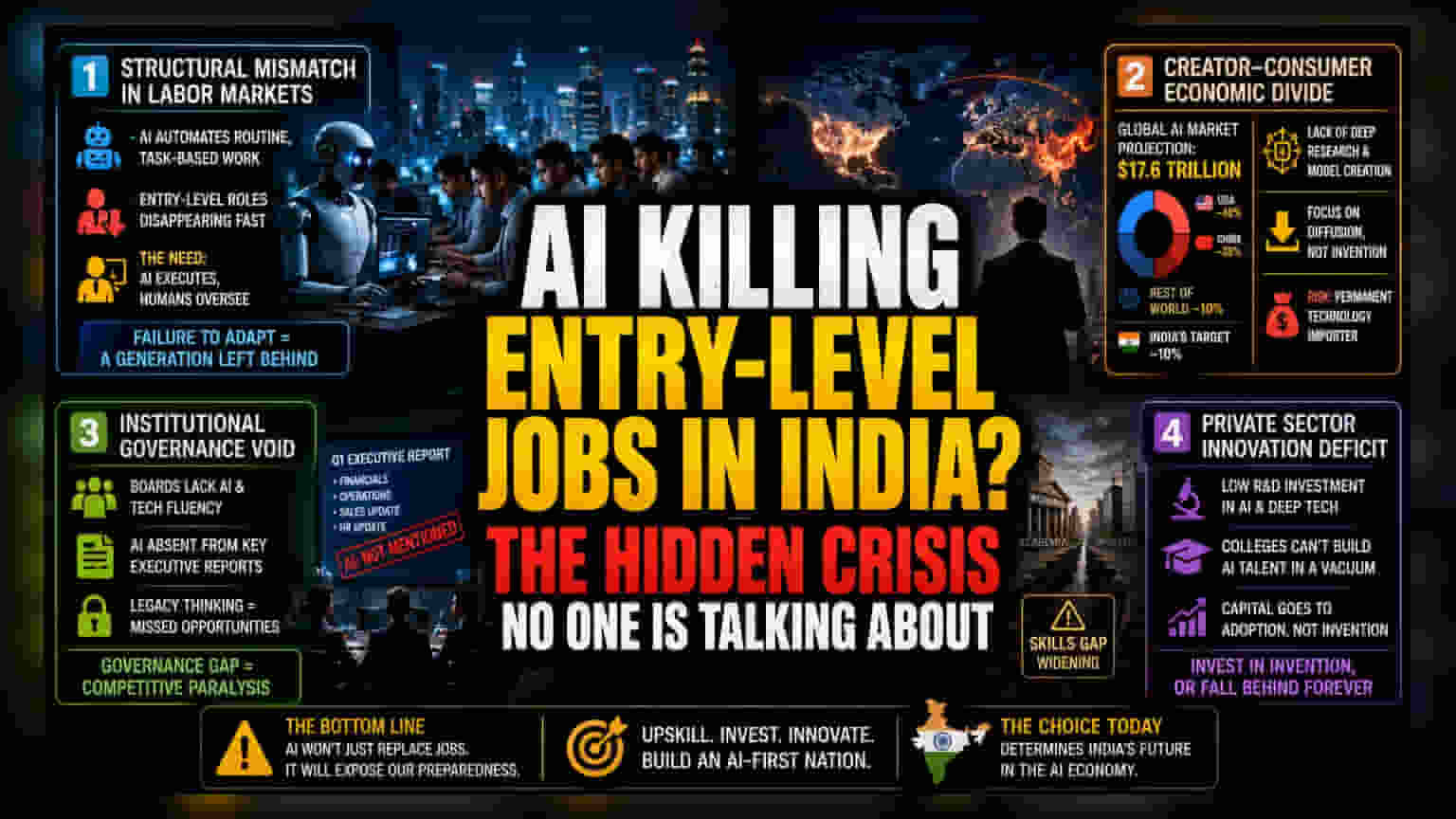


The Structural Mismatch in Labor Markets
The narrative that artificial intelligence triggers immediate, mass-scale unemployment obscures a more granular structural threat. Entry-level positions, traditionally the bedrock of India's services sector, are being dismantled not by a singular AI shock, but by the relentless automation of routine, task-based workflows. Industry veterans argue that the current labor friction is compounded by a failure to re-engineer these roles into 'human sandwich' configurations, where AI manages execution while human oversight remains mandatory. The failure to pivot toward this task-centric employment model threatens to create a permanent underclass of graduates whose skills are obsolete upon entry.
The Creator-Consumer Economic Divide
Global AI value projections suggest a lopsided distribution of wealth, with the United States and China poised to capture the lion's share of a projected $17.6 trillion market. India’s strategic target of 10% reflects a defensive posture rather than an aggressive pursuit of frontier technological dominance. This disparity stems from a fundamental lack of investment in deep research and proprietary model development. While the domestic focus remains on 'diffusion'—applying existing models to agriculture and healthcare—this strategy risks locking the nation into a permanent role as a technology importer, perpetually paying licensing rents to foreign entities rather than earning dividends from native innovation.
The Institutional Governance Void
Corporate governance in India is currently suffering from a severe technological blind spot. Boardroom composition has failed to evolve, with few independent directors possessing the technical fluency required to steer firms through an algorithmic transition. This leadership deficit explains why artificial intelligence remains absent from key executive reports even as competitive pressure mounts. The reliance on legacy decision-making frameworks prevents companies from pivoting to AI-first business models, effectively paralyzing them in a cycle of marginal operational improvements while missing the opportunity for disruptive growth.
The Private Sector Innovation Deficit
The responsibility for India’s technological stagnation lies heavily with the private sector’s refusal to fund long-term R&D. Educational institutions are merely downstream victims of this investment drought; colleges cannot produce AI-ready talent without the industrial mandates and funding to drive specialized curricula. Unless corporate India shifts its capital allocation toward invention rather than basic software adoption, the disconnect between academia and the workforce will widen, cementing a structural vulnerability that cannot be corrected by minor curriculum updates or government-led skilling initiatives alone.