 Whalesbook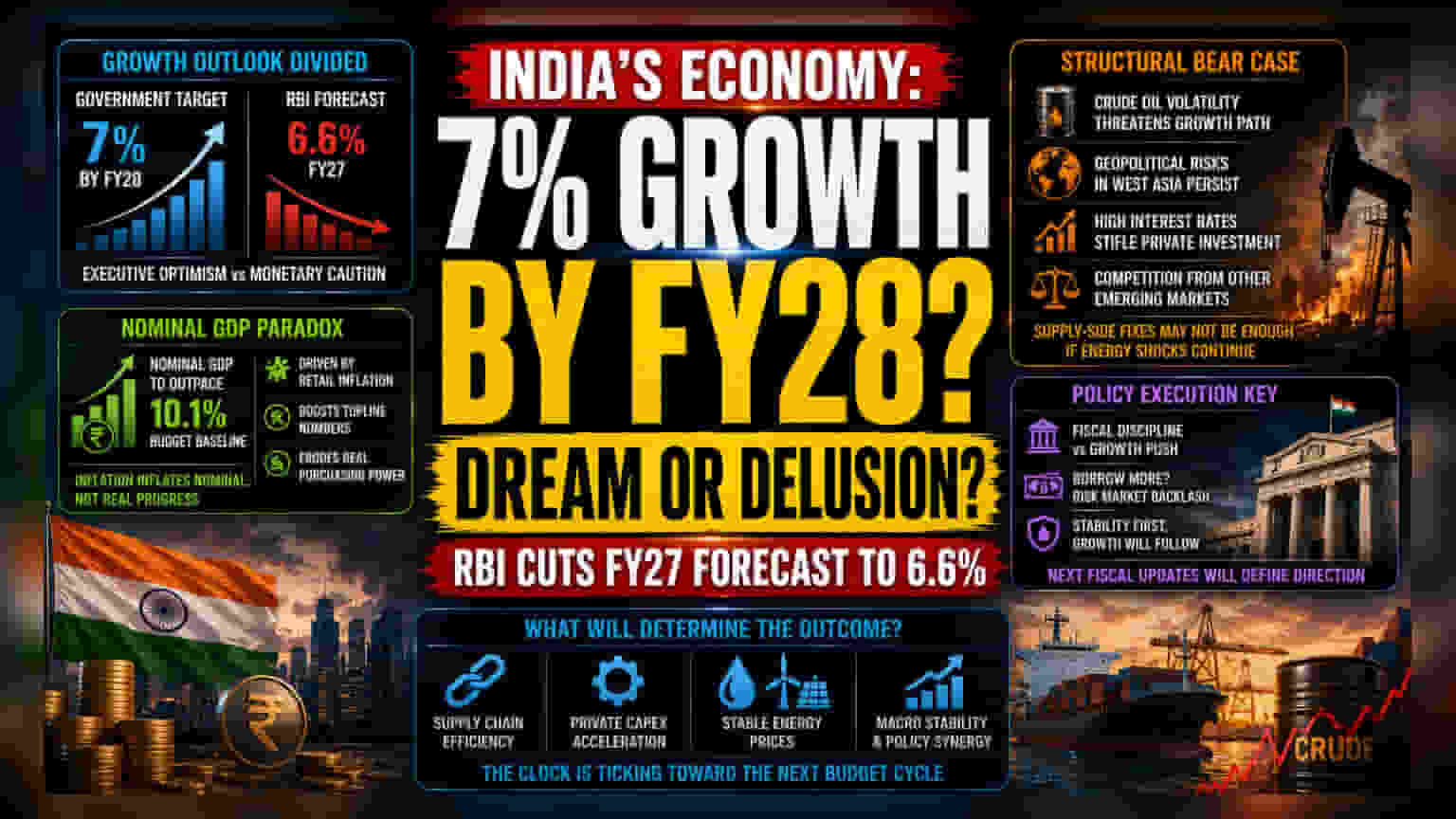


The Divergence in Projections
Official optimism surrounding a return to a 7% growth trajectory by fiscal year 2028 stands in stark contrast to the tightening monetary environment currently dictated by the Reserve Bank of India. While the administration maintains that supply-side interventions can counteract external shocks, the central bank’s decision to prune its FY27 forecast to 6.6% suggests that policymakers are preparing for a sustained period of reduced momentum. This friction between executive ambition and monetary caution is exacerbated by the reliance on stable energy prices, which have remained elusive due to regional instabilities in West Asia.
The Nominal GDP Paradox
Beneath the surface of real growth concerns lies a significant discrepancy in nominal GDP figures. Current expectations suggest that nominal expansion will outpace the 10.1% baseline established in the 2026-27 Union Budget. This phenomenon is largely tethered to persistent retail inflation, which artificially inflates nominal figures while simultaneously eroding purchasing power and corporate margins. Investors must distinguish between this inflation-driven nominal growth and genuine productive output, as the latter remains sensitive to capital expenditure cycles that have yet to fully accelerate in the private sector.
The Structural Bear Case
From a risk-management perspective, the reliance on external conditions improving by FY28 serves as a precarious foundation for economic planning. Should geopolitical tensions in energy-producing regions persist or escalate, the proposed supply-side fixes will likely be insufficient to bridge the gap toward the 7% threshold. Furthermore, the Indian economy faces competitive pressure from other emerging markets that are currently benefiting from shifting global supply chains. Unlike more diversified economies, the Indian fiscal structure remains disproportionately sensitive to crude oil imports, making it vulnerable to sudden shifts in the balance of payments. If inflation does not revert to the central bank’s comfort zone, real interest rates may remain high for longer, effectively stifling the private investment required to reach the government's stated growth objectives.
Policy Execution and Future Outlook
Market participants should watch for upcoming fiscal updates that will clarify whether the government plans to maintain its current deficit reduction path or expand borrowing to stimulate growth. If the administration prioritizes growth at the cost of fiscal discipline, it could trigger a negative reaction from bond markets and potentially jeopardize the stability required for long-term capital formation. The focus remains on whether the synergy between macroeconomic stability and supply chain efficiency can materialize before the next budget cycle begins.