

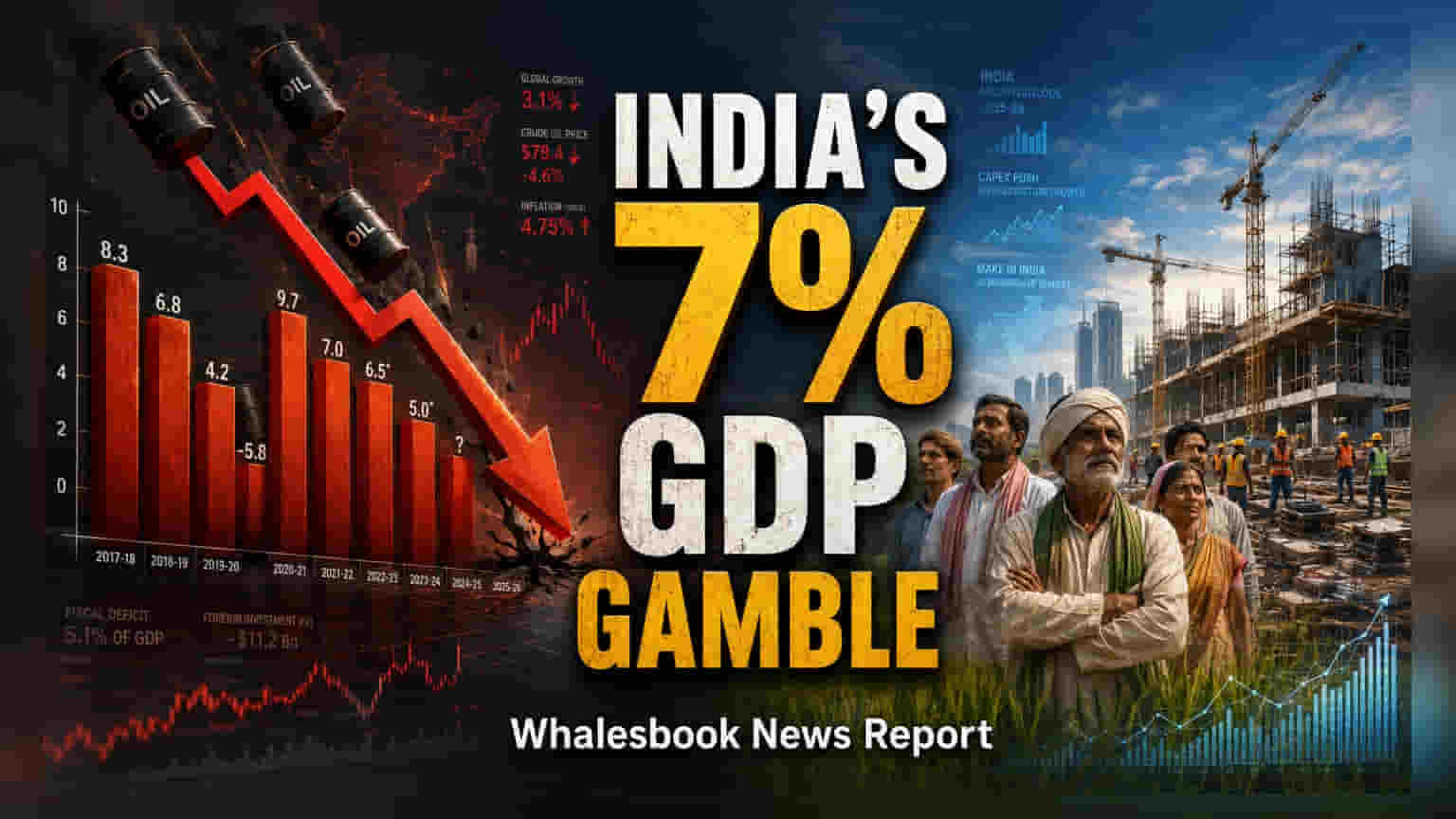
Equitree Capital’s Pawan Bharaddia highlights that India’s 7% GDP growth target depends on lower oil prices, monsoon performance, and private investment. While large-cap valuations are reasonable, investors are finding more attractive opportunities in mid-cap stocks with market values between ₹1,000 crore and ₹5,000 crore.
Pawan Bharaddia, Co-Founder and Chief Investment Officer at Equitree Capital, recently outlined the critical conditions necessary for the Indian economy to achieve a 7% growth rate. Beyond the influence of global crude oil prices, which remain a significant factor for India’s import bill and inflation management, Bharaddia pointed to the essential role of domestic drivers. These include the impact of monsoons on rural demand, the consistency of government spending on infrastructure, and an uptick in private sector investment.
Market Valuation and Sector Outlook
When evaluating the current stock market landscape, Bharaddia noted that large-cap companies are trading at reasonable levels compared to their historical averages. However, growth in earnings has not been uniform across all sectors, leading to a selective market environment. Investors searching for better risk-reward balance are increasingly looking at mid-cap companies, specifically those with market capitalizations in the ₹1,000 crore to ₹5,000 crore range. These businesses often present valuations below their long-term averages, though they require deeper, company-specific research to identify true potential.
Geopolitical Risks and Corporate Margins
Geopolitical tensions, particularly in West Asia, continue to be a primary source of uncertainty for the markets. A sustained spike in crude oil prices poses a direct risk to the Indian economy. Such an environment can trigger higher inflation, pressure the rupee, increase the current account deficit, and compress corporate profit margins. While there is a strong incentive for de-escalation due to the global economic costs involved, the risk of unforeseen conflict-related volatility remains a factor that could influence domestic market performance.
Consumption Trends and RBI Policy
The premium consumption theme, supported by rising disposable incomes and rapid urbanization, continues to be an area of long-term interest. For investors, the focus remains on companies that possess genuine brand strength and the ability to maintain pricing power amidst high competitive intensity. Looking ahead, the Reserve Bank of India (RBI) is expected to maintain a data-dependent stance in its upcoming policy meetings. The central bank's commentary on inflation, growth forecasts, and liquidity management will be essential for gauging the future direction of both interest rates and economic policy. Investors will likely track the RBI's guidance on currency stability and its assessment of global supply shocks as these will directly influence corporate planning and market sentiment in the coming quarters.