

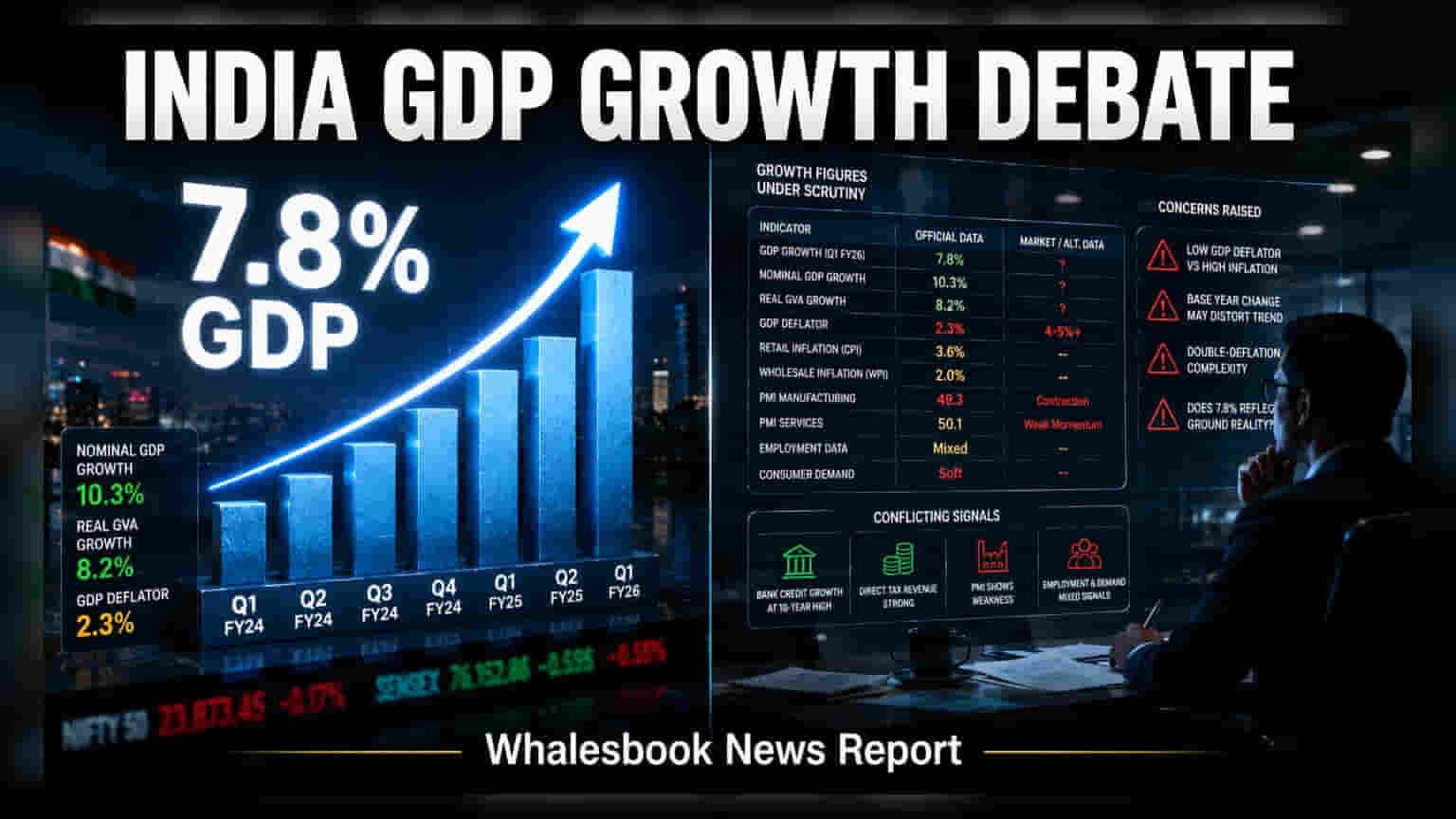
India reported 7.8% GDP growth for the June quarter, but the data has triggered debate among economists due to recent methodological updates. Critics question if the figures reflect true economic conditions compared to softer industry indicators, while the government maintains the new base year offers a more precise, globally aligned calculation.
India’s economy recorded a 7.8% growth rate in the quarter ending June, a headline figure that has sparked intense discussion among policymakers, economists, and market participants. The government’s update to the GDP base year, now set at 2022-23, and the introduction of new price indices have become the center of this debate.
The Ministry of Statistics and Programme Implementation (MoSPI) explains that these revisions are designed to capture a more accurate picture of the economy. By using a double-deflation technique and updated indices, including a new Producer Price Index and Banking Services Price Index, the ministry argues the current data aligns better with international standards. Official data also shows nominal GDP growth at 10.3% and real Gross Value Added (GVA) growth at 8.2% for the same period.
However, the report has drawn criticism from former officials, including former finance secretary Subhash Chandra Garg, who have questioned whether the 7.8% figure accurately represents the pace of the broader economy. Skeptics point to the GDP deflator, which registered at 2.3%, as a potential area of concern. They argue this figure is significantly lower than retail and wholesale inflation rates, potentially inflating the real growth calculation by underestimating price pressures.
This statistical debate is happening against a backdrop of conflicting economic signals. While metrics such as bank credit growth, which reached a decade high, and direct tax revenue suggest resilience, other indicators tell a different story. Purchasing Managers' Index (PMI) readings, often used to gauge business sentiment, have shown signs of weakness. This disconnect between strong headline figures and softer survey data has contributed to a cautious mood in the stock markets, where indices have faced pressure.
For investors, the situation highlights the importance of looking beyond the headline GDP figure. The true health of the economy will likely be judged by a combination of high-frequency indicators, such as consumer demand, employment data, and corporate earnings in the coming quarters. The market will continue to monitor whether future revisions align the official GDP data with ground-level sentiment and broader economic stability.