 Whalesbook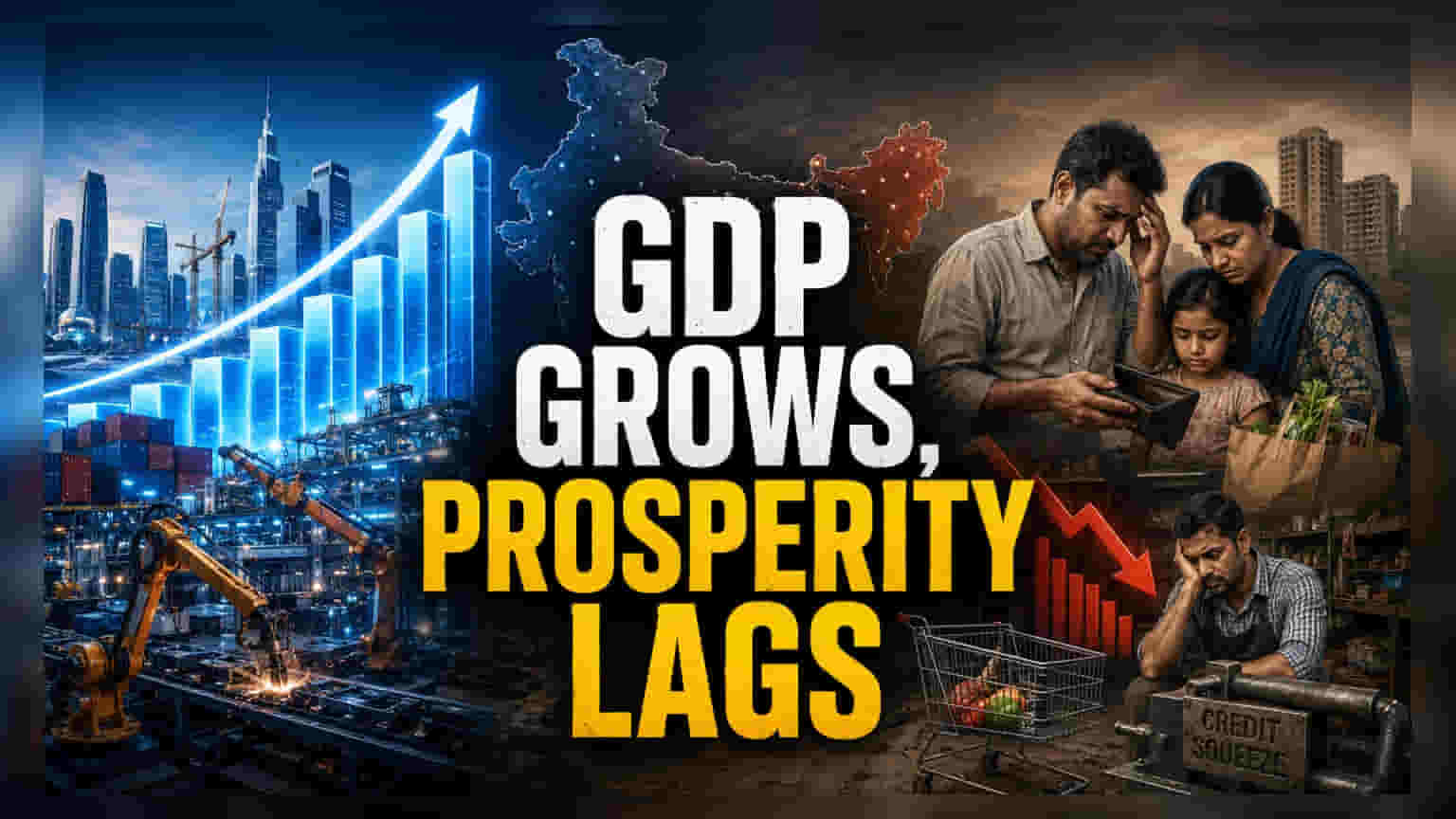


The Divergence Between Growth and Prosperity
While the headline expansion to 7.7% in FY26 marks a decisive step up from the 7.2% recorded in FY24, the aggregate data masks an underlying friction within the domestic economy. The expansionary momentum has been heavily skewed toward capital-intensive services and high-end manufacturing, which typically offer higher productivity but lower employment density. When measured against the reality of household wallet share, the decoupling becomes evident as per capita Private Final Consumption Expenditure fails to keep pace with broader output, signaling that the wealth effect remains confined to narrower segments of the demographic.
Industrial Resilience Against External Volatility
Manufacturing’s 10.7% output expansion represents a tactical win against global trade protectionism and shifting supply chain preferences. Unlike previous cycles where domestic industrial output was highly sensitive to global commodity price swings, this phase shows a pivot toward value-added production. However, the reliance on high-value sectors such as financial services and information technology creates a narrow base of support. If these sectors encounter cyclical cooling, the lack of depth in alternative labor-intensive industries becomes a significant structural vulnerability for the broader national account.
The Credit Impasse and Construction Drag
Fixed capital formation in construction has begun to lose altitude, a leading indicator that usually precedes cooling in semi-skilled employment markets. Simultaneously, the persistent failure to integrate Micro, Small, and Medium Enterprises (MSMEs) into the formal credit cycle acts as a ceiling on potential output. Banks continue to exhibit extreme risk aversion toward smaller firms, preferring the safety of corporate balance sheets. This liquidity hoarding by the financial sector directly stifles the manufacturing multiplier, preventing the small-scale industrial base from capturing the full benefits of the current economic cycle.
The Risks of Regional and Economic Fragmentation
The most acute risk to long-term stability is the growing concentration of economic activity. With western states continuing to monopolize a disproportionate share of GDP compared to their eastern counterparts, the geographic imbalance risks creating a permanent underclass of labor-exporting states. Current data indicates that if the gap between aggregate GDP and per capita income growth does not narrow, the nation faces a potential consumption cliff. The inability of the current growth model to translate into broad-based household income gains suggests that the official figures may overstate the vitality of the average citizen’s economic condition.