 Whalesbook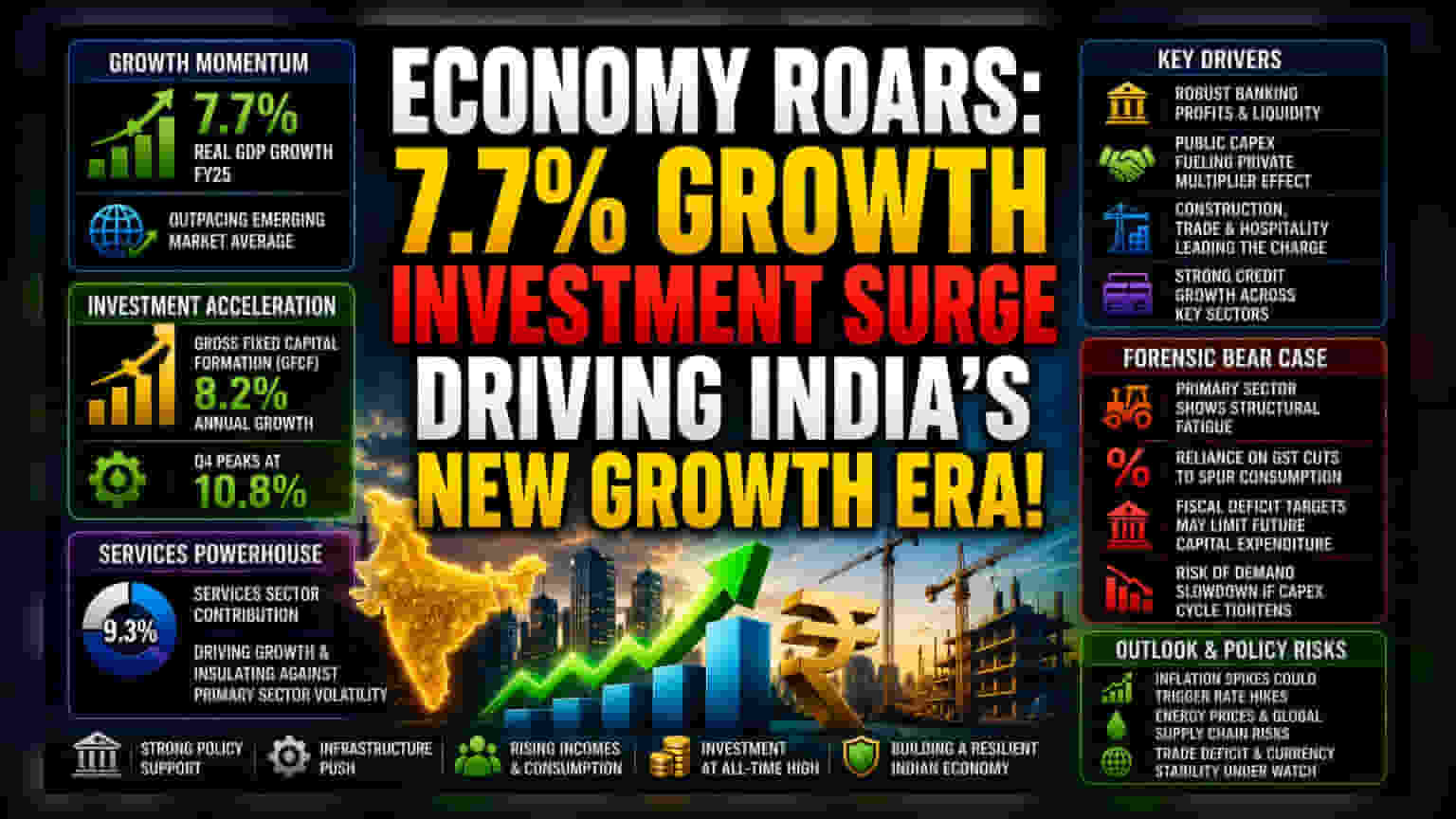


The Velocity of Growth
The recent climb to 7.7% annual growth confirms a decoupling from the broader regional stagnation often observed in emerging markets. This performance is characterized not merely by top-line expansion, but by a notable acceleration in Gross Fixed Capital Formation, which climbed 8.2% annually and hit a crescendo of 10.8% in the final quarter. Such a trajectory suggests that the capital expenditure cycle, heavily bankrolled by public sector outlays, is finally inducing the intended private sector multiplier effect.
The Anatomy of the Expansion
The shift toward a service-led growth model is pronounced, with a 9.3% contribution from the services sector effectively insulating the headline figure from volatility in the primary sector. Increased liquidity and robust banking sector profitability have facilitated this expansion, creating a feedback loop where financial services growth enables further credit expansion for the construction and manufacturing industries. However, the reliance on trade, hospitality, and construction as primary engines leaves the economy exposed to cyclical demand shifts that may not persist if borrowing costs remain elevated for an extended period.
The Forensic Bear Case
Despite the optimistic headline, a more cautious examination reveals underlying fissures in the current economic structure. The primary sector—specifically agriculture and mining—is exhibiting symptoms of structural fatigue, with moderated output that threatens to drag on rural disposable income. Furthermore, the reliance on GST rationalization to stimulate Private Final Consumption Expenditure suggests that growth is being incentivized through fiscal policy levers rather than organic, base-level productivity gains. Should the government be forced to rein in capital expenditure to adhere to fiscal deficit targets in FY27, the absence of a fully matured, self-sustaining private consumption base could lead to a rapid deceleration in domestic demand.
Future Outlook and Policy Risks
Looking ahead, the market is bracing for the impact of potential inflationary spikes that could force a recalibration of interest rates. Analysts note that while the current sub-9% nominal growth rate reflects cooling inflation, any resurgence in energy costs or global supply chain friction could jeopardize the fragile balance between investment demand and household spending power. The consensus among institutional observers remains focused on whether the upcoming fiscal cycle can maintain current momentum without triggering a trade deficit expansion that undermines currency stability.