

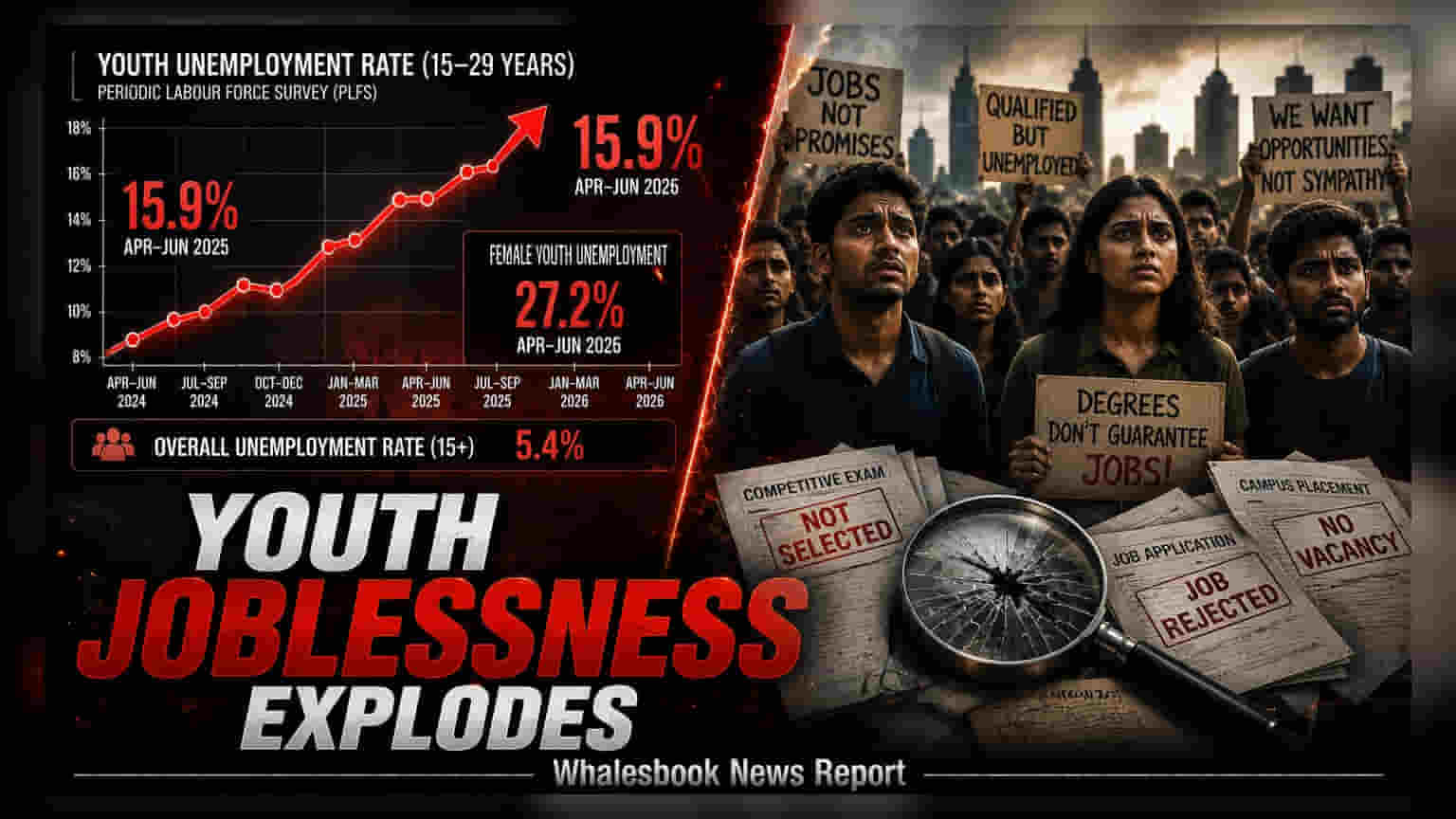
India's youth unemployment rate for the 15-29 age group rose to 15.9% in the April-June 2026 quarter, compared to 14.6% a year ago. The rising jobless trend highlights structural challenges, such as skills mismatch, which may affect long-term consumer demand and economic productivity. Investors are monitoring how policy shifts in education and labor reform address these gaps.
Recent government data from the Periodic Labour Force Survey (PLFS) shows that the unemployment rate for India's youth, aged 15-29, reached 15.9% during the April-June 2026 quarter. This is an increase from the 14.6% recorded in the same period a year earlier. While the broader unemployment rate for individuals aged 15 and above remained at 5.4%, the persistent difficulty in absorbing the youth population into the workforce remains a key economic indicator for the country.
Structural labor market challenges, such as a mismatch between the skills taught in educational institutions and the requirements of modern industries, continue to weigh on the employment landscape. This gap often results in a situation where vacancies exist, yet graduates lack the specific qualifications to fill them. For investors, this creates a complex environment where long-term productivity and consumer spending power are linked to how effectively the workforce can be integrated into high-growth sectors.
Gender Gap and Urban Labor Trends
The data also points to persistent disparities, particularly in urban areas. Female youth unemployment figures continue to show higher levels of stress compared to their male counterparts. Addressing this gap is important for broader economic expansion, as higher female labor force participation is often a driver of household income growth and increased consumption. These trends are monitored closely because they influence the long-term trajectory of domestic consumption, which is a major driver of the Indian economy.
Economic Implications and Sector Focus
High youth unemployment, when prolonged, poses risks to social stability and economic efficiency. The inability to fully utilize the nation's demographic dividend—a large working-age population—can dampen potential GDP growth. In the market, this issue is most relevant to sectors such as education, vocational training, and consumer goods. Companies in the skill-development space may face shifting demand as government and private sector players increase their focus on bridging the skills gap. Conversely, consumer-facing companies monitor these trends because sustained youth employment is vital for maintaining steady growth in sales of entry-level and premium products.
Investors typically observe government policy announcements, including changes in labor laws, education reforms, and budget allocations for skill development, to gauge how the state plans to mitigate these structural issues. Any successful shift toward industry-aligned education could improve workforce quality and support long-term economic stability. The next key data releases from the PLFS and government updates on labor market reforms will remain essential for assessing the health of the broader employment ecosystem.