 Whalesbook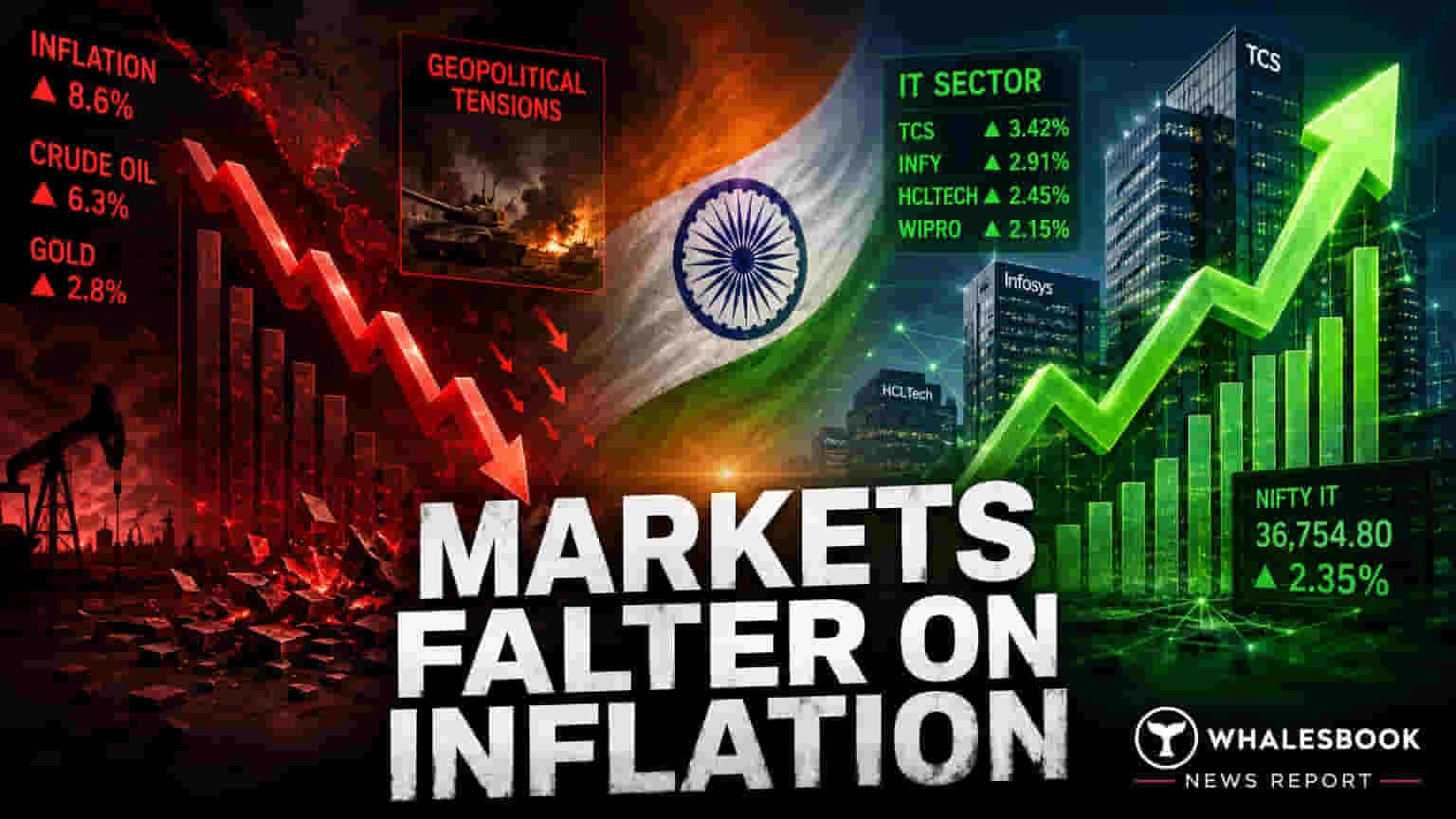


Indian equity benchmarks, Sensex and Nifty, ended Tuesday with modest declines, signaling investor caution. Persistent inflation worries and their potential impact on monetary policy contributed to the subdued market mood. High crude oil prices added to business costs for transportation and manufacturing. Geopolitical tensions in West Asia heightened investor anxiety, leading to a preference for safer assets.
Foreign institutional investors continued their trend of net selling, further weighing on market performance.
IT Sector's Strong Performance
Despite the general market weakness, the Information Technology (IT) sector emerged as a strong performer. Positive earnings forecasts and a robust global demand outlook for IT services boosted sector gains. Major IT firms reported strong financial results, largely driven by global client investments in digital transformation and cloud computing.
Inflationary Pressures Persist
The Reserve Bank of India (RBI) has emphasized its commitment to controlling inflation. Rising commodity prices, especially oil, are fueling imported inflation and challenging the central bank's goals. Investors are closely monitoring upcoming inflation data and the RBI's future monetary policy moves. The slight dip in the broader market highlights the tension between domestic economic recovery and external risks. While the IT sector shows growth potential, overall market sentiment remains sensitive to macroeconomic indicators and global geopolitical events.
Sector Divergence and Analyst Views
Analyst reports indicate a mixed outlook for the Indian market, favoring sectors less affected by commodity price swings. IT companies are benefiting from a global increase in digital spending, while sectors like industrials and consumer discretionary face higher input costs. For example, IT leaders such as TCS and Infosys have seen stock price increases, while FMCG companies are experiencing margin pressures. This divergence is visible in market valuations, with the IT sector trading at a premium, suggesting investor confidence in its growth.
Foreign Investor Outflows
The ongoing outflow of foreign institutional investment (FII) is a key factor affecting market sentiment. FIIs have been net sellers due to global economic uncertainties and rising interest rates in developed nations, making Indian equities less appealing. This selling pressure has been partly absorbed by domestic institutional investors (DIIs) and retail investors, but the overall trend points to caution. The link between FII flows and market performance remains a critical indicator to watch for shifts in market direction.