

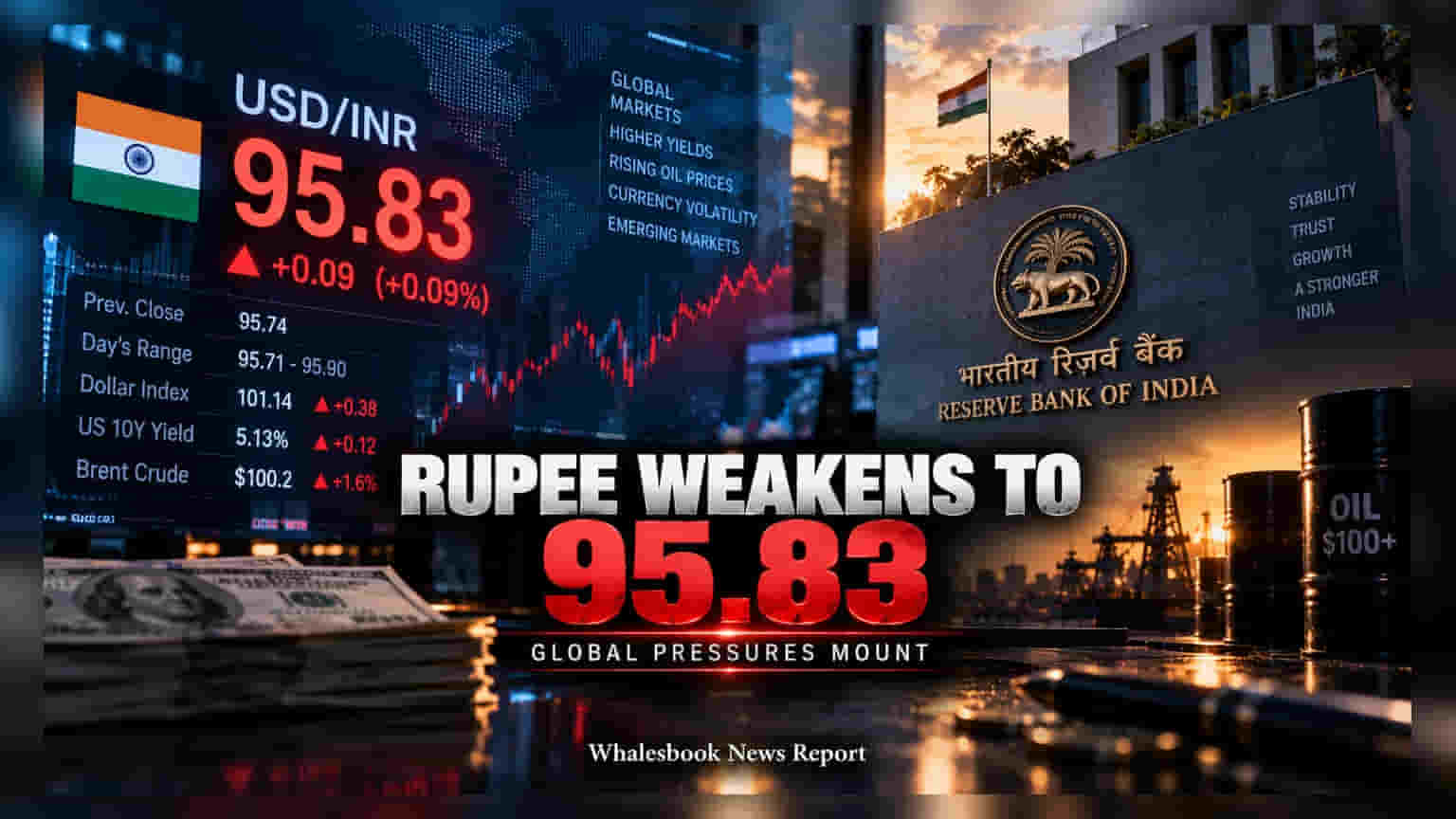
The Indian rupee opened at 95.83 against the US dollar on September 24, sliding 9 paise as rising oil prices and a strong dollar index pressured the currency. The Reserve Bank of India is expected to maintain oversight near the 96.00 level to manage volatility. This comes as traders balance global economic pressures with India's strong fiscal year 2027 growth projections.
The Indian rupee weakened on September 24, opening at 95.83 against the US dollar. This move follows the previous close of 95.74 and reflects the impact of shifting global macroeconomic factors on the domestic currency. The decline is primarily driven by a firm US dollar index, which stood at 101.14, alongside rising US Treasury yields that reached 5.13%. These higher yields often attract capital toward US assets, creating pressure on emerging market currencies.
Rising global oil prices are also contributing to the current pressure. India is a significant importer of oil, and higher global prices typically increase the demand for dollars to pay for imports, which can weaken the rupee. Despite these external challenges, the Reserve Bank of India continues to play a central role in the market. The central bank is widely expected to remain active to prevent sharp, disorderly movements, particularly as the exchange rate approaches the 96.00 level.
While currency markets are experiencing short-term volatility, the broader economic context for India remains relatively stable. Major global institutions, including S&P, Fitch, Moody’s, and the Asian Development Bank, have projected India’s GDP growth to hover around 7% for the 2027 fiscal year. These forecasts are supported by resilient domestic demand and steady economic activity, providing a long-term buffer against external currency pressures.
Market participants are adjusting their trading strategies to navigate this environment. Exporters are currently active sellers as the rupee approaches 95.90, aiming to lock in current levels. Meanwhile, importers are taking a more cautious approach, choosing to deploy capital on dips in the exchange rate rather than making large commitments during times of high volatility.
The situation in India is part of a broader trend across Asian markets. Performance has been mixed, with currencies like the Indonesian Rupiah and the Japanese Yen showing some strength, while the Chinese Renminbi, South Korean Won, and Malaysian Ringgit have faced downward pressure against the dollar. Looking ahead, the trajectory of the rupee will likely be determined by the interaction between global interest rate trends, oil prices, and the extent of intervention by the Reserve Bank of India. Investors will be watching for any shift in global central bank policies and further updates on domestic inflation and growth data to gauge the next move for the currency.