

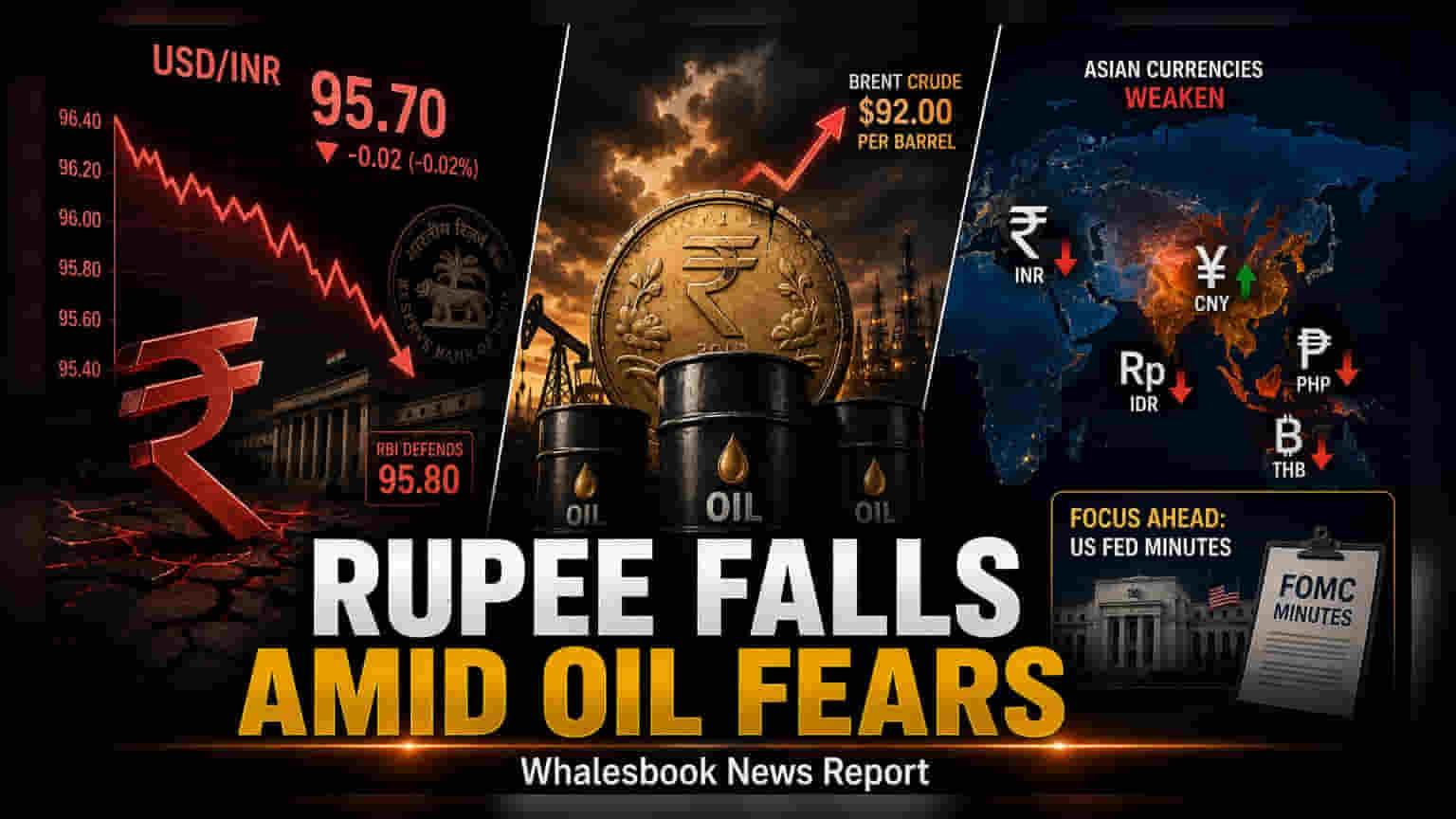
The Indian rupee opened at 95.70 against the US dollar on August 19, 2026, dropping slightly from its previous close of 95.68. The currency faces pressure from rising global crude oil prices, which have neared $92 a barrel amid geopolitical tensions. The Reserve Bank of India is actively intervening in the market to manage volatility and support the rupee.
The Indian rupee started the trading day on August 19 at 95.70 against the US dollar, marking a slight decline from the previous session's close of 95.68. The local currency has been under pressure throughout the morning, primarily due to rising crude oil prices and a cautious global risk environment.
Oil Price Rise and Geopolitical Tensions
Brent crude oil prices have climbed towards $92 per barrel, largely driven by escalating geopolitical tensions between the US and Iran. This price surge has direct consequences for the Indian economy. As India imports a large portion of its crude oil requirements, higher oil prices increase the demand for US dollars to pay for these imports. When oil companies buy more dollars to settle their bills, it naturally creates downward pressure on the rupee.
Reserve Bank of India's Market Intervention
Despite the negative pressure from oil prices, the rupee has shown resilience. Financial market participants have noted that the Reserve Bank of India (RBI) is actively intervening in the foreign exchange market to prevent a sharp depreciation. By selling dollars, the central bank aims to manage volatility and provide stability. Analysts tracking the market suggest that the RBI may continue to defend levels around 95.80, limiting how far the currency falls despite global headwinds.
Market Behavior and Strategy
Trading activity has reflected this cautious environment. Importers, who require dollars to fund their business obligations, are buying the US currency whenever it dips. Meanwhile, exporters are being more selective, waiting for higher conversion levels to sell their dollar holdings. This strategy suggests that participants are adjusting their plans based on the ongoing central bank support.
Global Cues Awaiting Fed Minutes
The rupee is not the only currency struggling in the current environment. Other Asian currencies, including the Indonesian rupiah, Philippine peso, and Thai baht, have also weakened against the dollar. Investors globally are now shifting their focus toward the upcoming release of the US Federal Reserve's latest policy meeting minutes. These minutes are important because they will provide clues about the future path of US interest rates. If the Federal Reserve signals that it plans to keep interest rates high, it could strengthen the US dollar index further, which typically exerts pressure on emerging market currencies like the Indian rupee. In the coming sessions, the key monitorables for investors will remain crude oil price trends, the extent of the RBI's intervention, and any fresh updates on US interest rate policy.