

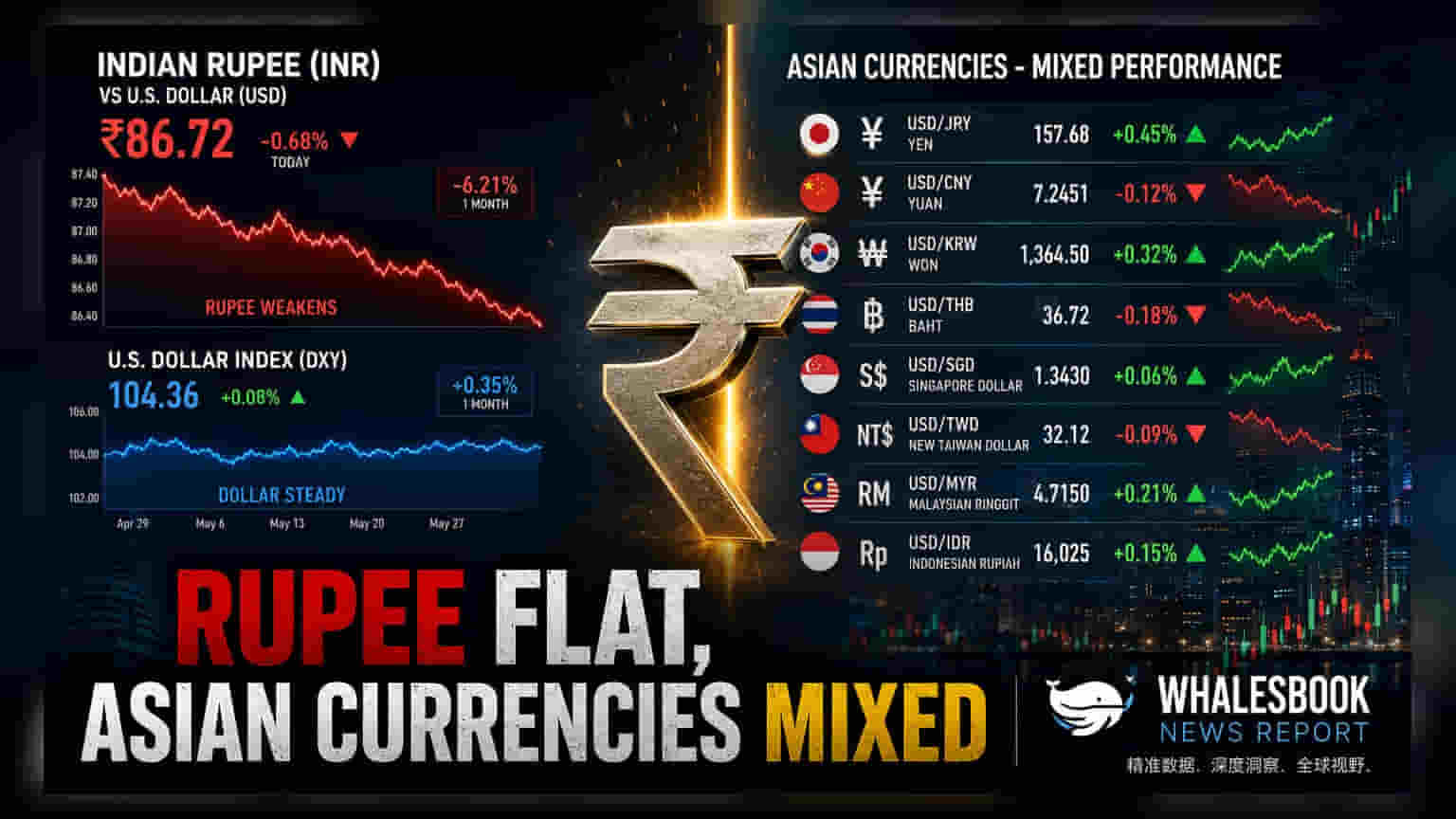
The Indian rupee began the trading session at 95.23 against the US dollar on July 6, remaining unchanged from its previous close. This stability persists despite mixed performance in regional Asian currencies and rising global oil prices. Market observers are closely tracking potential intervention by the Reserve Bank of India to manage currency volatility within this narrow trading range.
The Indian rupee maintained a steady opening at 95.23 per US dollar on Monday, July 6, showing no immediate change from the closing level of the previous session. This performance reflects a period of consolidation for the currency as it navigates complex global and regional economic pressures. While the dollar index remained relatively firm at 100.9 in early trade, the rupee stayed resilient despite a modest rise in international crude oil prices, which typically puts downward pressure on the currency by increasing import costs for oil-dependent nations like India.
Mixed Trends Across Asian Currencies
The broader Asian currency market displayed divergent movements during early trading hours. While the South Korean won, Indonesian rupiah, and Chinese renminbi posted marginal gains, other regional currencies faced downward momentum. The Japanese yen continued to struggle, trading near levels not seen in 40 years, which has kept global currency markets on edge regarding the possibility of official interventions. The variation in performance suggests that regional factors and differing domestic economic conditions are influencing currency valuations more than a single unified trend.
Global Factors Influencing Currency Markets
Global currency markets are currently reacting to shifting expectations regarding the monetary policy of the US Federal Reserve. Investors have recently tempered their outlook on further interest rate hikes for the year, which has provided some breathing room for other currencies, allowing the euro and British pound to register gains against the dollar. However, the overall strength of the US dollar index, which tracks the value of the greenback against a basket of other major currencies, continues to act as a benchmark that limits the recovery potential for emerging market currencies.
Investor Monitorables
For participants in the Indian financial market, the primary focus remains on the Reserve Bank of India’s stance. The central bank has historically intervened in the foreign exchange market to prevent excessive volatility and maintain stability in the rupee. Investors may monitor future updates on foreign exchange reserves and the central bank’s commentary regarding currency management. Additionally, because India is a net importer of energy, sustained volatility in crude oil prices will remain a critical factor that could influence the rupee's trajectory in the coming sessions. The currency is currently expected to trade within a defined range, and any sharp deviation from this may prompt further policy observation.