

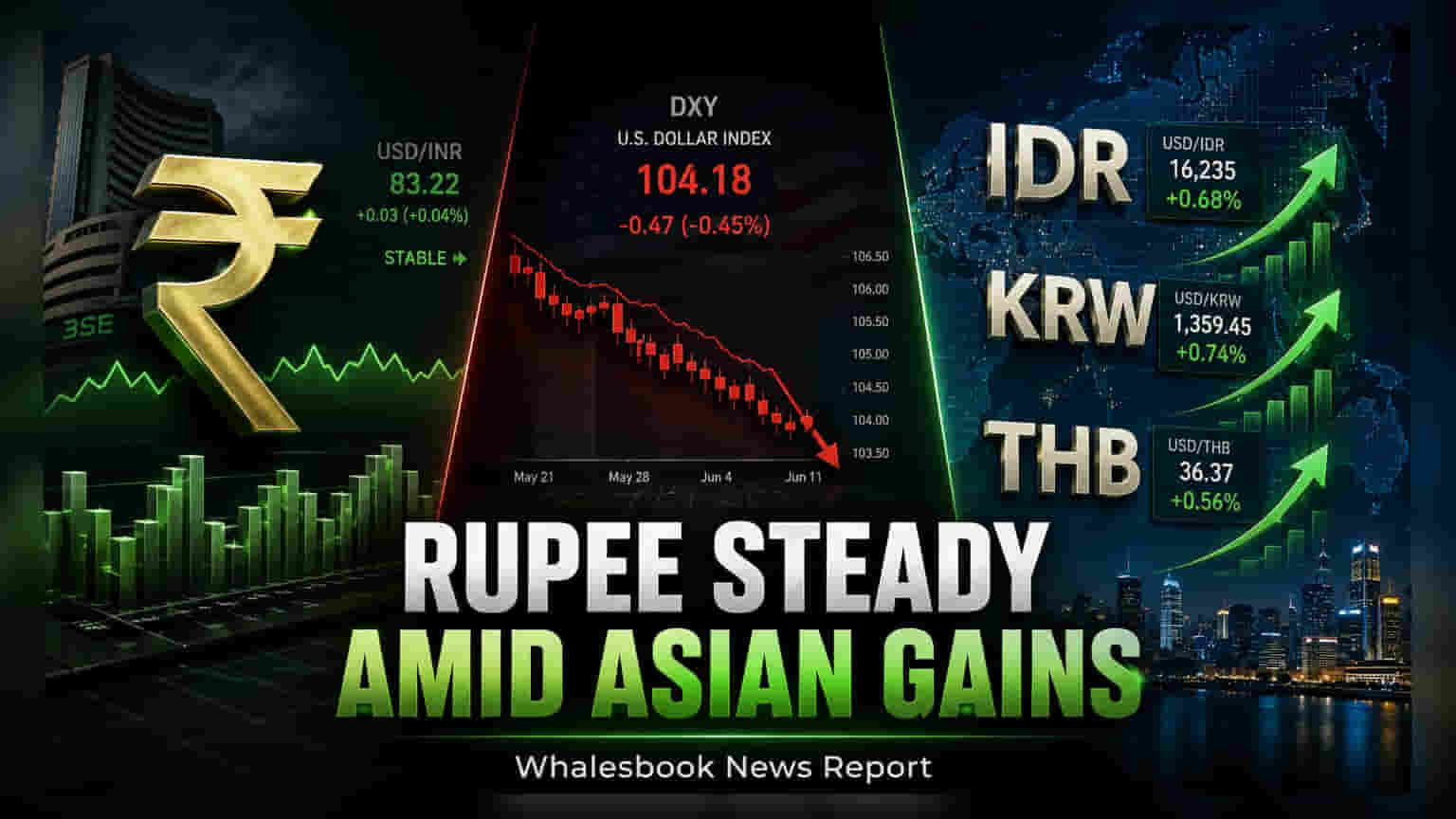
The Indian rupee remained flat at 95.13 against the US dollar in early trade on August 6, 2026. Stability is supported by a weakening US dollar index and lower crude oil prices, which have eased pressure on the local currency. Market activity remains balanced, with exporters and importers offsetting each other's actions.
The Indian rupee began Thursday’s trading session on a stable note, opening unchanged at 95.13 against the US dollar. This steady performance comes as the broader Asian currency market shows signs of strength, with regional currencies like the Indonesian Rupiah leading gains against the greenback.
Market Drivers and Currency Strength
The rupee’s stability is largely influenced by a softer US dollar, which has been hovering near a six-week low. When the dollar index weakens, it typically provides relief to emerging market currencies like the rupee. Additionally, crude oil prices trading below $80 per barrel have served as a positive factor. Since India imports a significant portion of its oil, lower prices help reduce the demand for dollars, thereby supporting the rupee's valuation.
Market dynamics are currently defined by a tug-of-war between exporters and importers. Exporters are utilizing the current levels to sell dollars and book near-term earnings, which prevents the rupee from weakening significantly. Conversely, importers are entering the market to buy dollars whenever the rupee shows strength, aiming to cover their payment obligations through September. This consistent exchange of liquidity has kept the currency in a narrow trading range.
Policy Context and Investor Risks
The Reserve Bank of India’s recent decision to maintain the repo rate at 5.25% has also provided a predictable environment for the currency. By keeping interest rates steady, the central bank has helped prevent sharp volatility, though investors remain focused on how global factors might shift this balance.
While the current outlook is stable, several risks remain that investors should track. Geopolitical tensions, particularly in the Middle East, continue to threaten crude oil prices, which could suddenly increase the cost of imports. Furthermore, high US Treasury yields remain an attractive option for global investors, which could pull capital away from emerging markets if US economic data suggests that interest rates will stay higher for longer. Any unexpected shift in Federal Reserve policy or US inflation data could also lead to renewed strength in the dollar, putting pressure back on the rupee. For now, the next important indicators for the market will be global oil price movements and upcoming economic data from the United States.