 Whalesbook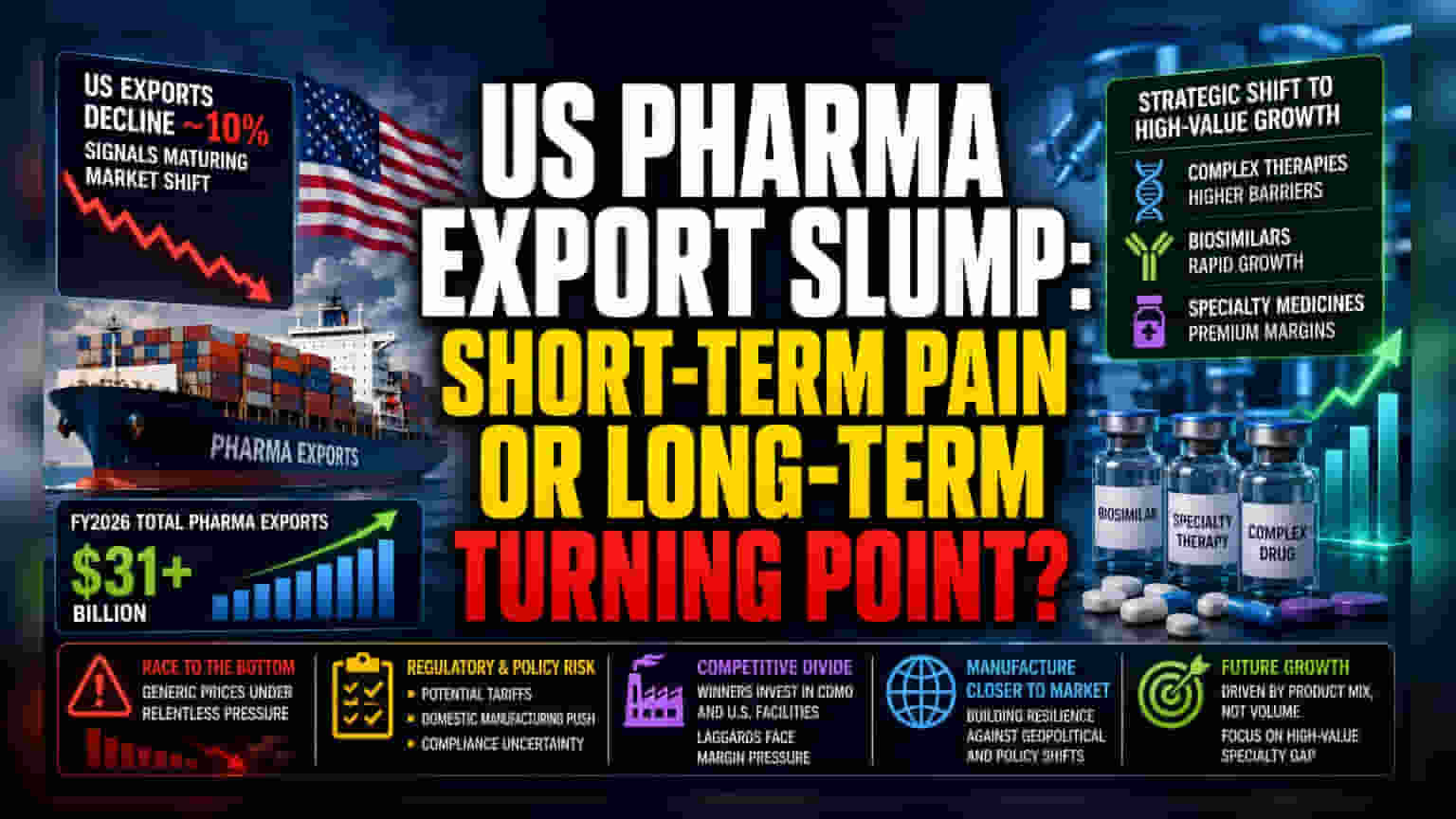


The Valuation Gap and Export Realities
The recent contraction in pharmaceutical exports to the United States represents more than a seasonal dip; it signifies a maturing market where the traditional volume-driven model for Indian manufacturers is under severe strain. Despite fiscal year 2026 total exports reaching over $31 billion, the ~10% decline in U.S.-bound shipments highlights a critical misalignment between historical supply patterns and current demand. U.S. hospital networks and distributors have moved toward just-in-time inventory management, abandoning the buffer-stock strategies that previously provided a consistent order floor for Indian suppliers.
The Analytical Deep Dive
Data indicates this shift is compounded by a "race to the bottom" in standard generic pricing. As commoditized formulations face relentless price erosion, leading Indian firms are responding by reallocating capital into complex therapies, biosimilars, and specialty medicine pipelines. Unlike the past decade, where scale was the primary competitive moat, current success is tethered to regulatory agility and the ability to manufacture high-barrier, technology-intensive products. The Nifty Pharma index, which has faced recent downward pressure, reflects investor caution regarding this transition, as markets weigh the long-term profitability of specialty segments against the eroding revenue of legacy portfolios.
The Forensic Bear Case
The sector faces structural risks that extend beyond simple inventory cycles. While Indian generics currently enjoy an exemption from certain U.S. trade tariffs, the regulatory environment remains volatile. The U.S. administration’s ongoing push for domestic pharmaceutical manufacturing creates a persistent threat of future exclusionary policies or tightened compliance requirements that could erode the cost-advantage of imported drugs. Furthermore, firms that remain over-indexed on basic oral solids are vulnerable to continued margin compression. Unlike competitors diversifying aggressively into high-margin CDMO (Contract Development and Manufacturing Organization) operations or local U.S. facility ownership, laggards in this transition face an uphill battle to protect their bottom lines in the face of consolidated, aggressive U.S. pharmacy benefit managers.
The Future Outlook
Despite current headwinds, industry sentiment remains constructive on the long-term potential of the U.S. corridor. Leading players are increasingly adopting a 'manufacture closer to market' strategy, effectively hedging against geopolitical and regulatory volatility. Brokerage outlooks emphasize that revenue growth in the coming periods will likely be driven by product mix evolution rather than volume expansion. Success will hinge on navigating the delicate balance between maintaining market share in legacy generics and successfully capturing the high-value 'specialty gap' that currently defines the evolving healthcare supply chain in North America.