

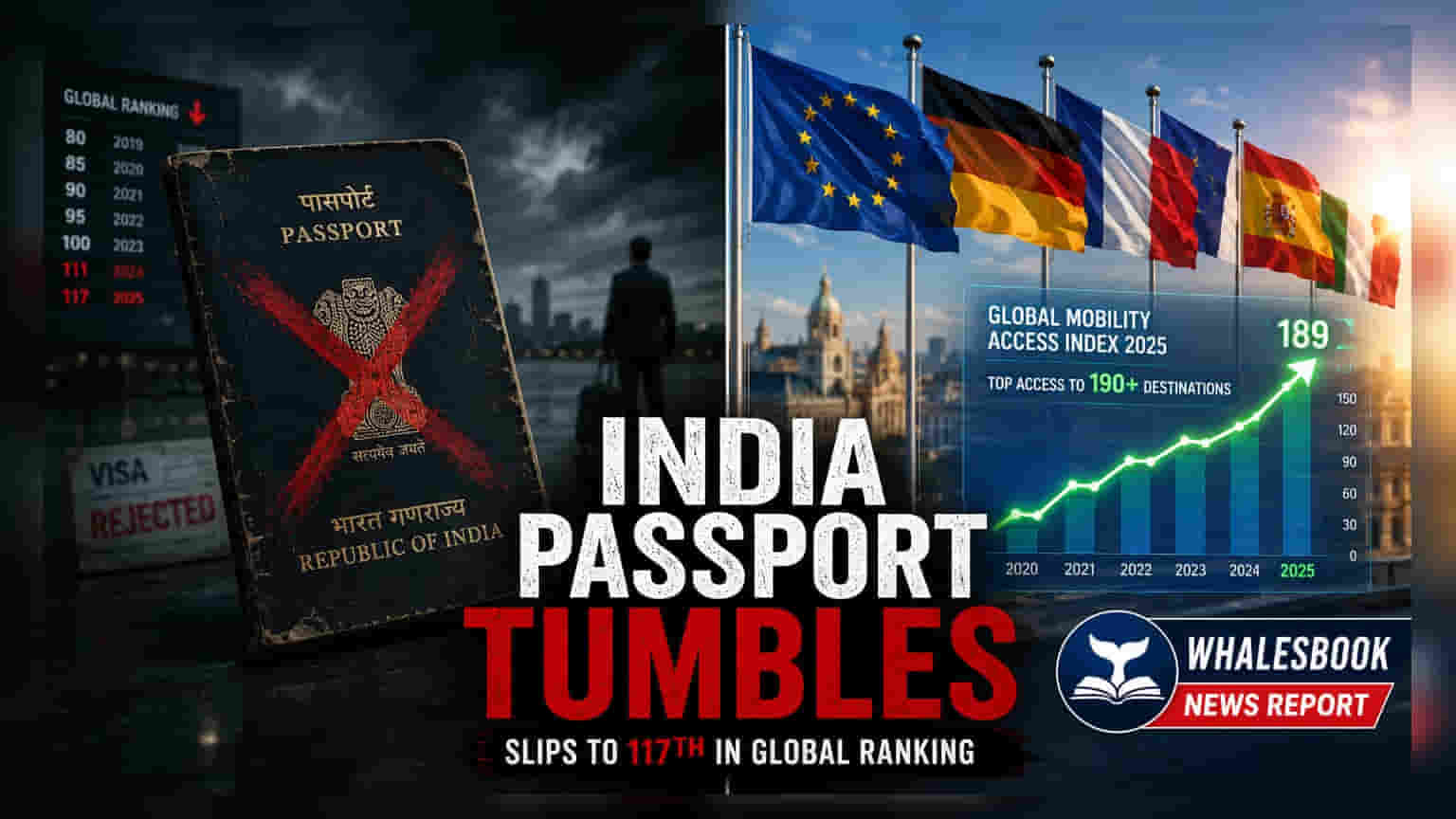
India's passport now ranks 125th in the 2026 Global Passport Index, offering visa-free or visa-on-arrival access to 26 countries. This decline highlights ongoing challenges for international business travel and tourism compared to global peers.
What Happened
India’s global travel mobility ranking has slipped to 125th place in the 2026 Global Passport Index. This represents a decline from the 124th position held last year. Indian passport holders currently have visa-free or visa-on-arrival access to only 26 destinations worldwide. For most major global economies—including the United States, the United Kingdom, China, Germany, France, and the United Arab Emirates—Indian travelers must still secure a visa before departure.
Impact on Business and International Mobility
The lower ranking carries practical implications for Indian professionals, business travelers, and tourists. Limited access to major economic hubs means that international business trips often require lengthy visa application processes, which can increase travel costs and create planning delays. While travel to nations like Nepal, Bhutan, and Jamaica remains relatively accessible, the lack of seamless entry into top-tier global markets remains a friction point for individuals and companies operating across international borders.
Regional and Global Context
When compared to other nations, India’s ranking highlights a widening gap in travel freedom. While China ranks at 104th, other South Asian neighbors face even greater limitations, with Nepal at 164th, Bangladesh at 166th, and Pakistan at 188th. In contrast, European nations dominate the top of the index. Countries such as Sweden, Switzerland, and Finland consistently lead the rankings due to favorable reciprocal travel agreements. Even major powers like the United States and France currently sit at 11th, with Canada at 13th, reflecting a broader hierarchy in how different nations manage cross-border movement.
Historical Trend and Limitations
India has seen fluctuations in its passport power over the last few years. While the country showed a slight improvement from the 127th ranking it held between 2021 and 2023, the current fall to 125th indicates that efforts to expand visa-free access have not kept pace with other nations. Investors and businesses often track these travel mobility metrics as a proxy for diplomatic relations and the ease of conducting international trade, as restricted mobility can sometimes correlate with higher administrative barriers for business expansion and talent movement abroad.
What Investors and Travelers Should Track
For those tracking the broader economic implications, the key monitorable is any shift in diplomatic agreements regarding visa reciprocity. Future improvements in the ranking will depend on government-led bilateral talks aimed at simplifying travel requirements with major trade partners. Changes in these policies can directly impact the ease with which Indian firms integrate into global supply chains and expand their international operations.