

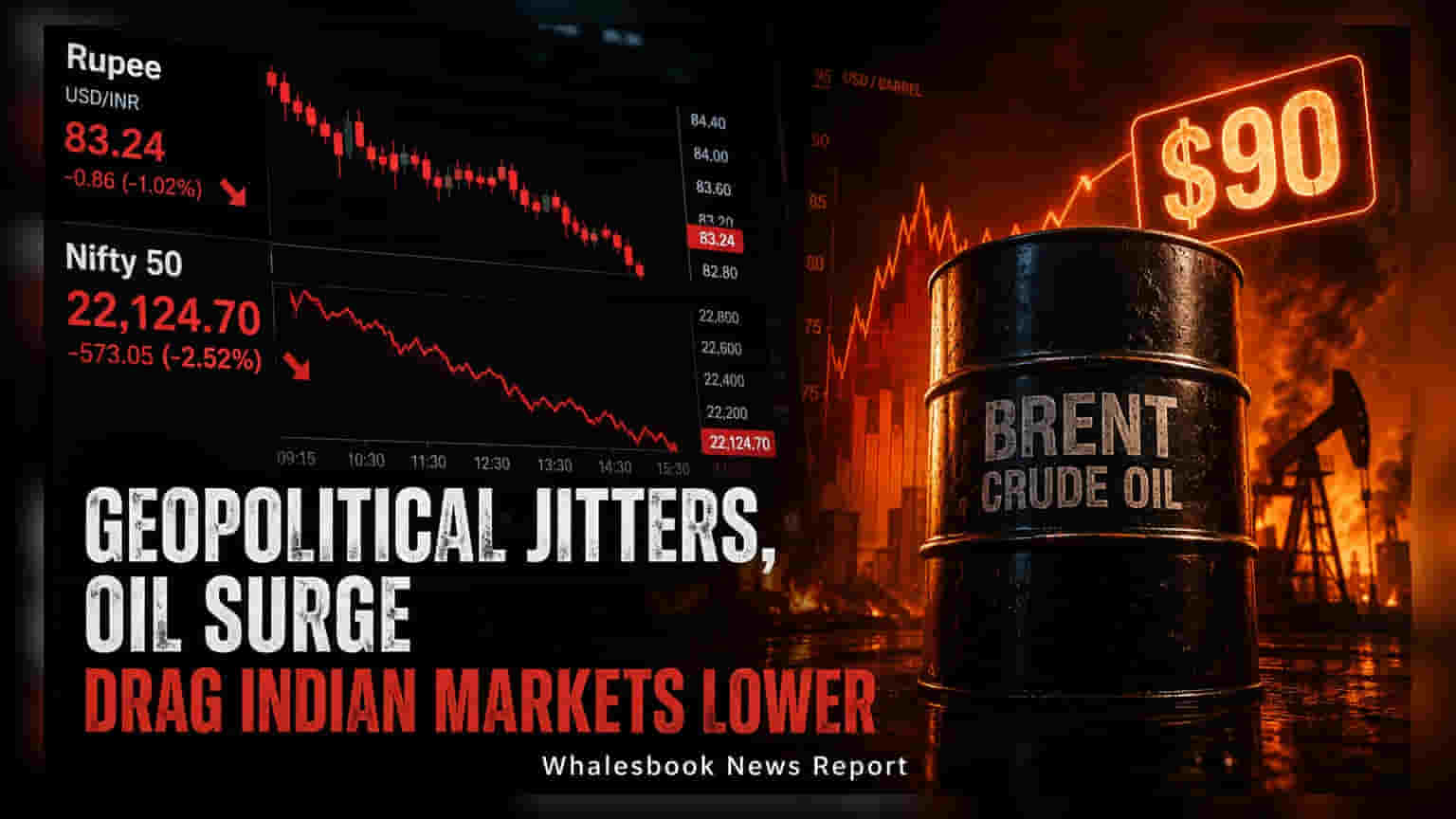
Indian equities are witnessing a cautious start on Monday following a weak close last week. Rising geopolitical tensions in the Middle East have pushed Brent crude oil prices near $90 per barrel, fueling anxiety about energy costs and corporate profits. Investors are now closely watching how these global factors influence the Indian rupee and market sentiment in the coming sessions.
Indian stock markets began the week on August 17, 2026, with a cautious tone. This trend follows a weak performance on Friday, August 14, where the benchmark Nifty 50 index closed at 24,366 and the BSE Sensex ended at 78,009.25. The decline snapped a two-week winning streak, and the current sentiment is largely driven by external global factors rather than domestic policy changes.
The primary concern weighing on investor confidence is the surge in global energy prices. Brent crude oil has been hovering in the $88 to $90 per barrel range. This increase is linked to ongoing instability near the Strait of Hormuz and the prolonged standoff between the United States and Iran, which has now entered its sixth month. When oil prices remain high, it creates a ripple effect throughout the Indian economy. For many businesses, higher energy costs translate to increased transportation and manufacturing expenses, which can eventually squeeze profit margins.
Market data from the previous week highlights the impact of this volatility. The total market capitalization of companies listed on the BSE eroded by over Rs 1 lakh crore during the Friday session. Simultaneously, the Indian rupee has shown signs of weakness, recently trading near 95.43 against the US dollar. A weaker rupee makes essential imports more expensive, adding another layer of pressure on companies that rely on global inputs.
While the broader indices have faced selling pressure, the market has shown a degree of selectivity. Previous sessions saw strength in sectors like Media, Capital Markets, and Defense, which provided some buffer against the wider sell-off in energy-intensive sectors like Oil & Gas and Auto. However, the market remains in a consolidation phase following the conclusion of the Q1FY27 earnings season. The current environment is one where investors are waiting for more clarity on how sustained energy costs might affect the earnings growth of India Inc. in the coming quarters.
Looking ahead, the volatility index and foreign institutional investor (FII) flows will be key areas to track. While FIIs have been net buyers at certain intervals, the net monthly outflows suggest that international investors remain cautious given the global geopolitical climate. For the coming days, market participants will likely monitor the stability of oil prices and the rupee, as any major shift in these variables could dictate whether the indices continue to trade within a range or face further corrections.