

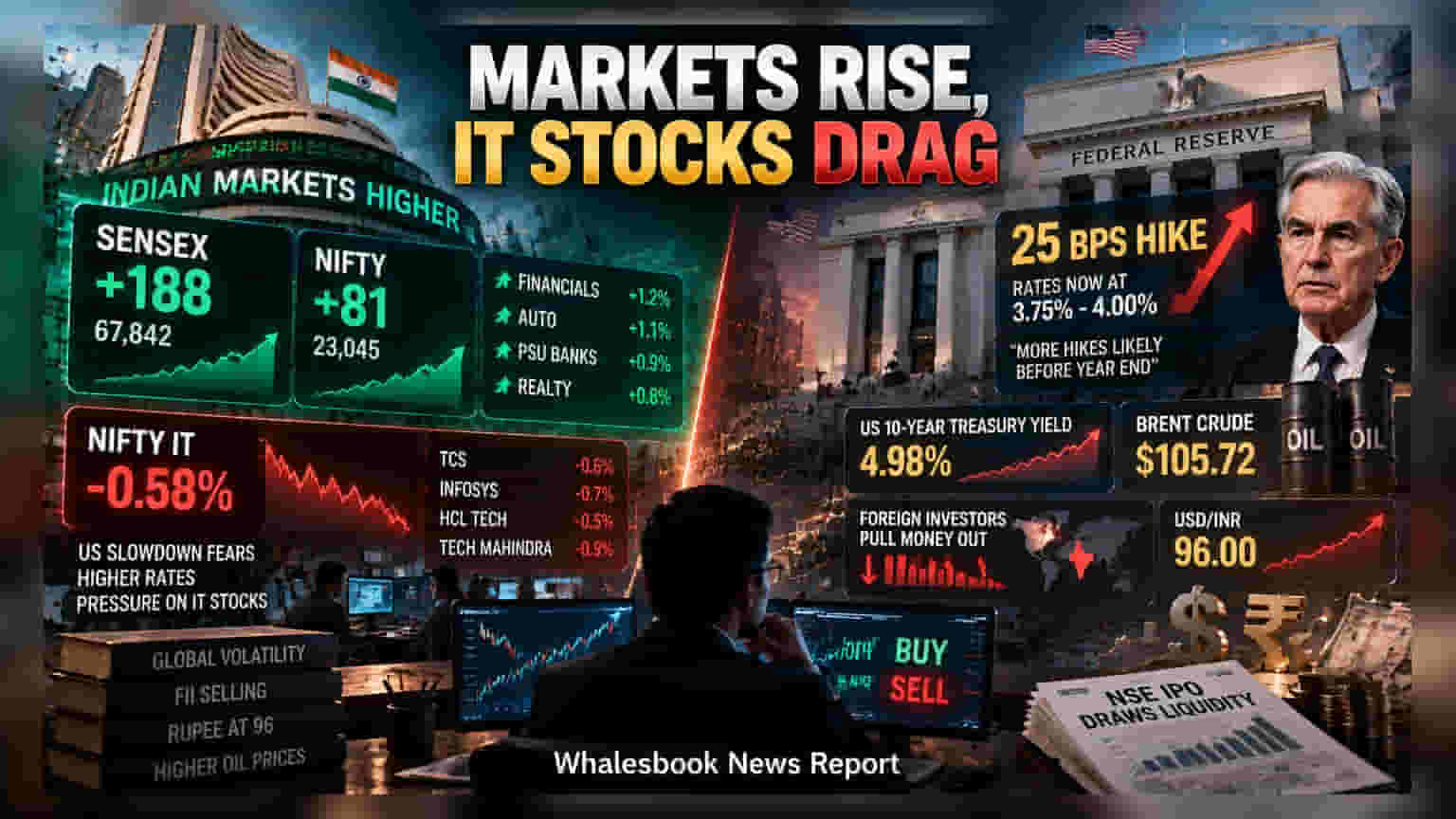
Indian equities opened higher despite the US Federal Reserve's 25-basis-point rate hike, the first in three years. While buying in financial and auto stocks pushed the Sensex and Nifty up, the IT sector faced selling pressure due to high US borrowing costs. Investors are now balancing domestic optimism with macro challenges like the weak Rupee, high oil prices, and the large NSE IPO subscription.
Indian equity markets started Thursday with a cautious rise, as investors digested the US Federal Reserve's decision to hike interest rates by 25 basis points. This move marks the first increase in three years, signaling a shift in global monetary policy that markets have been anticipating. The Sensex gained 188 points and the Nifty rose 81 points in early trade, driven primarily by buying interest in domestic-focused sectors like financials, auto, and PSU banks.
However, the overall sentiment remains tempered by the Fed's forward-looking stance. Out of 18 policymakers, 16 have indicated that they expect at least one more rate hike before the end of the year. This suggests that the era of low-cost borrowing may not end soon, keeping pressure on global equity valuations. The US 10-year Treasury yield, which is now hovering near the 5% threshold, acts as a benchmark for risk-free returns. When these yields are high, global investors often move money away from emerging markets, which poses a persistent challenge for Indian equities.
Technology shares were the day's primary laggards. Major IT companies, including HCL Technologies, Tata Consultancy Services, Infosys, and Tech Mahindra, saw their share prices decline. The reason lies in the sector's heavy reliance on the US market. Higher interest rates in the US can lead to a slowdown in corporate technology spending. Furthermore, when risk-free US Treasury yields are high, investors tend to demand lower valuations for IT companies, putting downward pressure on their stock prices.
Beyond global interest rates, India faces specific macro-economic hurdles. The Indian Rupee has touched the 96 per dollar level, which raises import costs for the country. Adding to this pressure is the price of Brent crude, which remains above $105 per barrel. Since India imports a significant portion of its oil, expensive crude creates a dual problem: it can fuel inflation and widen the trade deficit, potentially hurting the Rupee further. Foreign institutional investors have also remained persistent sellers, which limits the market's ability to maintain a strong recovery.
Domestic liquidity remains a critical factor as well. The ongoing subscription for the National Stock Exchange (NSE) IPO is drawing significant attention from investors. Large primary market offerings often absorb liquidity from the secondary market, which can contribute to short-term volatility.
Looking ahead, investors may track the 23,000–23,080 zone on the Nifty as a key support level. Sustained recovery will depend on whether domestic buying can offset the selling pressure from foreign investors and whether global oil prices show signs of cooling. The next important updates will be the management commentary from IT firms regarding US spending and any further volatility in the Rupee.