 Whalesbook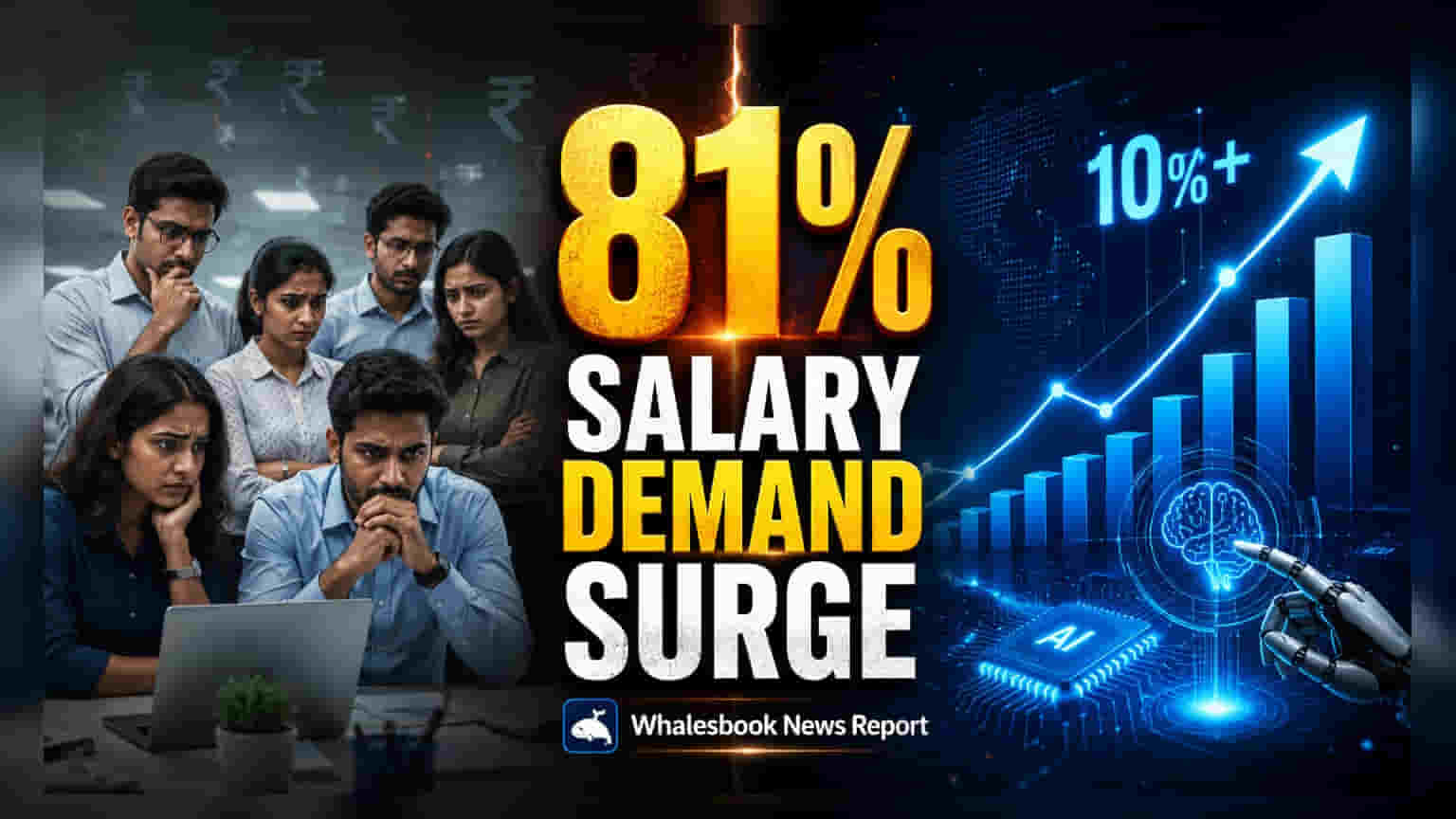


The Margin Squeeze Catalyst
Corporate India is approaching a critical juncture where the dual pressures of inflationary strain and a tightening talent market are threatening operational profitability. The widespread expectation for double-digit salary increases among the vast majority of professionals suggests that firms will face significant difficulty in maintaining current labor cost structures. When labor expenses—often the largest line item for the services-heavy Indian economy—experience such sharp upward velocity, the immediate consequence is often margin compression. Companies struggling to pass these costs to clients in an increasingly competitive global market may find themselves forced to choose between eroding profitability or risking mass attrition.
The AI Productivity Paradox
While leadership teams often view the integration of artificial intelligence as a long-term cost-saving mechanism, the current reality for the Indian workforce is one of anxiety rather than enablement. A clear tension exists between the high adoption rates of AI tools and the prevailing fear of displacement. This psychological burden is directly impacting retention. Unlike previous technological cycles, employees are now factoring in the potential for automation-driven redundancy when negotiating for higher immediate compensation. The demand for salary hikes is not merely a reaction to the cost of living; it is a defensive hedge against an uncertain career trajectory in an AI-accelerated environment.
Structural Risks and the Talent Liquidity Crisis
From a risk perspective, the disconnect between management’s return-to-office mandates and the workforce's steadfast preference for hybrid arrangements creates a persistent friction point. Nearly eight out of ten professionals prioritize flexibility, yet corporate leaders continue to push for in-office visibility as a proxy for engagement. This misalignment serves as a primary driver for the high intention among talent to seek new opportunities. Organizations that fail to institutionalize mental health support are particularly vulnerable to the current turnover trend. The data suggests that younger cohorts, specifically Gen Z and Millennials, are increasingly willing to decouple their career paths from companies that do not provide adequate psychological and financial security, effectively turning the labor market into a volatility engine for the services sector.
Forward-Looking Fiscal Implications
Looking ahead, the labor market is set to experience intensified volatility as wage expectations continue to outpace traditional corporate budgeting cycles. Analysts are beginning to signal that companies with heavy reliance on fixed-price service contracts may find their profit outlooks challenged if they cannot recalibrate their delivery models. The focus for investors will shift toward firms capable of decoupling revenue growth from headcount expansion. Businesses that rely on traditional, labor-intensive growth strategies will likely see the highest sensitivity to these emerging salary demands, potentially leading to a bifurcation in sector performance where only those with high AI-driven efficiency gains remain insulated from the impending wage inflation cycle.