 Whalesbook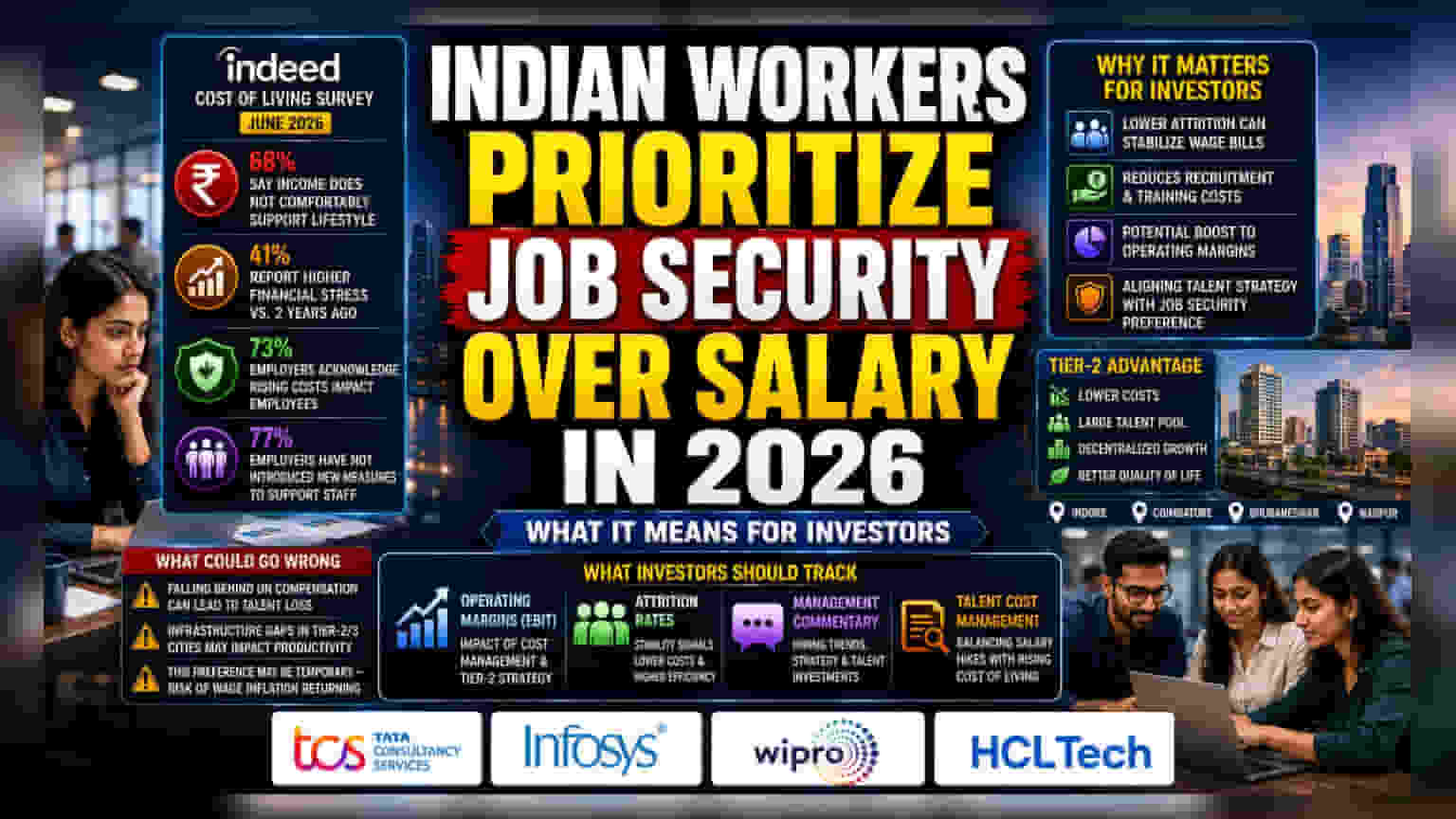


A new Indeed survey reveals that Indian employees are increasingly prioritizing job security over pay hikes due to rising living costs. For stock market investors, this shift aligns with the long-term strategy of Indian IT firms to expand operations into Tier-2 and Tier-3 cities. This transition, which helps companies manage high operational costs in metro hubs, could be an important factor for investors tracking profit margin stability in the IT services sector.
What Happened
A new report by the hiring platform Indeed shows that Indian workers are fundamentally changing how they view their careers. According to the "Cost of Living Survey" released in June 2026, nearly 68% of employees feel their current income does not comfortably support their lifestyle. As living expenses rise, 41% of workers reported higher financial stress compared to two years ago. This economic pressure is causing a shift in priorities: employees are now valuing job stability and security more than aggressive salary increases. While 73% of employers acknowledge that rising costs are impacting their staff, about 77% have not introduced specific new measures to help workers cope, signaling that employees may be looking for security within their current roles rather than betting on higher pay elsewhere.
Why This Matters For Investors
For investors, particularly those tracking the Indian IT services sector, this trend holds significant business implications. IT companies are labour-intensive, meaning their largest expense is the cost of employees. In recent years, high attrition and the need to pay competitive wages in expensive metro cities like Bengaluru, Mumbai, and Gurgaon have put consistent pressure on operating margins.
If the broader workforce is now prioritizing job security over jumping jobs for higher pay, it could theoretically help IT majors stabilize their wage bills. Lower attrition and a more stable workforce can reduce the high cost of recruiting and training new talent. If companies can align their talent strategy with this growing preference for stability, it may provide a much-needed buffer for profitability.
The Tier-2 Strategy
This shift in employee mindset aligns with a broader structural trend already underway: the move of major IT companies into Tier-2 and Tier-3 cities. Firms like Tata Consultancy Services (TCS), Infosys, Wipro, and HCLTech have been expanding their presence in cities like Indore, Coimbatore, Bhubaneswar, and Nagpur for several years.
For these companies, this strategy serves two purposes. First, it allows them to access a large, capable talent pool at a lower operational cost than in premium metro hubs. Second, as employees become more open to relocating for affordability or quality of life, companies can effectively decentralize their workforce without compromising on productivity. If this decentralization continues to gain traction, it could structurally improve how IT firms manage their infrastructure and talent expenses over the long term.
What Could Go Wrong
While a stable workforce is a positive, investors should be cautious about the "quality of life vs. quality of work" trade-off. If companies fail to adjust their salary structures or benefits in line with inflation, they risk losing top-tier talent to global competitors or sectors that are more aggressive with compensation. Furthermore, the reliance on Tier-2 cities depends on continued infrastructure growth and the ability of these cities to support large-scale operations. If these locations cannot keep pace with the demand for amenities and connectivity, productivity could suffer. Investors should also watch for signs that this "stability preference" is only temporary; if the economy improves or inflation cools, workers may quickly return to a more aggressive hunt for higher pay, reigniting wage inflation pressures.
What Investors Should Track
Investors may monitor the following metrics in upcoming quarterly results:
Operating Margins (EBIT): Check if companies are successfully using their Tier-2 footprint to manage payroll and infrastructure costs.
Attrition Rates: A falling or stable attrition rate would suggest that the workforce is indeed prioritizing security, which would be a positive for operational efficiency.
Management Commentary: Look for specific mentions of hiring trends in smaller cities and how the company is balancing employee compensation with cost control.
Talent Cost Management: Watch how companies address the gap between their salary hikes and the rising cost of living, as failing to do so could lead to long-term talent retention risks.