

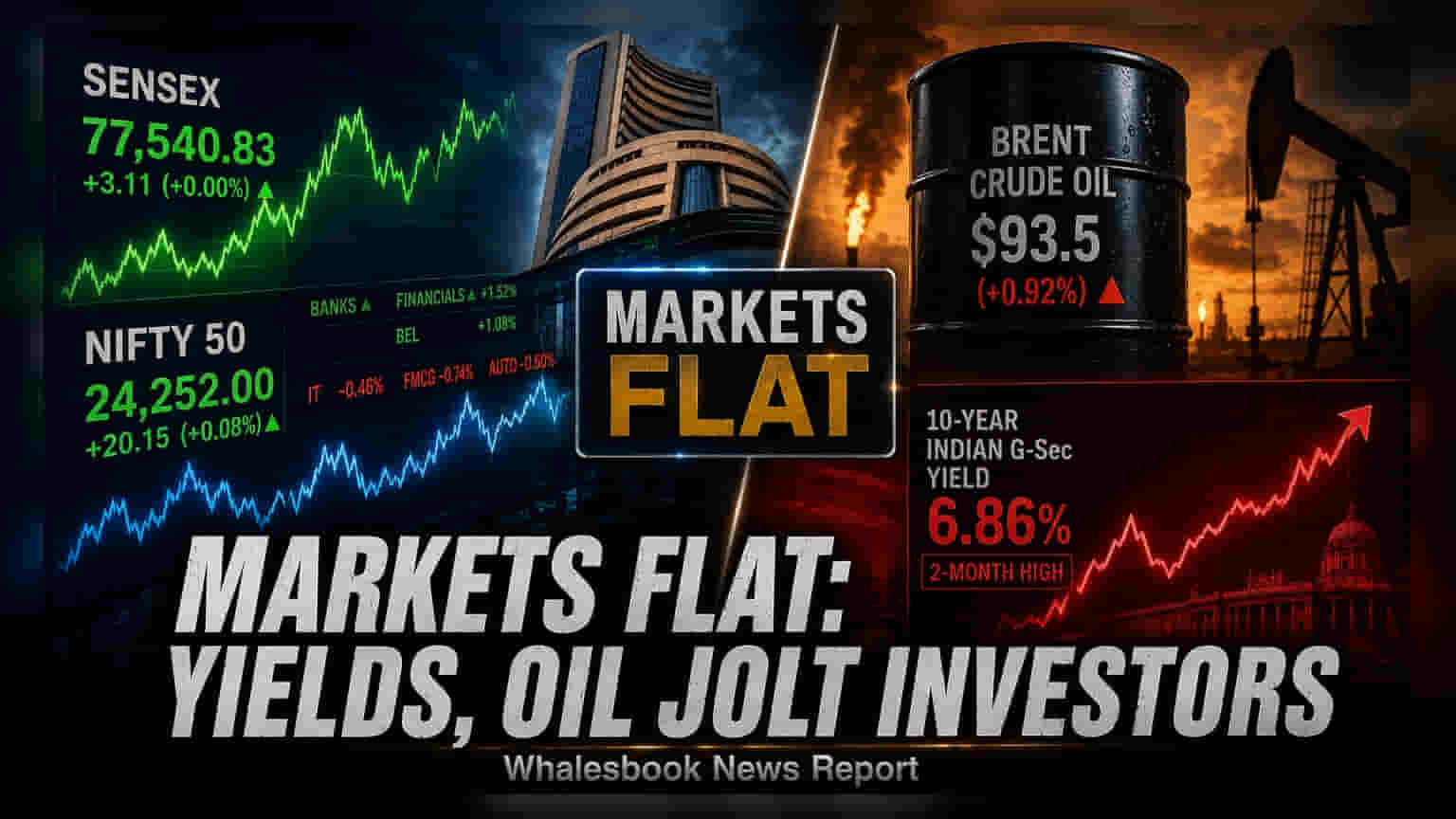
Indian equity markets ended Friday, August 21, 2026, largely unchanged as gains in financial stocks balanced concerns over rising oil prices and bond yields. The Sensex closed at 77,540 and the Nifty 50 at 24,252, with investors remaining cautious due to geopolitical tensions and recent signals from the RBI regarding potential interest rate hikes.
Indian stock markets finished the trading day on Friday, August 21, 2026, with minimal movement. The BSE Sensex edged up by 3.11 points to close at 77,540.83, while the Nifty 50 finished 20.15 points higher at 24,252.00. The day was marked by a tug-of-war between support from large financial stocks and broader worries regarding the global economic environment.
Financials Act as Market Support
Financial institutions helped prevent a steeper decline during the session. Shares of Kotak Mahindra Bank gained 1.52%, and Bharat Electronics (BEL) rose 1.08%. Some market participants shifted capital into financial stocks due to their relatively attractive valuations following recent market corrections. Other major lenders, including State Bank of India, HDFC Bank, and ICICI Bank, also saw positive movement, which acted as a cushion against selling pressure in other sectors.
Macro Concerns Weigh on Sentiment
Investors remained wary throughout the day due to two primary global and domestic issues. First, Brent crude oil prices remained elevated near $93 to $94 a barrel, driven by ongoing geopolitical tensions between the US and Iran. Since India relies heavily on oil imports, higher prices can lead to inflation and impact the country's trade balance.
Second, domestic borrowing costs felt the strain. The yield on the 10-year Indian government bond hit a two-month high, reaching approximately 6.86%. This followed the release of the Reserve Bank of India’s latest meeting minutes, which signaled that policymakers are becoming more concerned about inflation. This stance has led to market worries about the possibility of future interest rate hikes, which generally makes borrowing more expensive for companies and can impact profit margins.
Sectoral Performance and Future Monitorables
Pressure was visible in sectors like IT, FMCG, and Auto, which ended in the red. The Nifty IT index dropped 0.46%, Nifty FMCG fell 0.74%, and Nifty Auto declined 0.60%. These sectors are often more sensitive to global demand trends and input cost increases. Despite the caution, the broader market showed some resilience, with midcap and smallcap indices posting minor gains.
Looking ahead, investors will be monitoring oil price fluctuations and any further statements from the central bank. If crude prices continue to hover at these high levels, it may put additional pressure on corporate profitability and inflation figures in the coming months.