

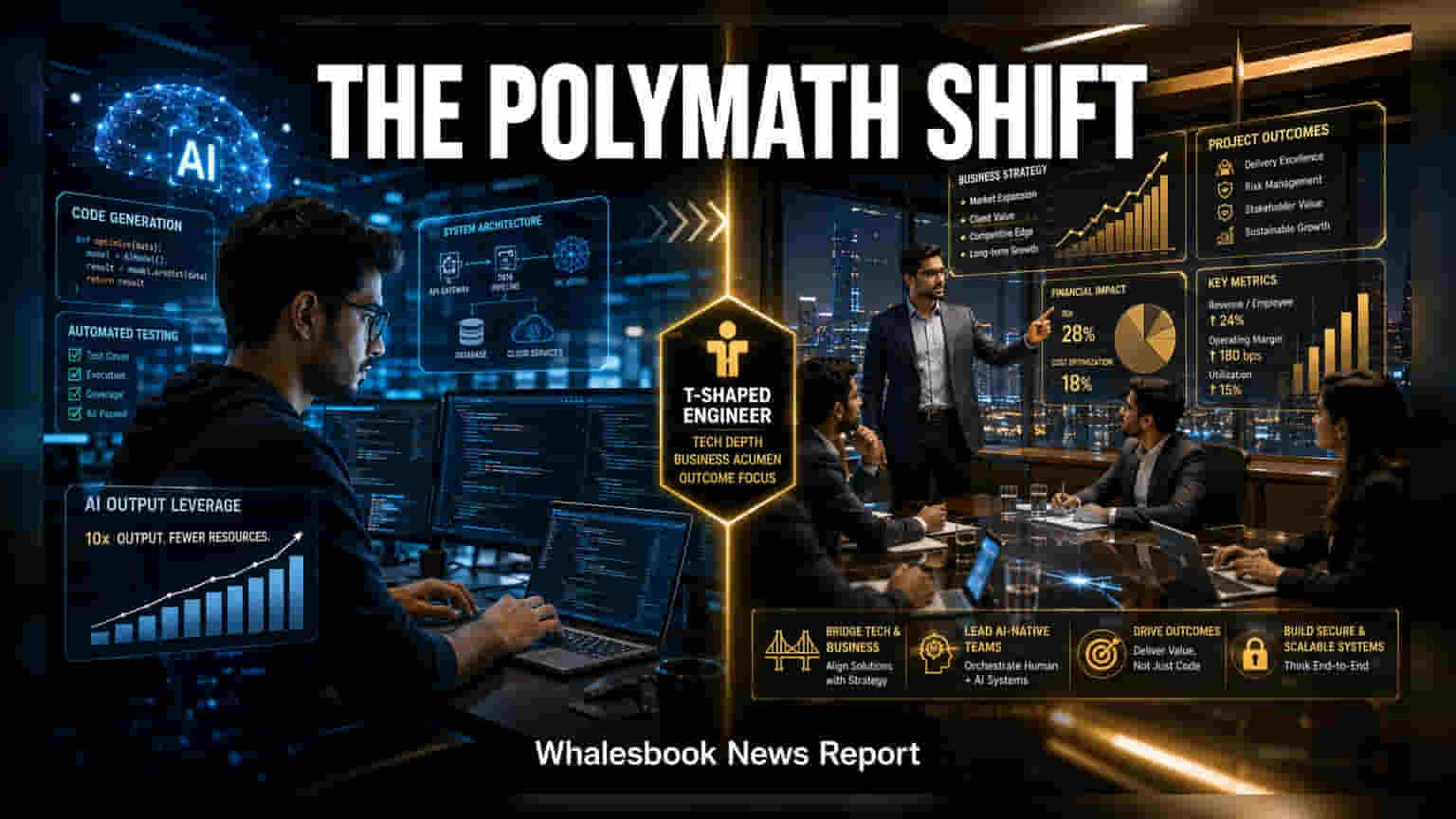
Corporate demand is shifting from narrow technical specialists to hybrid engineers who combine coding with business strategy. As AI automates routine tasks, firms are prioritizing high-impact roles. For Indian IT companies, this transition could boost productivity and profit margins, though it creates a new challenge in training and acquiring high-level talent.
The corporate engineering landscape in India is undergoing a significant transformation. As artificial intelligence becomes capable of handling routine coding, testing, and repetitive cognitive tasks, companies are moving away from hiring narrow technical specialists. Instead, there is a growing push for 'polymath' engineers—professionals who possess deep technical knowledge while also maintaining the ability to understand business strategy, security, and project outcomes.
The Shift Toward Hybrid Engineering
The traditional model of staffing projects with a large number of junior specialists is being challenged by the increased output leverage provided by AI. With AI agents now capable of performing tasks that previously required entire teams, the focus is shifting to individuals who can manage these systems and ensure they align with commercial goals. This trend is not about replacing engineers but rather elevating the requirement for 'system-level' thinkers. Companies are increasingly seeking talent that can bridge the gap between complex technical implementation and financial viability, often referred to as 'T-shaped' or hybrid skillsets.
Efficiency Gains vs. Training Costs
For major Indian IT service providers, this structural shift has clear implications for profitability. If companies can achieve higher output with fewer, more skilled employees, it can potentially improve revenue per employee and protect operating margins. By consolidating functions into single, higher-value roles, firms aim to optimize productivity in an environment where AI fluency is becoming a baseline requirement rather than an optional skill. However, this transition comes with its own risks. The demand for such versatile professionals currently outstrips supply, which could lead to higher talent acquisition costs or wage inflation for senior-level hybrid roles. Additionally, there is the operational risk associated with the speed of this transition; if an organization fails to upskill its existing workforce fast enough, it may face execution delays or struggle to maintain the quality required for complex projects.
What Investors Should Watch
As this transition gains momentum across the sector, investors may look beyond traditional headcount growth metrics. A company’s ability to manage its workforce as it adopts AI-driven productivity tools is becoming a critical monitorable. Key indicators to track in upcoming quarterly results include revenue per employee, which serves as a proxy for productivity gains, and operating margin trends, which will reflect whether these companies can successfully navigate the costs of training and high-end talent acquisition. Furthermore, management commentary regarding their internal upskilling programs will be essential to understanding how effectively these firms are adapting to the new reality of the engineering job market.