

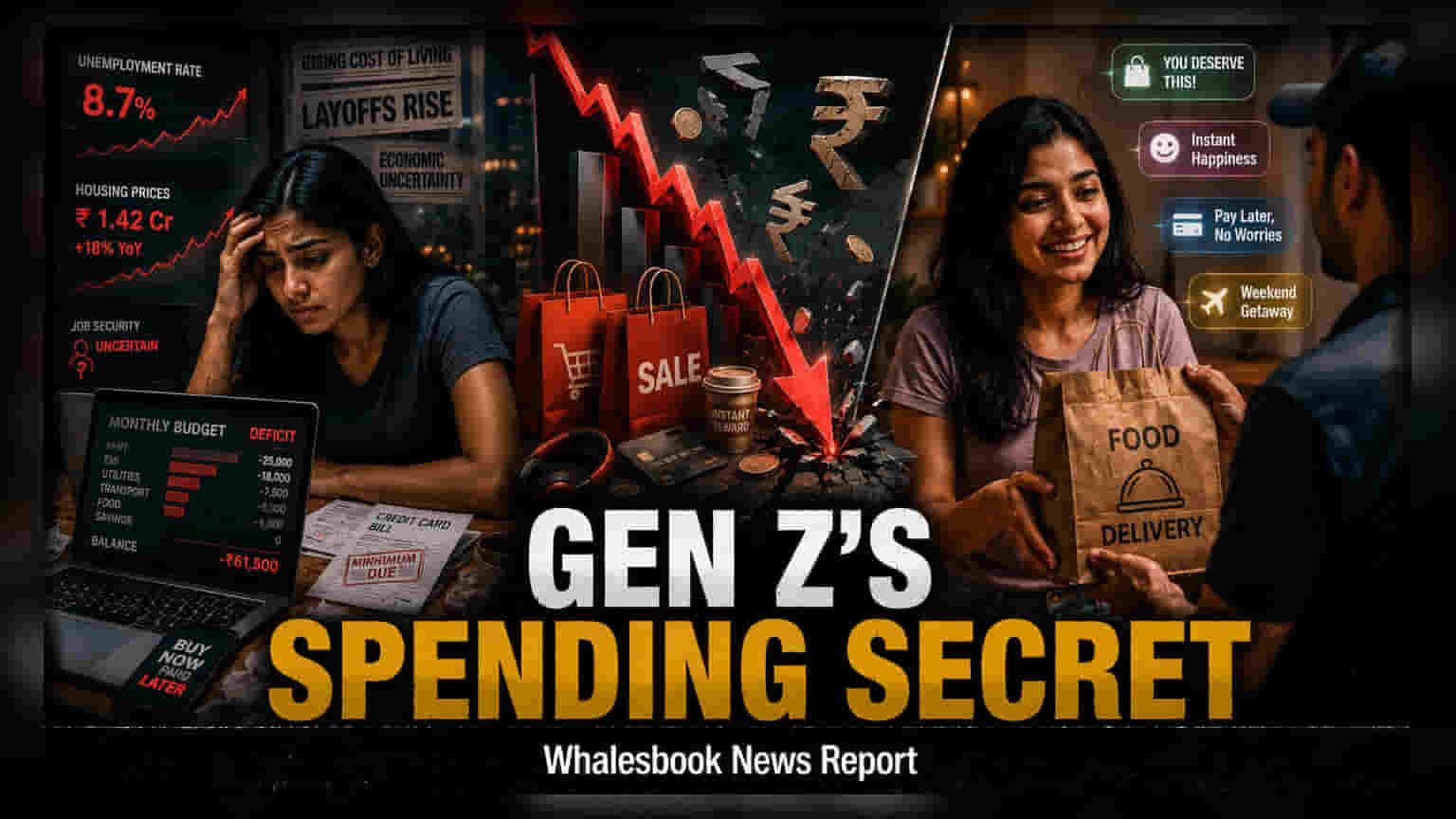
Indian Gen Z is increasingly adopting 'doom spending'—prioritizing immediate purchases over savings due to economic pessimism. This shift, fueled by easy access to unsecured credit, is reshaping consumer demand and increasing household debt. Investors should watch how this trend impacts retail consumption patterns and long-term financial stability.
The trend of 'doom spending'—where individuals purchase goods and experiences to cope with economic stress—is gaining attention in India. Rather than saving for long-term goals, many young consumers are choosing immediate rewards. This behavior is driven by a mix of factors, including high housing costs, concerns about future job security, and the psychological relief that immediate consumption provides.
From an investor’s perspective, this shift creates a notable tension between consumption and savings. While companies in sectors like quick commerce, retail, and travel may benefit from higher short-term demand, the underlying financial structure of this spending is changing. Many young consumers are relying on unsecured credit, such as credit cards and 'buy now, pay later' schemes, to fund their lifestyle choices. As of March 2026, non-housing retail loans have climbed to 58.4% of total household borrowings, a trend that warrants attention.
This debt-fueled consumption model carries risks. If the reliance on unsecured loans continues to grow, it could lead to increased defaults if the economic environment tightens. For investors, the sustainability of this consumer demand is a key question. While the desire for instant gratification supports current retail growth, it may come at the cost of household financial health, potentially limiting future spending power.
There is also a link between this 'instant-reward' mindset and financial risk-taking. Recent data highlights that the median age of active stock market investors has fallen to 33, with many young adults aggressively participating in high-risk trading. Reports from regulators indicate that a large share of individual losses in equity derivatives is concentrated among younger investors. This suggests that the same psychological need for immediate control or gain is pushing young Indians toward both excessive retail consumption and speculative market activity.
For the broader economy, this behavior presents a dual-sided narrative. On one hand, it keeps consumer confidence high, as reflected in various financial well-being indices for 2026. On the other hand, it shifts capital away from traditional, stable savings vehicles like bank deposits.
Investors should monitor a few specific indicators as this trend evolves. These include the growth rates of unsecured retail loans, the quality of credit card portfolios held by banks, and shifting household savings data. Understanding whether this consumption is a temporary response to global uncertainty or a structural change in how India’s largest demographic manages money will be important for evaluating long-term growth in the consumer and financial sectors.