

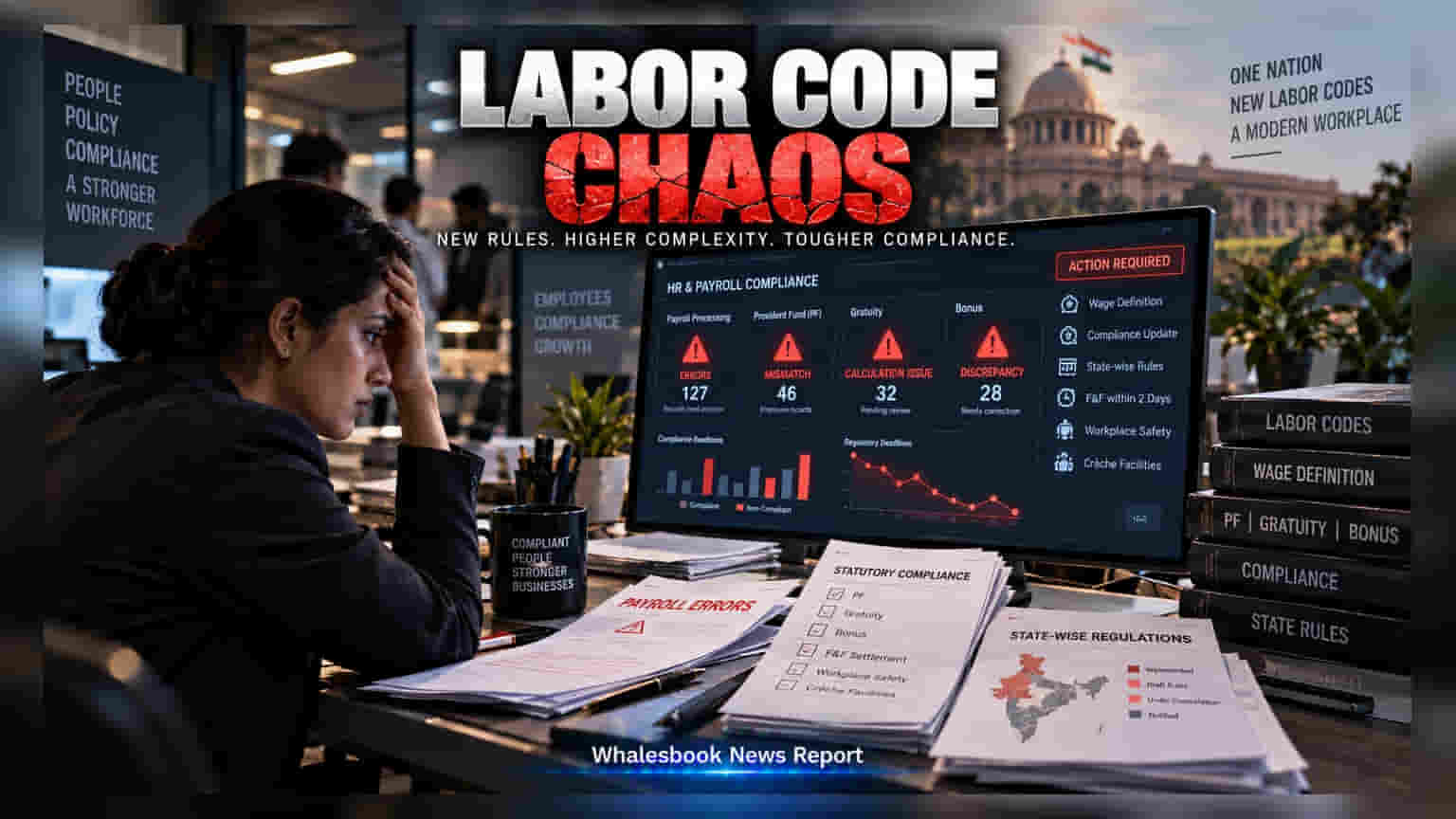
Ten months after the rollout of India's new labor codes, companies are struggling to align payroll and HR systems. Ambiguity in wage definitions and inconsistent state-level rules are creating operational friction, forcing businesses to invest in system upgrades and navigate complex compliance requirements.
The transition to India's overhauled labor codes is proving to be a complex process for corporate India. Ten months after the initial rollout, many businesses continue to grapple with the practical application of these rules. The primary point of friction involves the definition of wages, which has forced companies to reassess how they calculate provident fund contributions, gratuity, and annual bonuses. Because these statutory payments are directly linked to salary structures, any shift in wage definition requires companies to adjust their payroll software and accounting systems to remain compliant.
Operational Challenges in Compliance
Beyond payroll adjustments, the new regulatory framework introduces strict operational timelines. For instance, the mandate to settle full and final payments for departing employees within two working days has strained existing HR workflows. Companies that previously relied on longer processing windows are finding their legacy infrastructure inadequate. Additionally, new operational requirements regarding workplace safety and the provision of crèche facilities for women employees have necessitated capital spending on facility management and security upgrades, adding to the immediate cost burden for large-scale employers.
The Challenge of Regulatory Fragmentation
Compliance is further complicated by the federal structure of the Indian labor market. Because labor laws fall under the Concurrent List, implementation depends on individual state governments framing their specific rules. While some states have already finalized their frameworks, others remain in the draft or consultation stages. For organizations with a presence across multiple states, this lack of uniformity creates a complex administrative environment. Many firms are currently forced to manage dual-compliance systems—running legacy processes in one state and the new codes in another—to ensure their operations remain legal across the country.
Investor Perspective and Monitoring
For investors, this transition period highlights a potential short-term impact on administrative and compliance costs, particularly for labor-intensive sectors like manufacturing, retail, and IT services. While the long-term goal of these codes is to simplify India's complex labor laws and improve the ease of doing business, the current period of ambiguity is driving up operational expenses. Investors should monitor whether companies can successfully digitize their HR processes and standardize payroll systems across states. The ability of management to navigate these regulatory changes without significant disruption to employee relations or financial margins will be a key factor to watch in upcoming quarterly disclosures.