

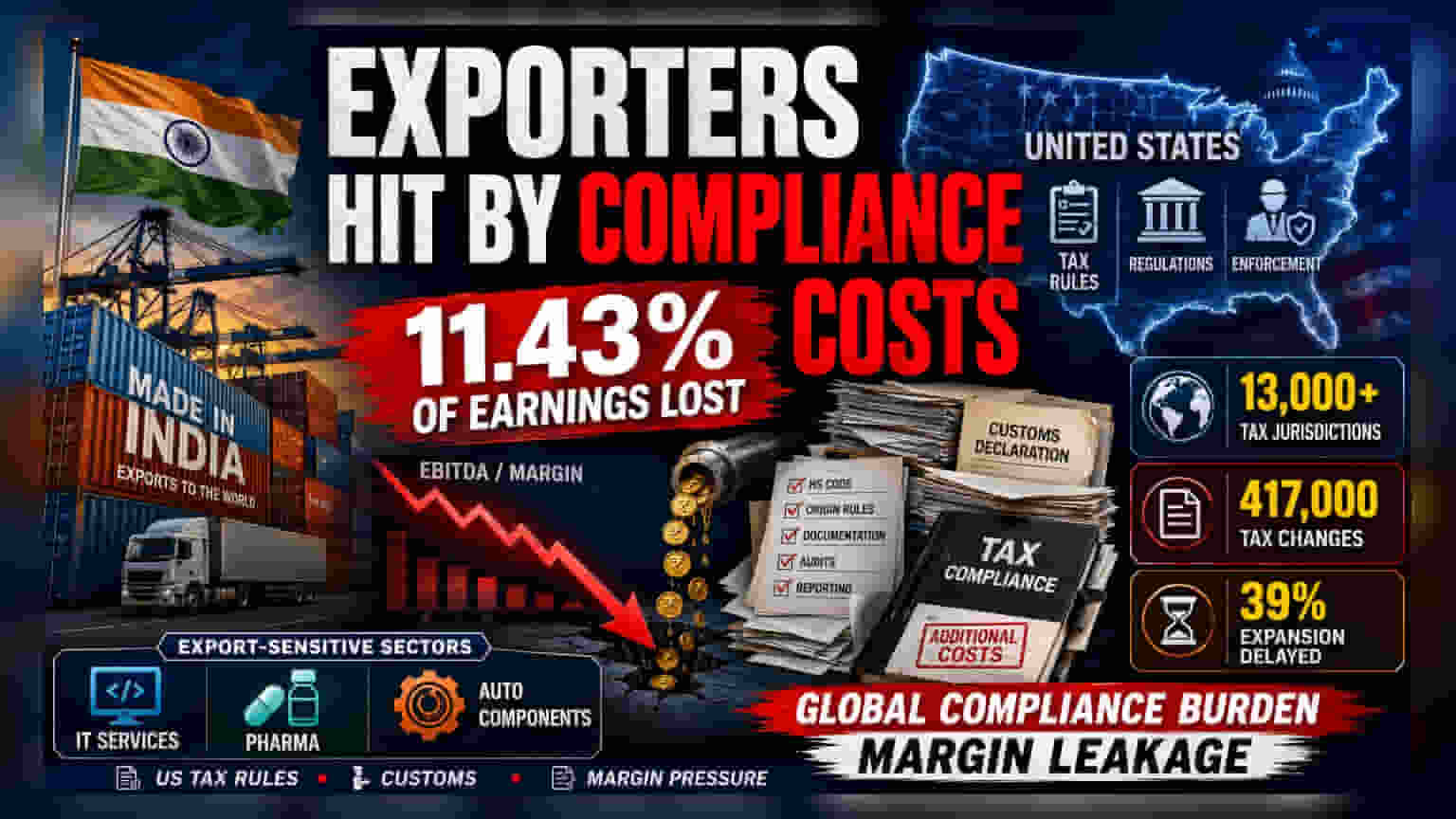
Indian businesses face a hidden financial burden as 11.43% of export earnings go toward foreign compliance and tax management. This cost pressures profit margins and has caused 39% of firms to delay international expansion. Investors may monitor how export-oriented companies in sectors like IT and pharma manage these operational expenses to protect their profitability.
What Happened
Indian exporters are dealing with a significant financial drain, with an average of 11.43% of their export earnings being spent on managing international compliance, customs, and tax regulations. A report, as highlighted by industry data, points to these costs being a major, yet often overlooked, factor that affects the bottom line of businesses selling products and services abroad. The complexity of foreign regulatory environments, especially in large markets like the United States, makes manual compliance tracking increasingly difficult and costly for companies of all sizes.
The U.S. Regulatory Challenge
For many Indian exporters, the United States represents a primary but complex market. The U.S. tax landscape is highly intricate, featuring over 13,000 tax jurisdictions and frequent changes to administrative rules. Recent data shows that the U.S. witnessed approximately 417,000 tax code changes and administrative rulings in the last year alone. For Indian companies, keeping pace with these changes manually is nearly impossible. Failure to comply can lead to regulatory notices, financial penalties, and operational disruptions that can persist for years.
Why Compliance Costs Matter for Margins
These compliance costs act as a direct leakage from profit margins. When a company spends over 11% of its earnings on regulatory compliance, it naturally reduces the EBITDA (operating profit) margin. For investors, this creates a clear monitorable: how efficiently a company manages its compliance spending directly impacts its ability to report healthy profit margins.
Sectors that are heavily dependent on exports—such as Information Technology (IT) services, Pharmaceuticals, and Automotive Components—often have high exposure to international regulatory standards. If these companies continue to rely on manual or outdated methods to manage compliance, their operational costs may remain elevated, putting pressure on overall profitability.
Impact on Expansion Plans
Regulatory uncertainty and the rising cost of compliance are not just hurting current profits; they are also slowing down growth. The data indicates that 39% of businesses have postponed their international expansion plans due to these regulatory burdens. For shareholders, this represents a risk to future growth. When companies put expansion on hold, it can limit their ability to capture new market share in developed economies, potentially impacting long-term revenue growth.
What Investors Should Monitor
Investors analyzing export-heavy companies should look for a few key indicators:
- Management Commentary: Listen for updates on how companies are managing operational and compliance costs. Firms moving toward automated compliance solutions may be better positioned to protect their margins.
- Profit Margin Trends: If a company shows a sudden decline in operating margins, check the notes to accounts for rising "other expenses" or increased administrative costs.
- Market Concentration: Companies with high revenue exposure to the U.S. are generally more sensitive to these regulatory costs compared to those with a more diversified geographic footprint.
- Tech Spending: Look for evidence of investment in digital infrastructure. Companies investing in automation and software to manage global tax and trade compliance may see better efficiency over the long term.