 Whalesbook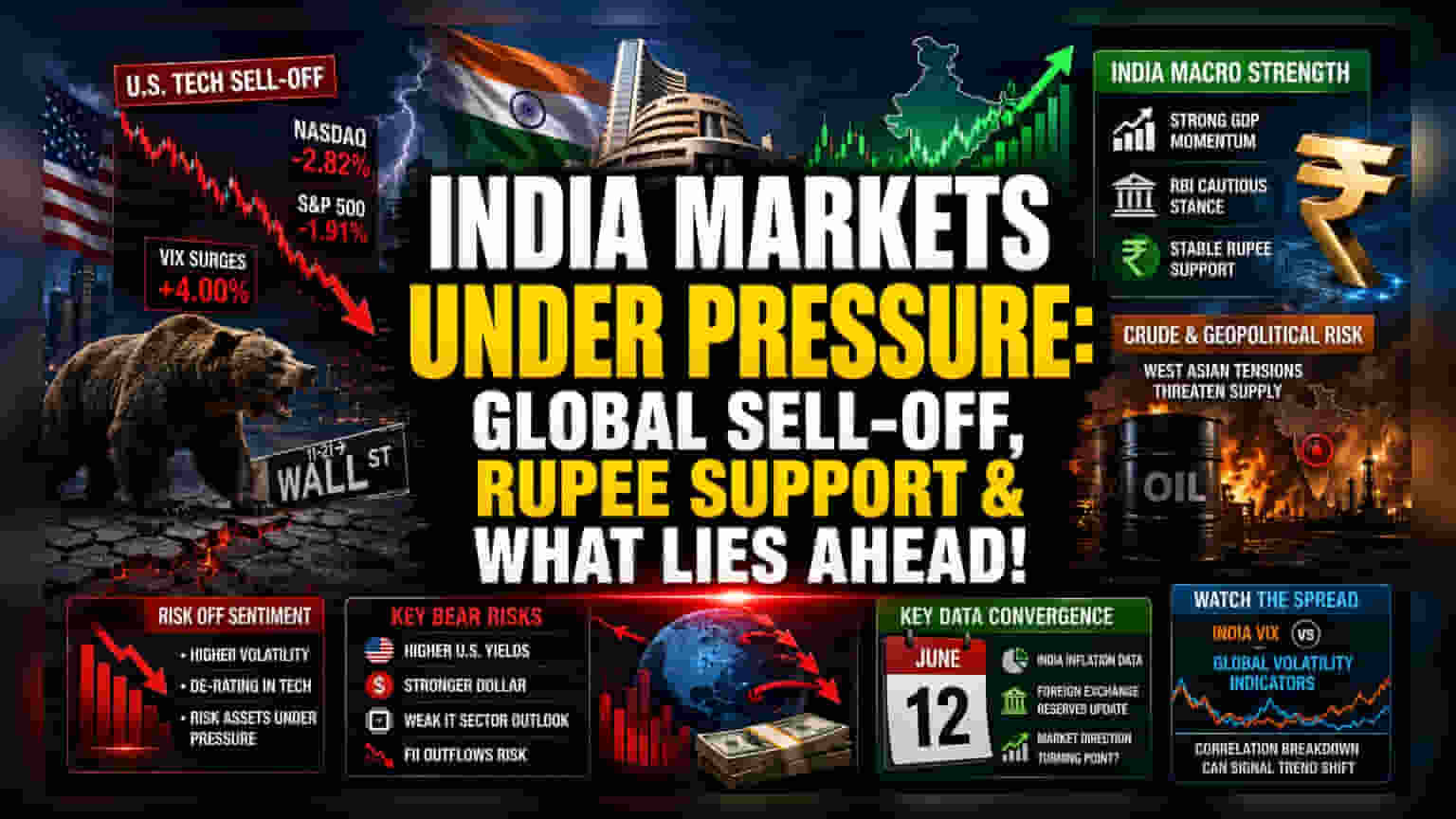


The Valuation Correction Catalyst
The sharp reversal in U.S. technology benchmarks serves as a primary headwind for Indian indices, which have historically shown a high beta to the Nasdaq Composite. When high-growth sectors face a rapid de-rating, as evidenced by the recent 4% surge in volatility, Indian IT exporters frequently endure sympathy selling. This technical weakness complicates the outlook for the BSE Sensex and NSE Nifty, both of which are currently struggling to maintain support levels following a lackluster performance in the previous week.
Macro Divergence and Currency Dynamics
While global indices grapple with inflation stickiness, the Indian economy presents a decoupled narrative. Persistent GDP momentum and the Reserve Bank of India’s cautious monetary stance have stabilized the rupee, potentially softening the blow from a stronger dollar. However, the interplay between crude oil pricing and regional West Asian instability remains the most significant outlier. Should supply chain disruptions escalate, the resulting cost-push inflation could threaten to erode domestic corporate margins, forcing institutional investors to adjust their exposure to cyclical equities.
The Forensic Bear Case: Structural Vulnerabilities
The reliance on foreign institutional inflows presents a critical risk factor, particularly if U.S. Treasury yields maintain their current elevation. Should the upcoming U.S. CPI data exceed expectations, it would likely invalidate recent narratives regarding imminent Federal Reserve policy easing, triggering further capital flight from emerging markets. Furthermore, the Indian IT sector, a key index heavyweight, remains vulnerable to reduced enterprise spending in the North American market. If the AI-driven infrastructure boom fails to translate into immediate bottom-line growth for major clients, current valuation multiples in the domestic tech space may face a harsh, forced correction.
Forward Outlook and Institutional Sentiment
Market participants will pivot toward June 12, a date marked by significant data convergence including Indian inflation reporting and foreign exchange reserves updates. While the consensus suggests a defensive positioning, the actual trajectory will depend on whether domestic growth metrics can offset the external liquidity drain. Traders are advised to monitor the spread between local volatility indices and global sentiment markers, as a breakdown in this correlation often precedes a broader shift in market leadership.