

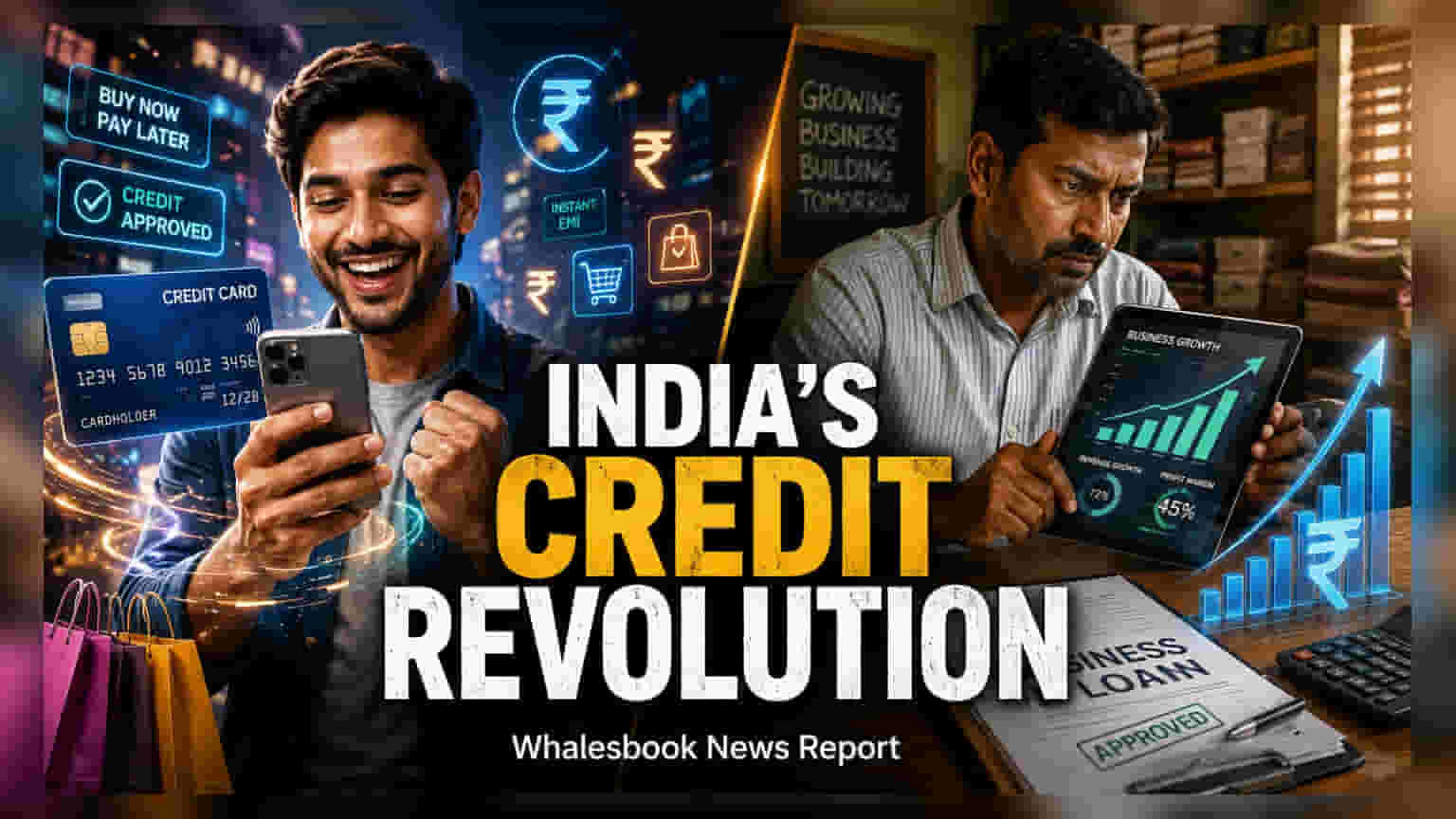
Post-pandemic credit data from TransUnion CIBIL reveals a major shift toward consumer durables and unsecured business loans over traditional asset financing. This change reflects evolving borrower behavior, particularly among Gen Z, and a maturing credit market with higher participation from women and younger demographics.
The Indian credit ecosystem has witnessed a fundamental change in borrower priorities since the pandemic. According to recent data from TransUnion CIBIL, credit demand has pivoted away from traditional long-term asset ownership toward immediate consumption and entrepreneurial ventures. As of March 2026, consumption-related loans have risen to represent 51% of the active borrowing landscape, a significant jump from the 34% share recorded in March 2017.
Consumer Durables and Business Lending Growth
Younger consumers, particularly the Gen Z demographic, are currently driving demand for consumer durable loans, such as financing for mobile phones. This trend has replaced the pre-pandemic focus on two-wheeler financing as the primary entry point for credit among younger borrowers. Simultaneously, unsecured business loans have seen rapid expansion, with their share of the credit market expected to hit 21% by March 2026, up from just 4% in March 2017. This surge suggests that small business owners and entrepreneurs are increasingly relying on unsecured credit lines to fund operations or expansion plans.
A Maturing Credit Market
Beyond product shifts, the market is showing signs of maturity. The proportion of new-to-credit borrowers is decreasing, indicating that financial institutions are increasingly focusing on deepening relationships with existing customers. Vehicle loans, traditionally a core part of the retail credit portfolio, have maintained a stable 18% share of the market. Demographic data further shows that women now make up nearly one-third of the credit-active population, while younger individuals account for 39% of total credit activity. Uttar Pradesh currently leads in credit inclusion, followed by Madhya Pradesh and Gujarat.
Investor Implications and Monitorables
For investors, this transition carries specific implications for the banking and non-banking financial company (NBFC) sectors. The shift toward unsecured business loans and consumer durables implies a change in the risk profile of retail loan books for lenders. While these segments often offer higher yields, they also require robust underwriting standards to manage potential default risks during economic cycles. Bhavesh Jain, MD and CEO of TransUnion CIBIL, emphasized that as the pace of new credit penetration moderates, the focus of the financial sector must remain on responsible growth and financial literacy.
Moving forward, investors may track how lenders manage the balance between these higher-growth, unsecured segments and the need for asset quality. Key monitorables include future updates on credit costs, the impact of interest rate cycles on discretionary spending, and how institutions leverage digital innovation to maintain margins in a maturing credit environment.