 Whalesbook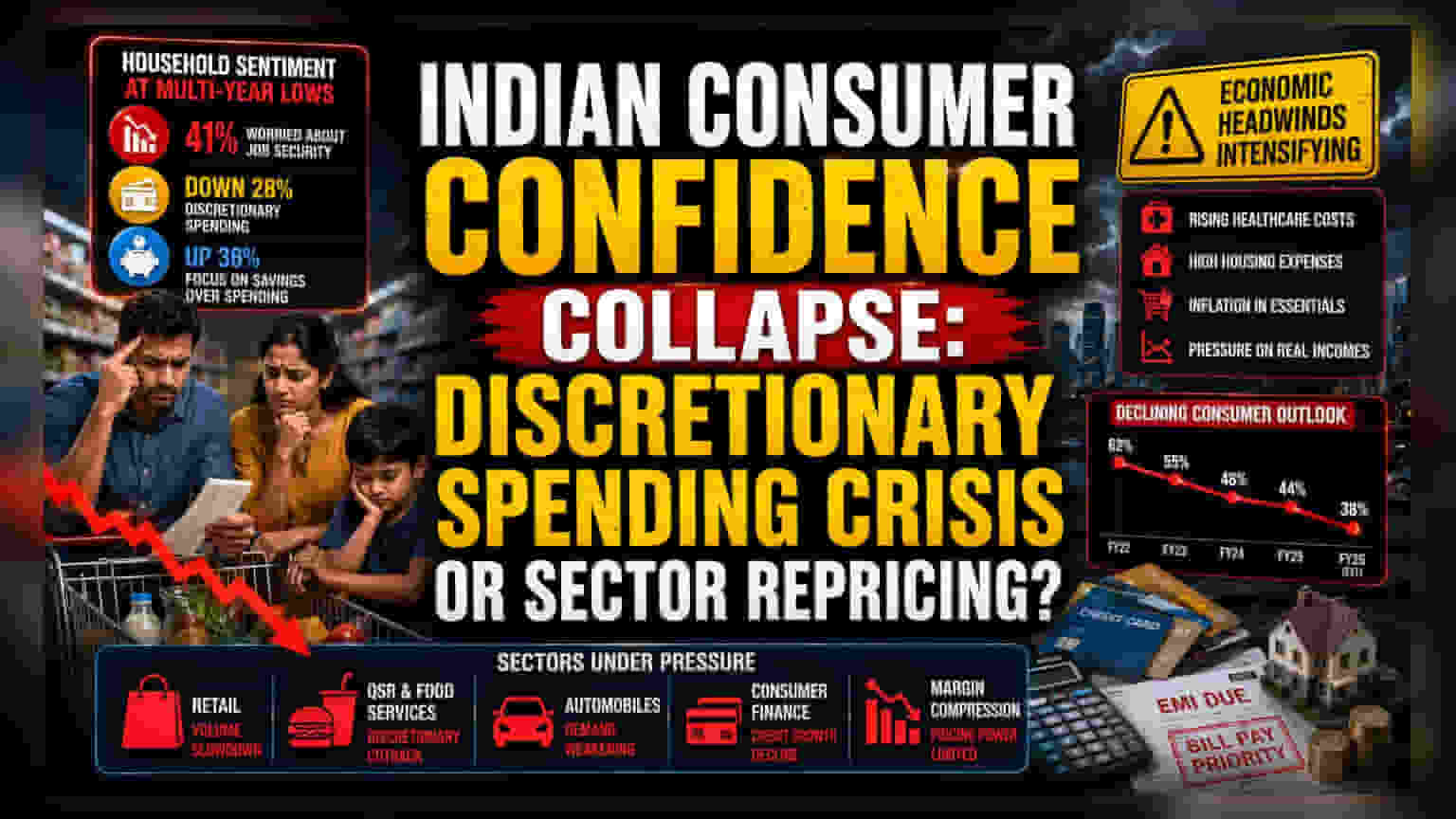


The Consumption Deflation Trap
The shift toward fiscal conservatism among Indian households suggests a fundamental repricing of discretionary retail and service sector stocks is imminent. While headline GDP figures often mask localized household pain, the current behavioral data shows a structural retreat from non-essential spending. This retrenchment is not merely reactionary; it reflects a long-term recalibration of household balance sheets against the backdrop of persistent inflationary pressures in essential services such as healthcare and housing.
Dissecting the Sentiment Contraction
Market participants often overlook the correlation between job security anxiety and consumer credit demand. As unemployment concerns climb to 41%, the propensity for households to leverage credit for large-ticket purchases is eroding. This creates a dual-pressure environment for banks and non-banking financial companies that heavily depend on high-interest personal loans and credit card uptake. When households prioritize EMI and rent coverage above all else, the margin for error in consumer-facing industries shrinks. Compared to previous fiscal cycles where rising credit demand signaled optimism, current data suggests that debt is being used for survival rather than expansion, a clear warning sign for sustained revenue growth in the consumer goods space.
The Forensic Bear Case
Investors relying on broad consumption growth narratives must confront the reality of margin compression. Companies in the retail, quick-service restaurant, and automobile sectors are already grappling with input cost inflation, but their pricing power is now hitting a hard ceiling. As consumers pivot away from discretionary categories, companies are forced into a difficult choice: either absorb costs and sacrifice earnings or raise prices and risk further volume degradation. Unlike prior periods of growth where middle-class consumption was relatively price-inelastic, current trends indicate a shift toward extreme price sensitivity. Any firm heavily indexed to luxury or impulse-driven commodities faces elevated risk, especially if management attempts to maintain guidance by burning cash on customer acquisition costs that no longer yield the same conversion rates.
Future Trajectory and Market Outlook
The outlook for the remainder of 2026 hinges on whether central bank policies can effectively stabilize the cost of living without triggering further layoffs. As long as the wedge between wage growth and essential living costs remains, the preference for savings over spending will likely persist. Analyst consensus suggests that firms with high debt-to-equity ratios and exposure to urban discretionary spending should be monitored for downward earnings revisions as the year progresses. Until job market confidence rebounds, a cautious allocation toward defensive, non-cyclical sectors appears the only rational move for institutional capital.