

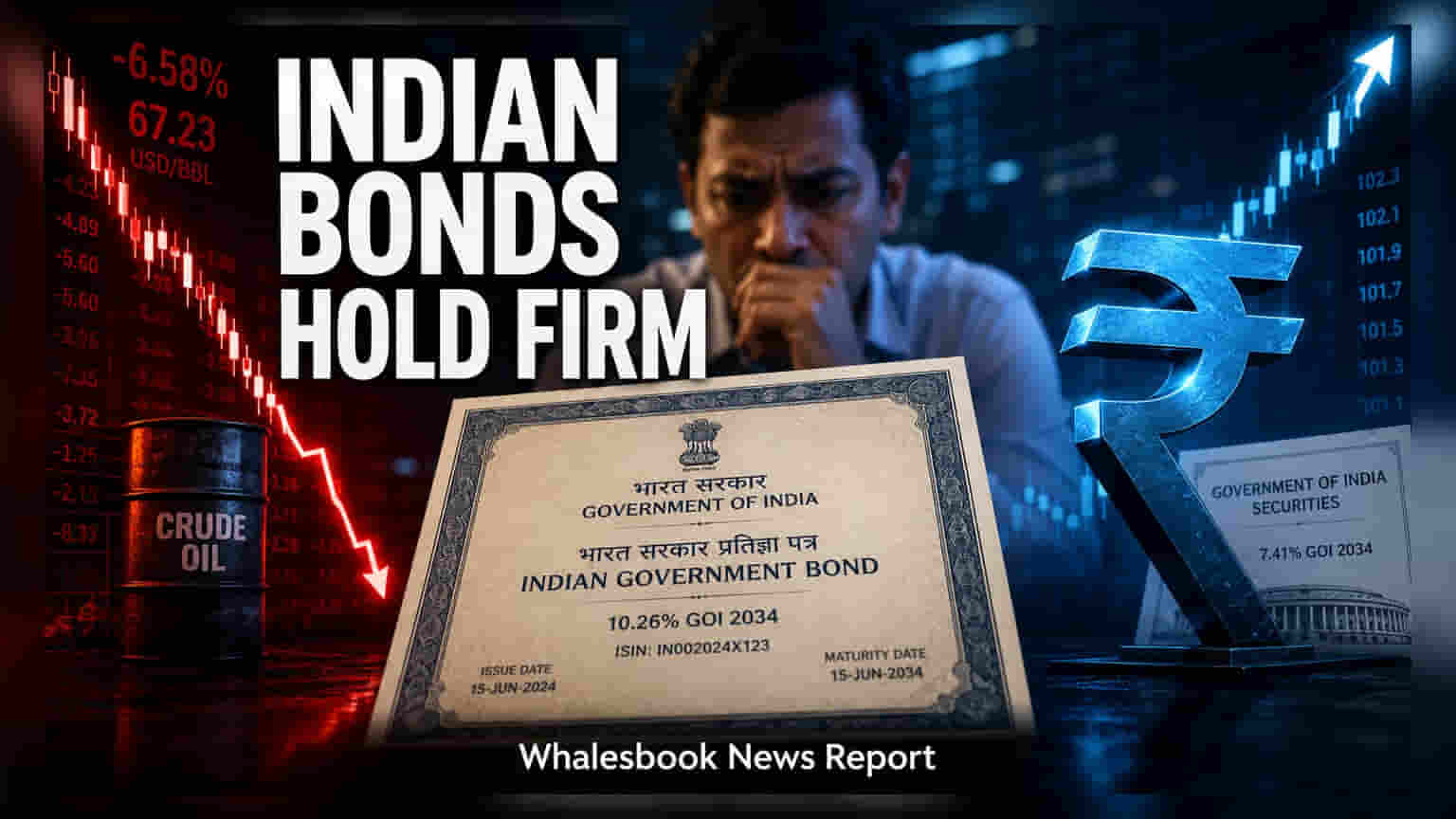
Indian government bonds remained resilient on Monday despite Bloomberg deferring the inclusion of local debt in its flagship index. Lower crude oil prices and strong dollar inflows helped stabilize yields. Investors are now focused on the Reserve Bank of India's upcoming policy meeting on Wednesday.
Indian government bond markets showed resilience on Monday, with the benchmark 6.94% 2036 bond yield trading near 6.85%. This stability followed news that Bloomberg Index Services would delay the inclusion of Indian sovereign debt into its Global Aggregate Index. The decision was a setback for market participants who had built up significant positions, with nearly $4 billion in net foreign buying recorded since June through the fully accessible route.
Market Stabilization Factors
While the index delay was unexpected, the bond market found support from falling global energy costs. Brent crude prices saw a sharp decline of over 7%, dropping below $84 per barrel during Asian trading hours. A drop in oil prices is generally positive for the Indian economy as it reduces the import bill and helps contain inflation, which can be supportive for fixed-income assets. Additionally, substantial dollar inflows exceeding $41 billion into special Reserve Bank of India (RBI) schemes through July provided a liquidity cushion, helping to absorb the selling pressure triggered by the index announcement.
Impact on Swap Rates
Interest rate swap markets also reacted to the broader economic cues. The one-year swap rate was seen at 5.90%, with two-year and five-year rates at 6.09% and 6.39%, respectively. This movement follows a period in July where swap rates had risen by 16-24 basis points. The recent dip suggests that some immediate market anxiety regarding a potential shift toward higher interest rates has eased, as the falling oil price may provide the central bank with more flexibility.
Upcoming Policy Cues
The primary focus for investors has now shifted to the Reserve Bank of India’s policy decision scheduled for Wednesday. Market expectations are leaning toward the central bank maintaining the status quo on key interest rates. Because the central bank’s commentary often shapes the trajectory for debt markets, participants will be looking for guidance on inflation projections and the potential timeline for any future rate adjustments. The combination of global index uncertainty and the local policy meeting highlights the balancing act currently facing fixed-income traders in India.