

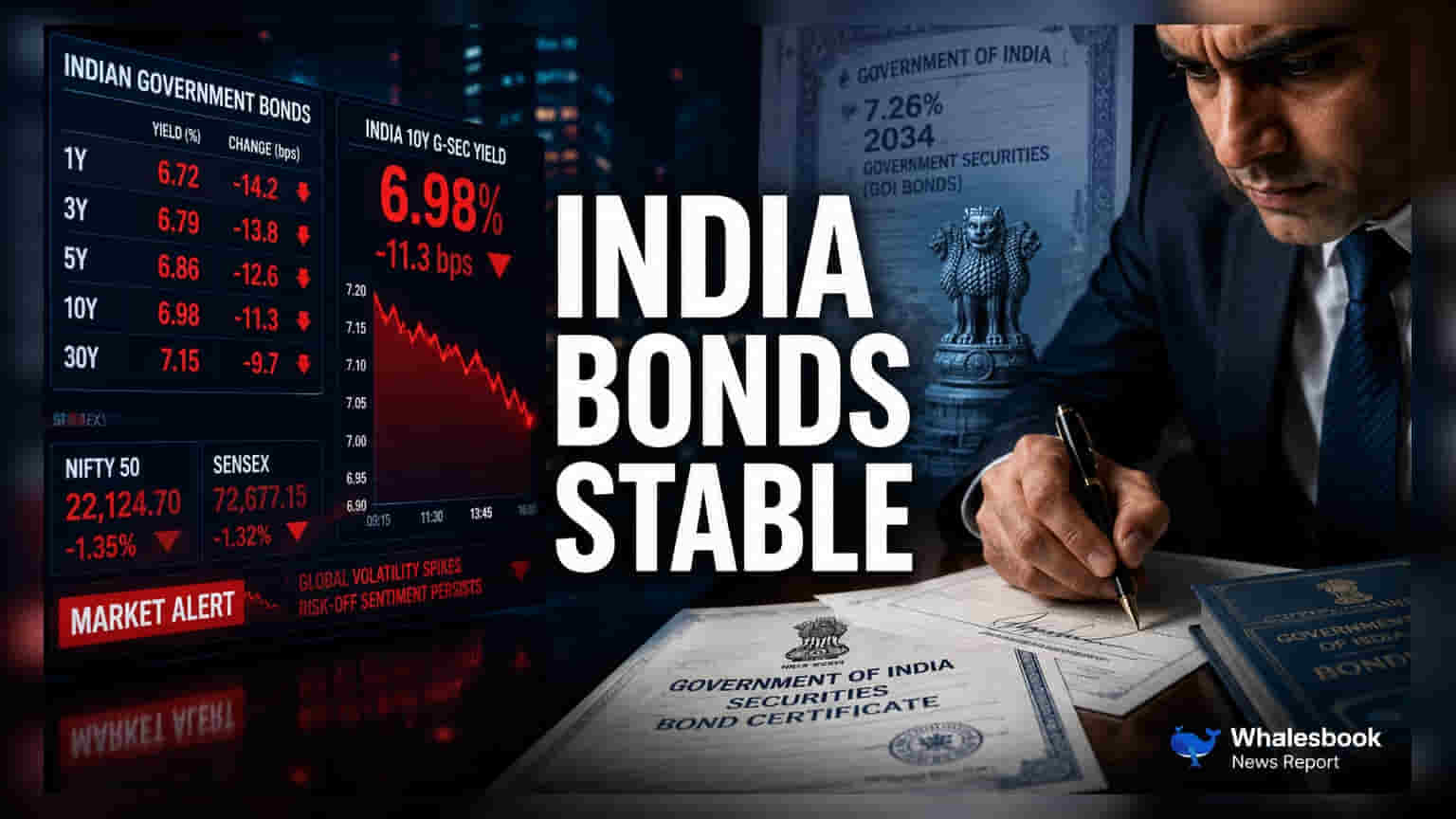
Indian government bonds are expected to remain stable this week with limited domestic triggers. Persistent foreign inflows continue to support market sentiment, while traders await the U.S. Federal Reserve meeting minutes for clues on future interest rate policy.
Indian government bonds are set for a steady start to the week as the market lacks major domestic economic data. The benchmark 6.94% 2036 bond yield is expected to trade within a narrow band of 6.70% to 6.74%. This stability follows a positive trend in recent weeks, during which the benchmark yield recorded six consecutive weekly declines, totaling a 34 basis point drop.
Impact of Global Interest Rates
The primary focus for market participants is the upcoming release of the Federal Reserve's meeting minutes this Wednesday. While the U.S. central bank kept interest rates unchanged at its previous meeting, it hinted at the possibility of a single rate increase before the end of 2026. Current market expectations reflect this uncertainty, with traders pricing in a 53% probability of a rate hike in September and rising to 77% by December. Investors are looking for these minutes to clarify the Federal Reserve's future path, which directly influences global bond yields and capital flows.
Role of Foreign Investment
Domestic bond sentiment remains supported by consistent foreign portfolio investment. Overseas investors have invested over 346 billion rupees into Indian bonds over the last five weeks. A significant portion of this capital has flowed through the Fully Accessible Route, which allows foreign investors to hold specific government securities without investment limits. This trend is driven by ongoing initiatives from the Reserve Bank of India and the government to make domestic debt more attractive for inclusion in global indices, such as the Bloomberg Global Aggregate Index.
Commodity Prices and Swap Rates
Stable oil prices are also providing a buffer for the Indian economy. The decision by OPEC+ to raise production targets by 188,000 barrels per day starting in August is helping to ease concerns over energy-related inflation. Mirroring the calm in bond markets, India’s overnight index swap rates, which represent market expectations for future interest rates, are also expected to remain range-bound. As of the most recent close, the one-year swap rate stood at 5.78%, the two-year rate at 5.91%, and the five-year rate at 6.18%.
Investors will continue to monitor the Fed minutes for any change in the central bank's tone regarding inflation and economic growth. Any unexpected hawkish signals from the Fed could lead to increased volatility in domestic bond yields, while further clarity on the interest rate trajectory will likely set the tone for the bond market in the coming weeks.