

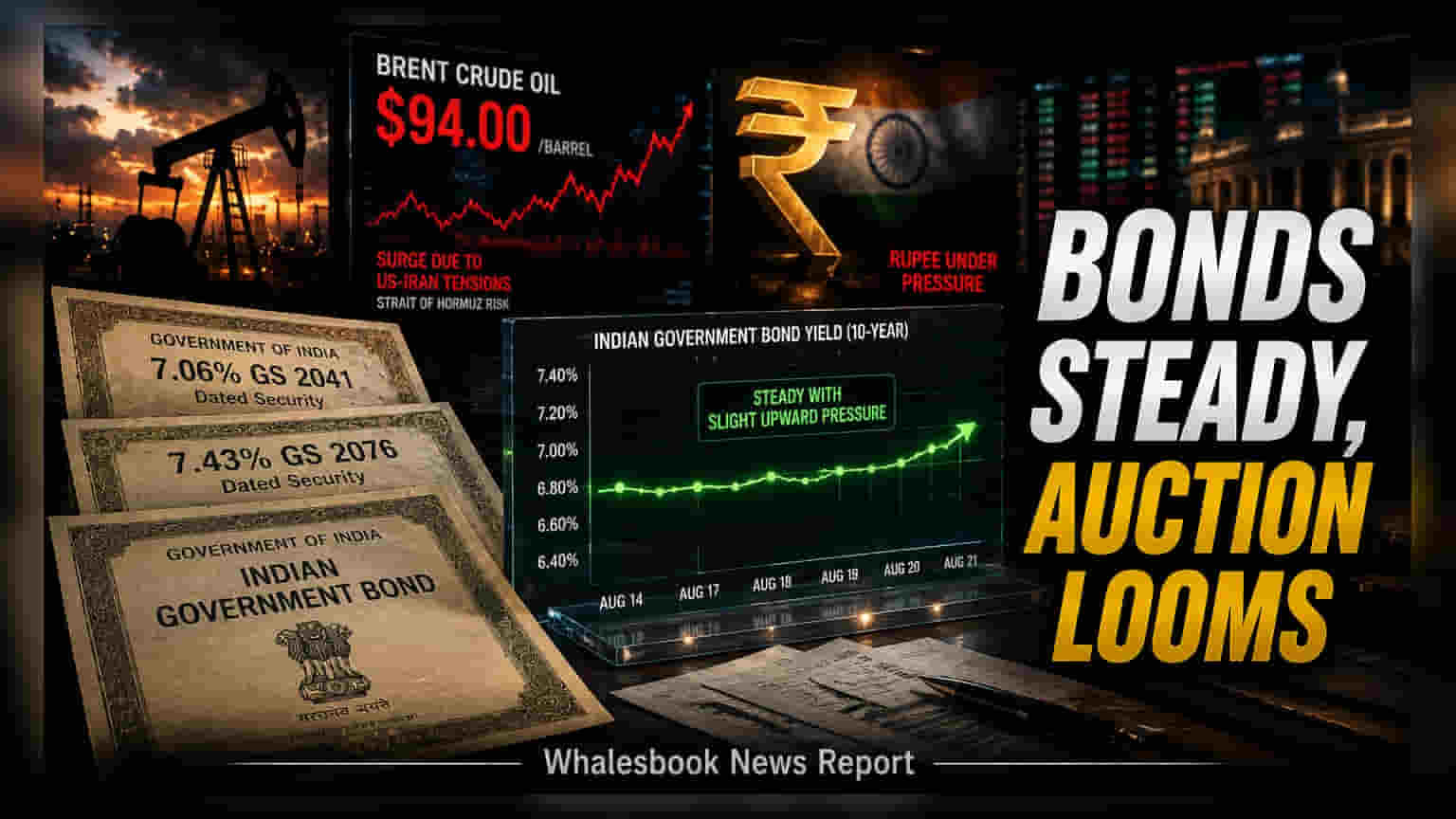
Indian government bond markets remain cautious today as investors prepare for a scheduled ₹28,000 crore debt auction. The sentiment is tempered by a rise in Brent crude oil prices to nearly $94 per barrel, driven by geopolitical tensions in the Middle East. For market participants, the dual pressure of increased government borrowing and potential energy-led inflation creates a watchful environment for bond yields.
Indian government bond markets opened with a guarded tone on August 21, 2026, as traders balanced domestic borrowing requirements against global energy price volatility. The immediate focus for the market is a government debt auction aimed at raising ₹28,000 crore.
Auction Dynamics and Bond Supply
The government is set to tap the market for ₹28,000 crore through the sale of two specific dated securities. The auction includes the 7.06% GS 2041, which is set to raise ₹17,000 crore, and the 7.43% GS 2076, intended to raise ₹11,000 crore. These auctions are a regular part of the government's borrowing program, but the timing coincides with a period of high sensitivity in the financial markets.
Bond yields—which move inversely to bond prices—are currently hovering at a point where market participants are unwilling to commit heavily without clarity on broader economic trends. A large supply of new bonds entering the market can sometimes push yields higher, as the market requires higher returns to absorb the increased volume.
The Impact of Rising Crude Oil Prices
Compounding the caution in the bond market is the recent surge in Brent crude oil prices, which have reached nearly $94 per barrel. This price movement is largely attributed to geopolitical tensions between the United States and Iran, specifically concerns regarding supply routes through the Strait of Hormuz.
For the Indian economy, energy prices are a critical factor because India imports approximately 85% of its crude oil requirements. Higher oil prices directly increase the country's import bill, which can put pressure on the current account deficit and the value of the Indian rupee. More importantly for bond investors, rising energy costs often translate into higher domestic inflation. If inflation remains sticky or trends upward, it limits the central bank’s room to maneuver on interest rates. While the Reserve Bank of India (RBI) has kept policy rates stable, the minutes from recent meetings have hinted at a hawkish stance, meaning they remain ready to keep interest rates higher for longer if inflation risks persist.
Investor Monitorables
Investors are currently looking for signals on how much demand exists for the long-duration bonds being offered in today's auction. The cutoff yields—the lowest price the government is willing to accept—will provide a clear picture of how much risk appetite institutional investors, such as banks and insurance companies, currently have.
Beyond the auction, the trajectory of crude oil prices remains the most significant external risk. Any further escalation in Middle East tensions could sustain oil at these elevated levels, keeping the bond market in a defensive stance. Conversely, if crude prices stabilize or retreat, it could provide some relief to the inflation outlook and potentially support bond prices in the coming sessions.