 Whalesbook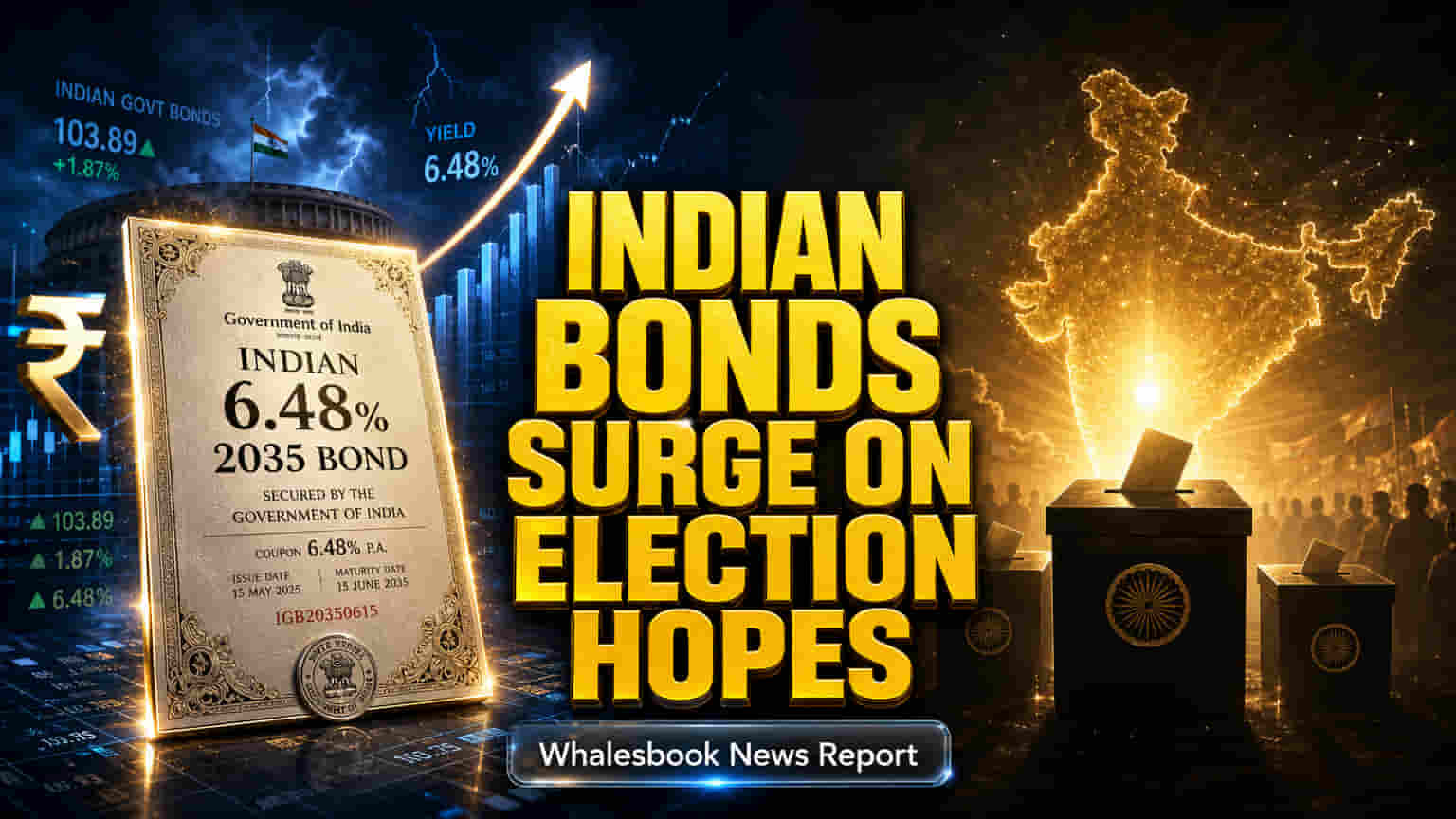


Election Tailwind
The market's positive turn was driven by a combination of factors, particularly Brent crude oil prices easing to around $109 a barrel, down from last week's high of $125. This price drop provides much-needed relief for India, which imports nearly 90% of its crude oil. High energy costs directly impact the country's import bill, inflation, and budget deficit.
Adding to the positive mood, preliminary election results showed Prime Minister Narendra Modi's Bharatiya Janata Party leading in West Bengal. This outcome is seen as beneficial for policy continuity, offering financial markets the political certainty they prefer. Results from three other states and a union territory also supported this view.
Bond Market Mechanics
The benchmark Indian 6.48% 2035 bond's price rose, closing at 6.9902% compared to 7.0148% on Thursday. Bond prices and yields move inversely: a higher price means a lower yield, making the debt more attractive for value investors seeking better returns. Indian markets were closed for a public holiday on Friday, limiting trading.
Monetary Indicators
Mirroring the trend in government bond yields, India's overnight index swap (OIS) rates also fell slightly. The one-year OIS rate was 5.97%, and the five-year OIS rate was 6.58%. The two-year swap rate remained untraded.
Oil Market Context
The global oil market eased as U.S. President Donald Trump suggested efforts to reduce tensions around the Strait of Hormuz, a key route for about 20% of global oil supplies. Although peace talks with Iran showed no clear progress, the perceived easing of risk affected prices. Iran had imposed shipping restrictions in the strait since April.