

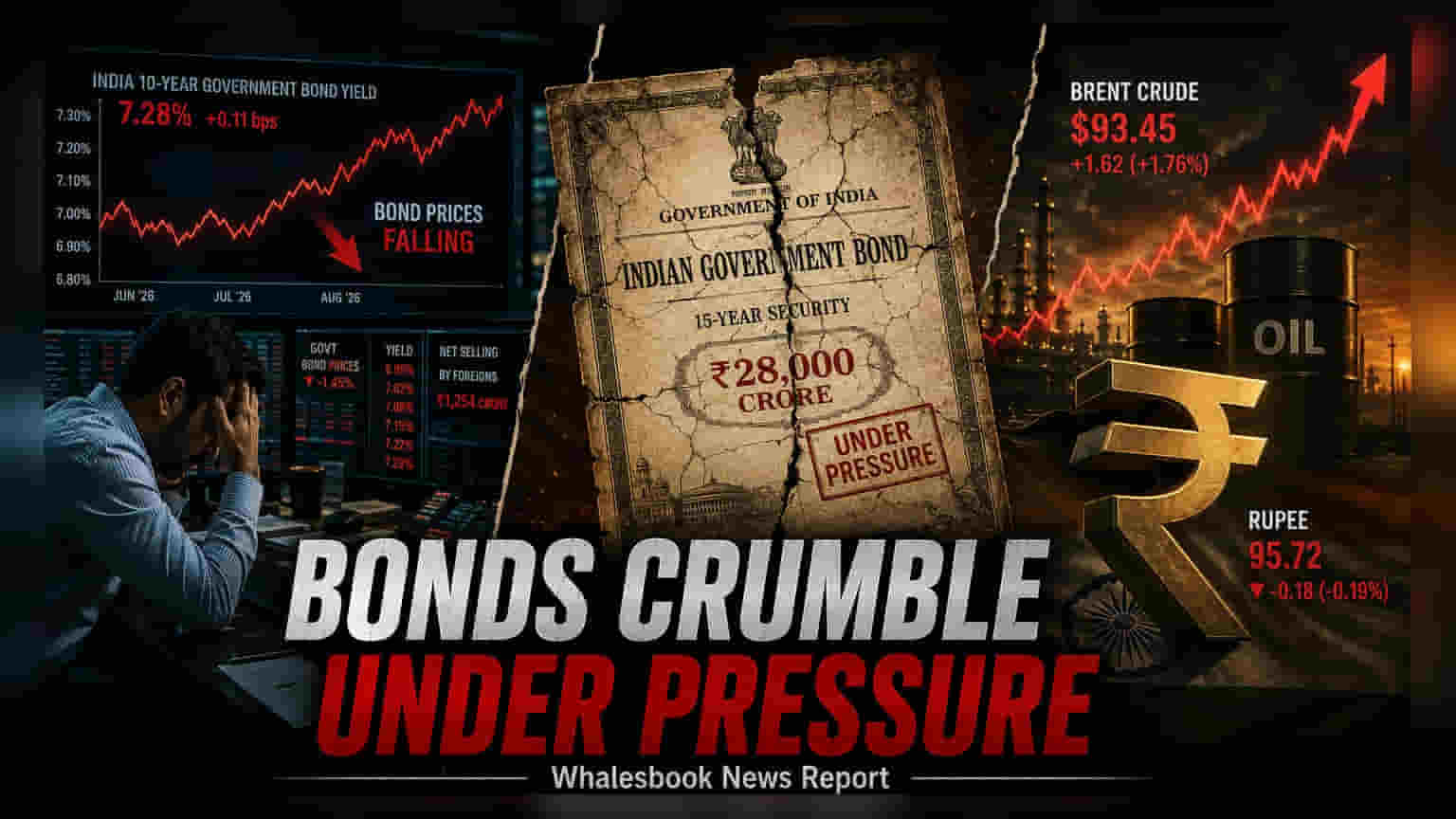
Indian government bonds are under pressure today ahead of a significant ₹28,000 crore debt auction. Rising global oil prices and a cautious tone from the Reserve Bank of India have pushed bond yields near two-month highs, signaling that investors are demanding higher returns.
Indian government bonds are experiencing selling pressure in Friday's session as the market prepares for a major weekly debt auction. Investors are cautious, leading to a rise in bond yields, which move in the opposite direction to bond prices. The benchmark bond yield is currently hovering near its highest level in two months, reflecting uncertainty among buyers.
The government is scheduled to raise ₹28,000 crore today through its weekly auction of securities. A significant portion of this debt consists of long-dated, 15-year bonds. In the bond market, when the government issues a large amount of new debt, there is a risk that supply could exceed demand. If demand is weak, investors expect higher interest rates to compensate for the risk, which drives bond prices down and yields up.
Adding to the pressure are broader economic concerns, specifically regarding inflation. India's retail inflation for July 2026 stood at 4.45%, which is above the Reserve Bank of India's (RBI) 4% target. High inflation often forces central banks to keep interest rates high or raise them further to control price growth. When interest rates are expected to stay high, existing bonds with lower interest rates become less attractive, leading to price declines.
Global energy prices are also a major factor impacting domestic sentiment. Brent crude oil prices have remained elevated, trading above $93 per barrel, driven by geopolitical tensions in the Middle East. As India is a major importer of oil, higher global prices often translate into higher domestic inflation, which can strain the country's fiscal health and widen the current account deficit.
Furthermore, the minutes from the Reserve Bank of India’s August monetary policy meeting, released on August 19, 2026, signaled a shift in tone. While the repo rate remains at 5.25%, policymakers expressed concerns about persistent inflation risks. This hawkish shift has led the market to price in the possibility of future interest rate hikes, or at least a longer period of high rates, which is generally negative for bond prices.
For investors monitoring the situation, the key focus will be the cut-off yield—the minimum interest rate at which the government accepts bids—at today's auction. A higher-than-expected cut-off yield would confirm that buyers are wary of the current economic climate and the inflation outlook. Going forward, domestic bond investors will likely track global oil price fluctuations and any further official commentary from the RBI regarding interest rate decisions.