

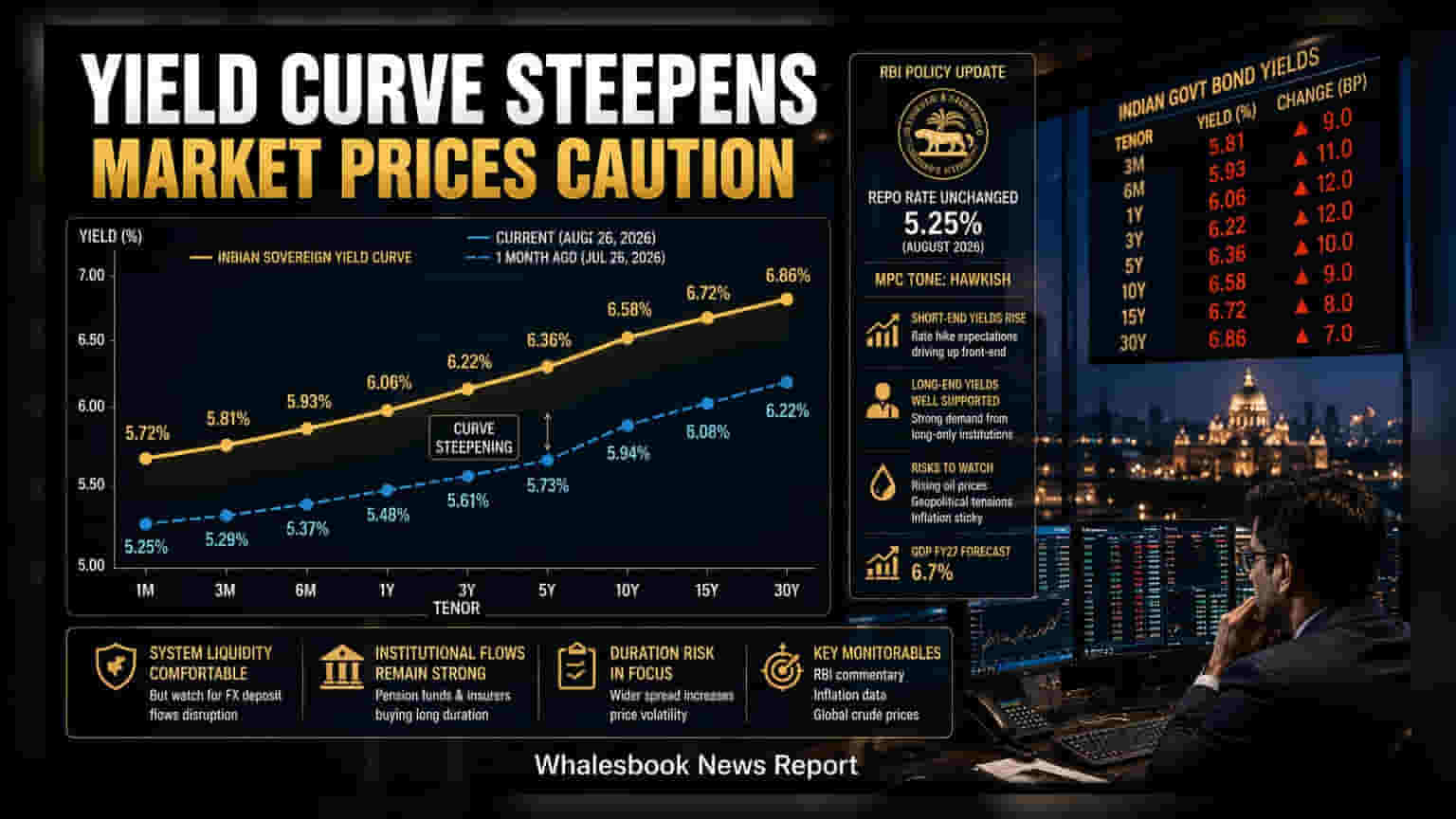
The Indian sovereign bond market is seeing a change in its yield curve following the release of the Reserve Bank of India's August policy minutes. Investors are weighing persistent demand for long-term government securities against growing concerns over future interest rate hikes fueled by inflation risks.
The Indian sovereign bond market is experiencing a notable shift in how yields behave across different tenures. While the Reserve Bank of India (RBI) kept the repo rate steady at 5.25% during its August 2026 meeting, the minutes from the Monetary Policy Committee (MPC) have introduced a more cautious tone. This hawkish sentiment has unsettled traders, leading to a rise in yields at the shorter end of the curve as the market begins to price in the possibility of future interest rate hikes.
The current market movement is a classic example of a "steepening" yield curve. Typically, when investors expect interest rates to rise, they demand higher yields to hold short-term debt, which is more sensitive to central bank policy. However, the long end of the market tells a different story. Long-duration government bonds continue to see steady support, largely due to consistent buying from long-only institutional investors such as pension funds and insurance companies. These investors are often less concerned with short-term volatility and more focused on locking in yields for the long term.
Several factors are contributing to this atmosphere of caution. Rising global oil prices and ongoing geopolitical tensions in West Asia are acting as a drag on market sentiment, raising fears that inflation could remain sticky. If inflation trends do not cool as expected, it may force the central bank to move away from its current neutral stance. Additionally, market participants are keeping a close eye on systemic liquidity. While the banking system has maintained a relatively comfortable level of liquidity, any disruption—such as the potential cessation of certain foreign currency deposit flows—could tighten conditions and push borrowing costs higher.
For investors in debt markets, this environment underscores the importance of understanding duration risk. When the gap between short-term and long-term yields widens, the value of bonds with longer maturities can be more sensitive to interest rate changes. The current macroeconomic backdrop, which includes a GDP growth projection of 6.7% for the fiscal year 2027, suggests that while the economy has momentum, the central bank’s primary challenge remains balancing this growth against inflationary pressures.
The next important monitorable for the market will be the central bank’s subsequent policy signals. Investors should track future commentary from RBI officials and incoming data on inflation and global crude oil prices, as these will likely dictate whether the current caution in the bond market intensifies or begins to settle.