

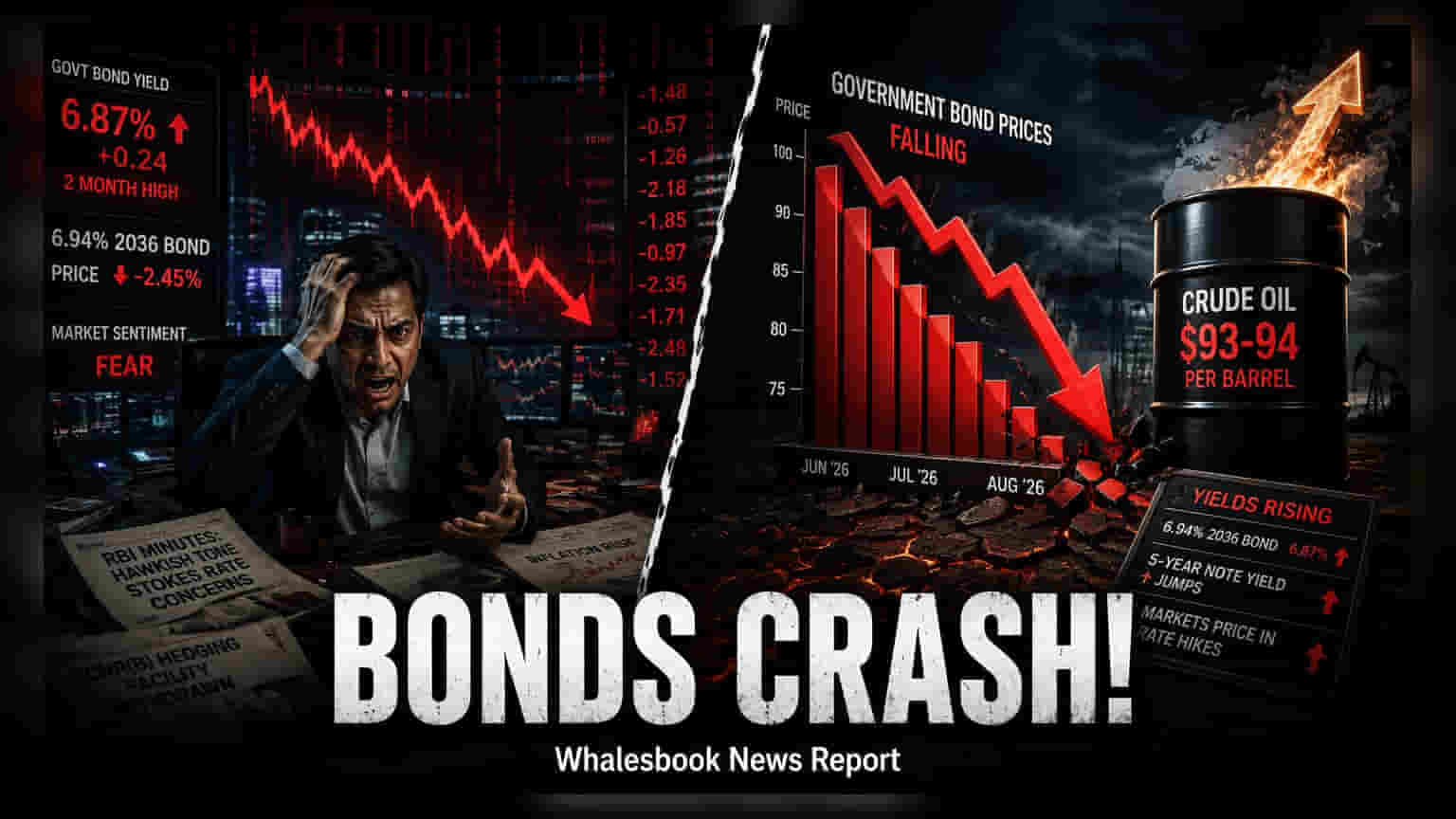
Indian government bonds recorded their worst weekly performance of the current financial year as of August 21, 2026. The sell-off was driven by the Reserve Bank of India’s hawkish policy minutes and a jump in global crude oil prices.
Indian government bonds faced a difficult week, marking their worst performance of the current financial year by August 21, 2026. As bond prices fell, yields—which move in the opposite direction to price—climbed to a two-month high. The benchmark 6.94% 2036 bond yield rose to approximately 6.87%, reflecting a sharp change in sentiment across the debt market.
The pressure on bond prices began primarily after the minutes from the Reserve Bank of India’s (RBI) August policy meeting were made public. While the initial policy statement was neutral, the minutes revealed a more hawkish tone among the committee members. This shift suggests that the central bank is becoming increasingly concerned about persistent inflation. Consequently, investors who previously expected the RBI to lower interest rates are now preparing for a scenario where rates might remain high or even increase in the coming months.
Adding to the market's unease was the premature closure of the FCNR(B) deposit hedging facility. This facility had acted as a support for bond demand by helping banks manage their liquidity. With its removal, the market has seen a reduction in liquidity, which disproportionately affected the five-year note, causing its yield to jump significantly over the week.
Global factors also played a major role in the bond market sell-off. Brent crude oil prices have surged, trading near $93 to $94 per barrel. Since India imports a large portion of its oil, higher global prices usually lead to higher domestic inflation. When inflation rises, it forces the central bank to keep interest rates higher for longer to control price increases, which is generally negative for existing bondholders.
Financial markets are now pricing in the possibility of future rate hikes, a marked change from earlier in the year when the focus was on when cuts might begin. The move in the overnight indexed swaps market, where traders bet on future interest rate directions, confirms that the market is adjusting to a higher interest rate environment.
For investors, the key monitorable remains the RBI’s upcoming policy reviews. Future decisions will depend heavily on the trajectory of inflation and global oil prices. Any further spike in energy costs or a clear signal from the central bank about future rate actions could continue to put pressure on bond prices. Investors may track upcoming inflation data and central bank statements to gauge how much longer this interest rate environment might last.