

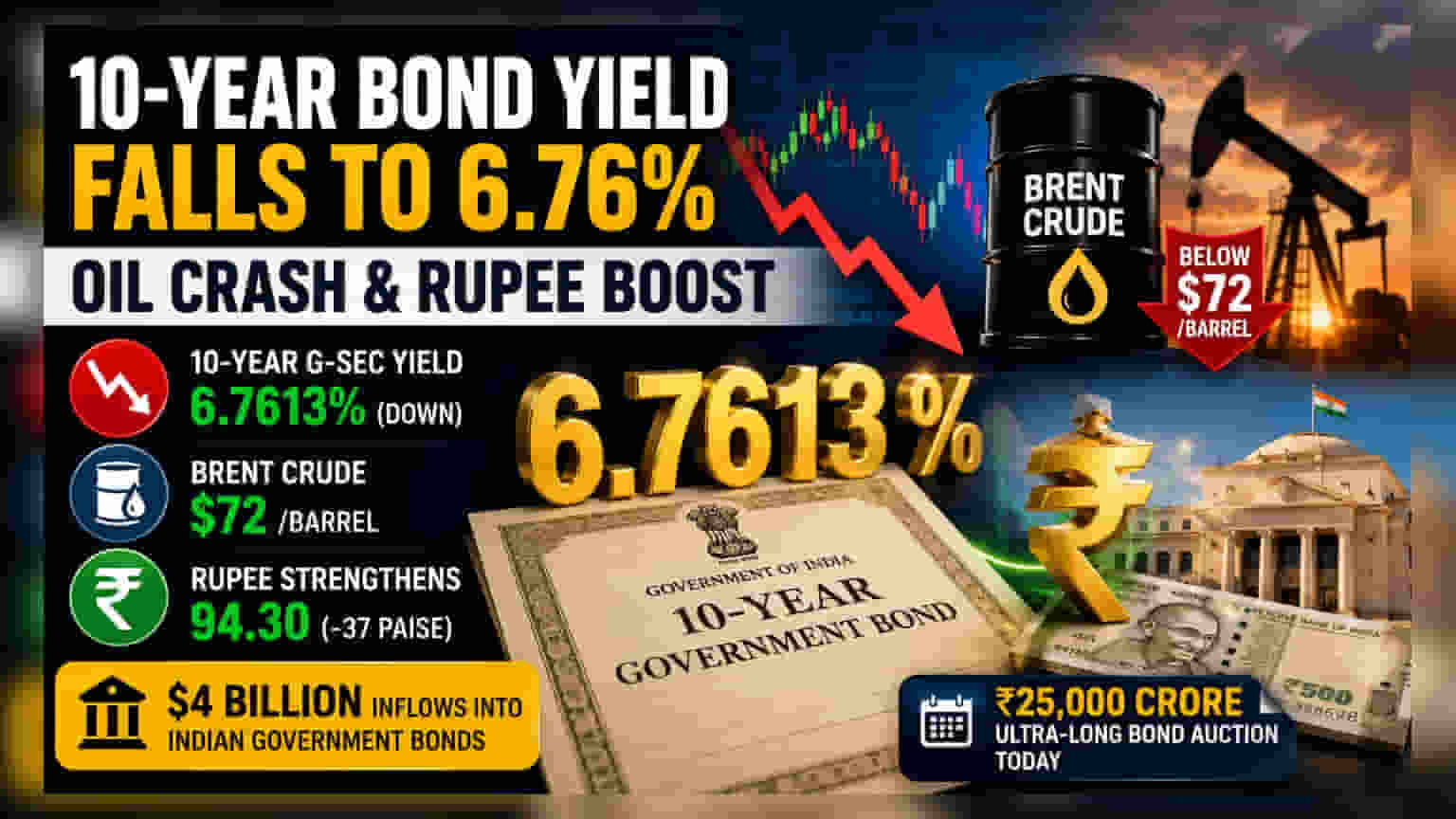
The benchmark 10-year Indian government bond yield fell to 6.76% as Brent crude oil prices retreated, easing domestic inflation concerns. The strengthening rupee and robust inflows into government debt highlight improved investor sentiment. Markets are now focused on the government’s ₹25,000-crore ultra-long bond auction scheduled for today.
What Happened
India’s benchmark 10-year government bond yield declined on June 25, 2026, falling to 6.7613% from its previous close of 6.7832%. This decline in yields—which move inversely to bond prices—comes as global Brent crude oil prices dropped to the $72-per-barrel range. This is a sharp reversal from highs seen in mid-May, when prices had surged above $125 per barrel.
The Oil And Rupee Link
For the Indian economy, oil prices are a critical factor because the country is a net importer of energy. When crude oil prices fall, it lowers the cost of imports, which helps narrow the trade deficit. This dynamic provides support to the Indian rupee, which appreciated by 37 paise to trade at 94.30 against the U.S. dollar.
Lower import costs also serve as a relief for inflation expectations. When inflation fears subside, bond yields often fall, reflecting the market’s view that interest rates may remain stable or potentially decrease in the future. Experts note that with oil at these levels, the rupee is operating in a more stable zone, helping to curb volatility despite broader global currency fluctuations.
Investor Demand In Fixed Income
There has been a noticeable shift toward safety and stability, with approximately $4 billion in fresh inflows entering Indian government debt securities this month. This sustained buying interest suggests that investors are finding current yields attractive, supported by the central bank's consistent stance on interest rate policy. While the Reserve Bank of India (RBI) does not set a formal target for the rupee, it remains active in the market to ensure the currency does not experience excessive, erratic movements.
What Investors Should Track
The most immediate event for bond markets is the government’s ₹25,000-crore ultra-long bond auction scheduled for later today. The auction results will serve as a test of current demand; a strong subscription rate could keep bond yields steady or push them lower.
Beyond the auction, investors will continue to monitor global crude oil price stability. Because energy prices are volatile, any rapid increase in Brent crude would likely reverse the current cooling effect on inflation expectations. Additionally, any shift in RBI policy or global economic data that impacts the dollar index will be essential to watch, as these factors directly influence the strength of the rupee and the appeal of Indian debt.