

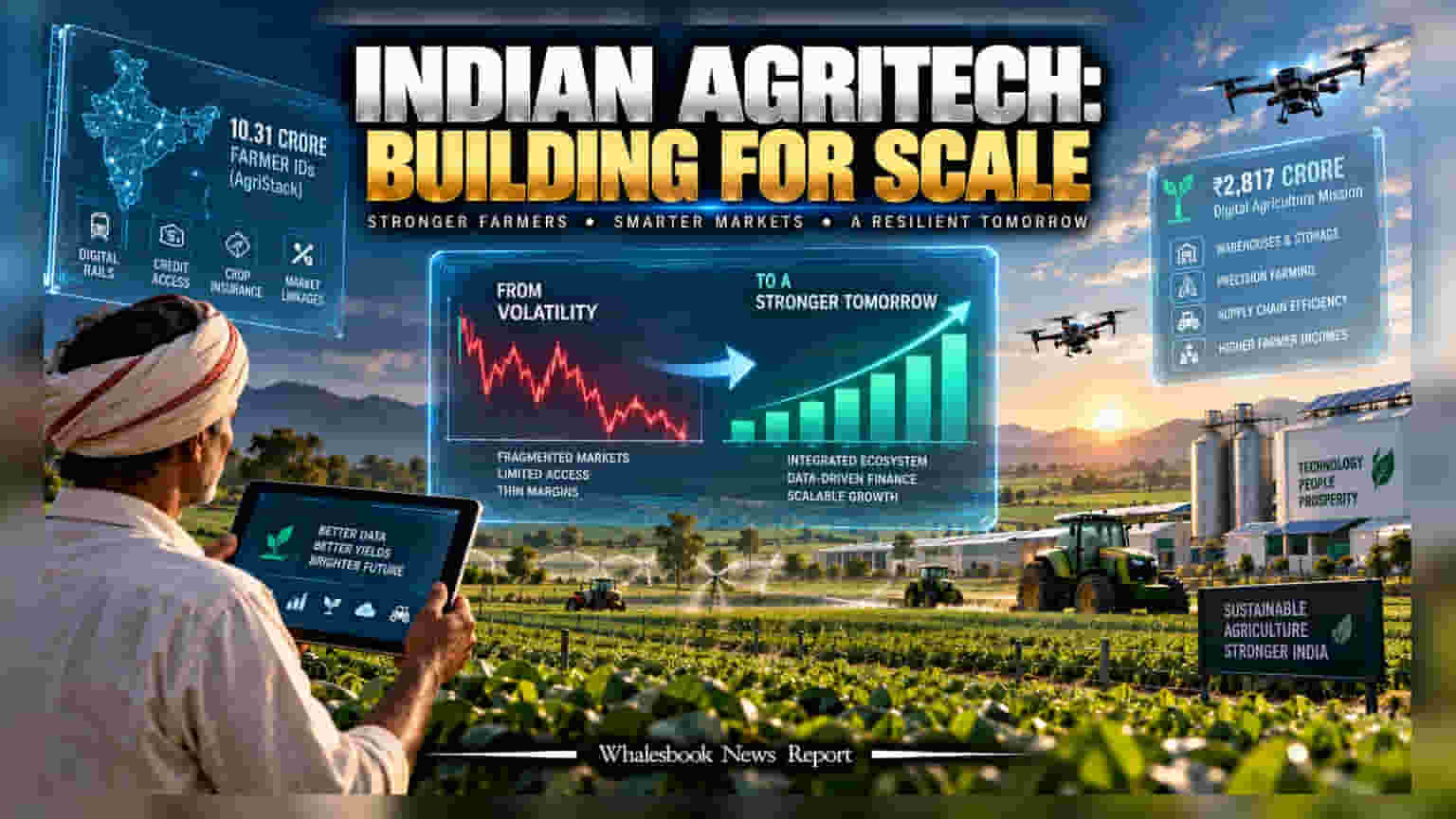
Indian agritech companies are abandoning models focused solely on replacing middlemen, pivoting instead toward infrastructure-led services. Supported by a ₹2,817 crore government Digital Agriculture Mission, the sector is prioritizing operational efficiency over rapid user acquisition. Investors are tracking this transition as the industry matures into a more sustainable, data-driven framework.
The Indian agritech sector is undergoing a fundamental shift in strategy. For years, the industry operated on the belief that technology could simply remove traditional intermediaries from the agricultural supply chain to reduce costs. However, companies have learned that these intermediaries, often local traders or commission agents, provide essential services such as credit, quality assessment, and logistics that digital platforms struggled to replicate at scale.
The Move Toward 'Digital Rails'
Instead of aiming to bypass the rural ecosystem, businesses are now focusing on building infrastructure that enhances the existing system. A major catalyst for this change is the government’s Digital Agriculture Mission, which has been allocated ₹2,817 crore. This initiative is creating foundational digital public infrastructure, often referred to as 'digital rails.' By August 2026, the government had successfully created over 10.31 crore unique Farmer IDs under the AgriStack initiative. This data foundation allows private companies to offer specialized financial services, such as credit underwriting and crop insurance, rather than relying on thin-margin e-commerce models.
Funding and Profitability Focus
This shift in strategy aligns with a changing funding environment. After a peak in investment interest around 2021, capital has become more selective. Venture and growth investors are no longer rewarding companies based purely on user growth or the number of farmers on a platform. Instead, the focus has moved to unit economics and profitability. Firms that combine physical assets—such as warehouses and collection centers—with digital data layers are finding more favor. For instance, companies like Arya.ag have gained prominence by focusing on grain commerce and storage infrastructure, proving that tangible value and operational control are more sustainable than digital-only intermediation.
Key Risks to Monitor
While the infrastructure-led approach offers a clearer path to revenue, it is not without challenges. The 'digital divide' remains a significant barrier, as varying levels of smartphone access and digital literacy in rural areas can slow the adoption of these new services. Additionally, structural issues in the Indian rural economy, such as the fragmentation of landholdings—which average roughly 3 acres—limit the scale of some solutions. Furthermore, the effectiveness of these digital models depends heavily on data governance. If the government’s digital frameworks are not managed consistently across different states, privacy and data security risks could complicate the implementation of new services. Investors monitoring the space will likely focus on how effectively these startups can balance the costs of building physical infrastructure with the ability to generate predictable, long-term returns from data-backed financial services.