

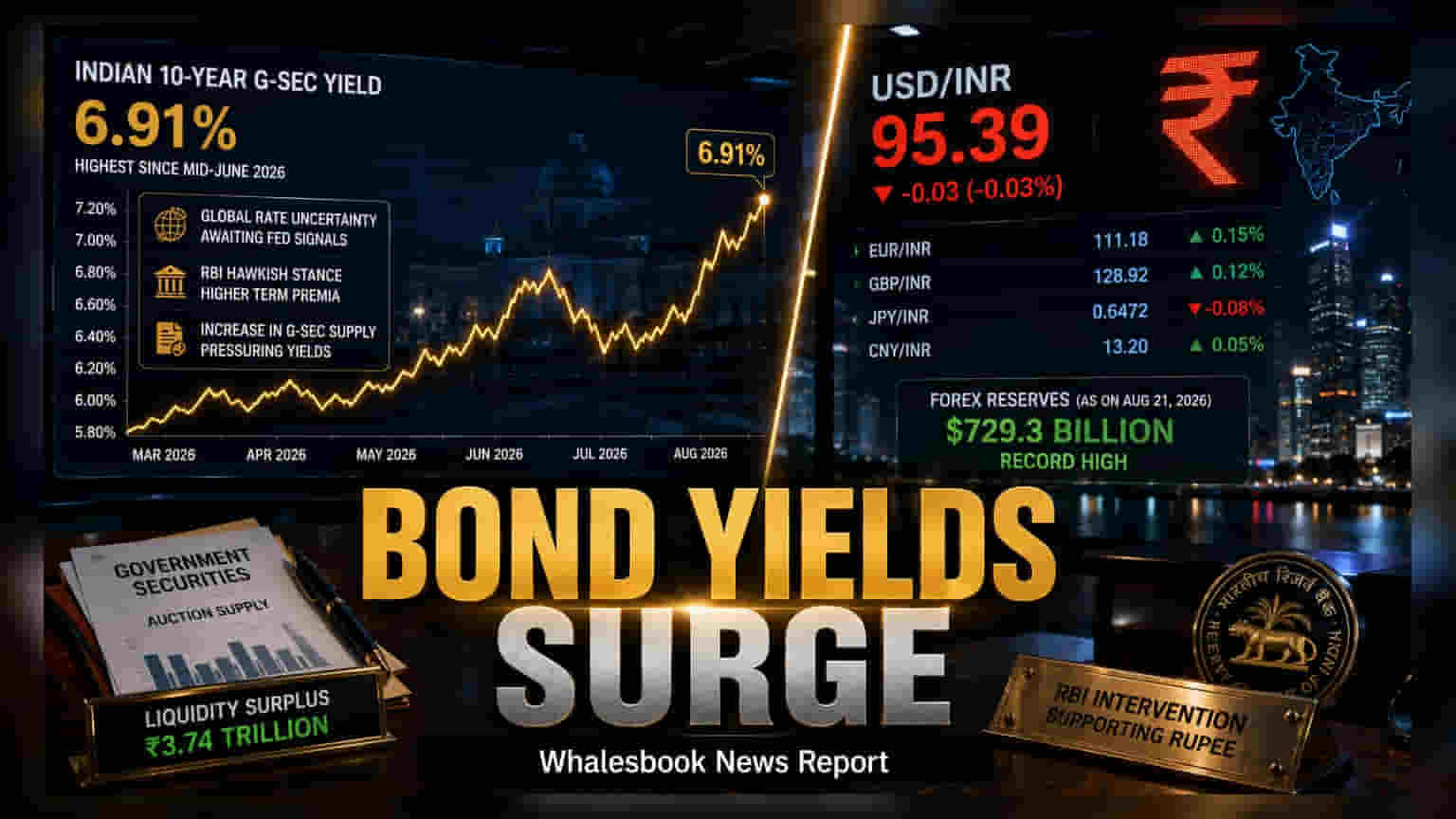
India’s benchmark 10-year bond yield climbed to 6.91% on August 28, 2026, marking a two-month high amid uncertainty over global interest rates. Meanwhile, the rupee remained steady at 95.39 per dollar, supported by RBI intervention and India's record-high foreign exchange reserves.
Indian government bond yields rose on Friday, with the benchmark 10-year note reaching 6.91%. This level represents the highest point for borrowing costs since mid-June 2026. Because bond prices and yields move in opposite directions, the rise in yields reflects a sell-off in the bond market as investors adjusted their positions.
Factors Influencing Bond Yields and Currency
The upward pressure on yields is driven by both global and local concerns. Investors are currently awaiting clear signals from the US Federal Reserve, particularly looking for commentary from Fed Chair Kevin Warsh at the Jackson Hole economic symposium. Any indication that the US central bank might keep interest rates higher for longer can influence global bond markets, including India’s.
Domestically, the Reserve Bank of India (RBI) has maintained a firm stance on monetary policy, as reflected in recent meeting minutes. This hawkish tone, combined with the anticipation of government bond supply, has led investors to demand higher yields before locking their money into long-term debt.
On the currency side, the rupee settled at 95.39 against the US dollar. While the currency has faced pressure from foreign institutional investors withdrawing funds from the Indian market, it has found a floor due to consistent RBI intervention. The central bank has been active in selling dollars to manage volatility and prevent sharp depreciation.
Foreign Reserves and Liquidity
India is well-positioned to handle currency fluctuations due to its strong foreign exchange buffers. As of the week ended August 21, 2026, the country’s foreign exchange reserves reached a record high of $729.3 billion. Additionally, the recent decline in global crude oil prices has helped the rupee, as lower energy costs reduce the amount of dollars required for imports.
Despite the activity in the bond and currency markets, the domestic banking system remains flush with liquidity. Current data shows a surplus of approximately ₹3.74 trillion. However, banks are exercising caution in how they deploy this cash; recent auctions for parking excess funds with the RBI saw lower-than-expected participation, as financial institutions appear to be holding onto liquidity in an uncertain rate environment.
Investors are now tracking the fallout from the US Fed’s commentary and the scale of foreign capital outflows. The durability of the 6.91% yield level will likely depend on whether the US interest rate outlook becomes clearer in the coming days and how foreign investors react to domestic policy signals.