 Whalesbook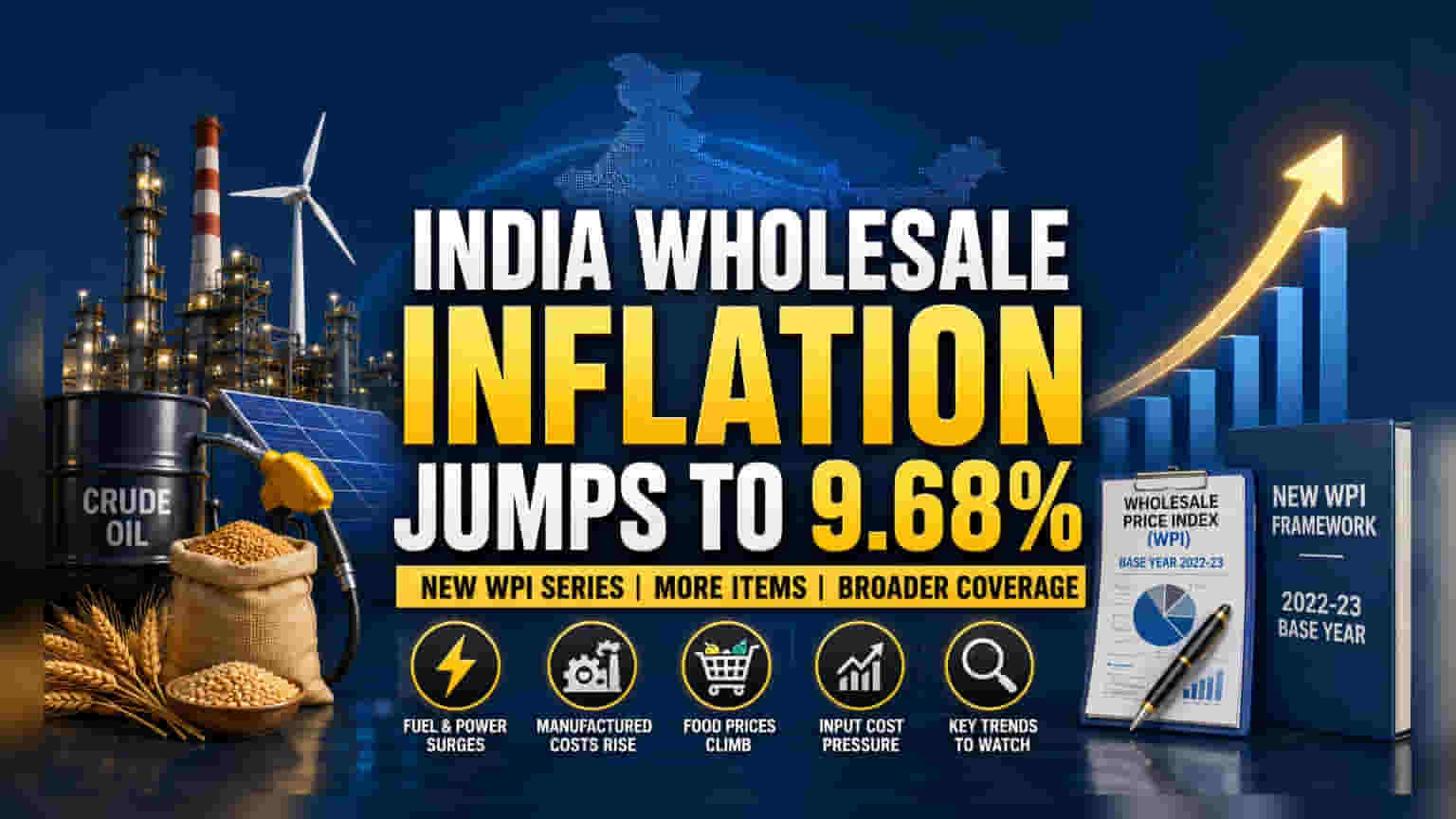


India's wholesale inflation climbed to 9.68% in May from 8.26% in April, driven by rising costs in fuel, power, and manufacturing. The government also rolled out a revised wholesale price index with a new 2022-23 base year, adding more items to capture a clearer picture of input costs. For investors, this shift indicates continued pressure on corporate profit margins and provides a more modern framework for tracking economy-wide price trends.
What Happened
India’s wholesale price inflation reached 9.68% in May, up from 8.26% in April. The government also introduced a new Wholesale Price Index (WPI) series with a base year of 2022-23, replacing the older 2011-12 framework. This update expands the basket of goods tracked to 957 items, significantly higher than the previous 697 items. The data, released by the Office of the Economic Adviser, also reclassified certain energy commodities and introduced new producer price indices for services, banking, and transport.
Why This Matters for Investors
Wholesale inflation tracks the price at which goods are traded between businesses before they reach the retail level. When this inflation is high, it acts as a signal for rising input costs across the economy. For investors, this creates a potential risk of margin pressure for companies. If businesses cannot pass these higher costs on to customers, their profitability may fall. Conversely, if companies successfully pass on costs, it may support revenue but could lead to slower demand growth. Understanding these trends helps in analyzing whether companies can maintain their profit margins in the coming quarters.
The New Index Framework
The move to a 2022-23 base year is a structural change designed to make inflation data more relevant to the current economic environment. By adding items like solar, wind, and nuclear power, and reclassifying crude petroleum and natural gas into the fuel and power group, the government aims to better capture modern consumption patterns and energy usage. The transition also signals a shift toward new producer price indices for services, which were previously not part of the wholesale inflation calculation. These indices will eventually replace the current WPI system after a five-year transition period.
Sector Trends and Cost Pressure
The data shows that rising costs are not isolated to one area. The fuel and power segment recorded a sharp jump to 30.33% in May, significantly higher than the 24.89% seen in April. Manufactured products also saw inflation rise to 7.48% from 6.68% a month earlier. Additionally, the WPI Food Index—which covers both food articles and manufactured food products—rose to 4.49%. This broad increase across energy, manufactured goods, and food inputs suggests that multiple segments of the industry are facing cost increases simultaneously.
What Investors Should Track
Moving forward, the key factor for shareholders will be how companies manage these cost pressures. Investors may track management commentary during upcoming quarterly earnings calls to see if businesses are absorbing higher costs or successfully raising prices without losing customers. The transition period where both old and new indices are published will also provide insights into the accuracy of inflation measurement. Finally, monitoring the ongoing shift toward the new producer price indices will be important, as these will eventually become the primary benchmark for tracking industrial input costs in the Indian economy.