

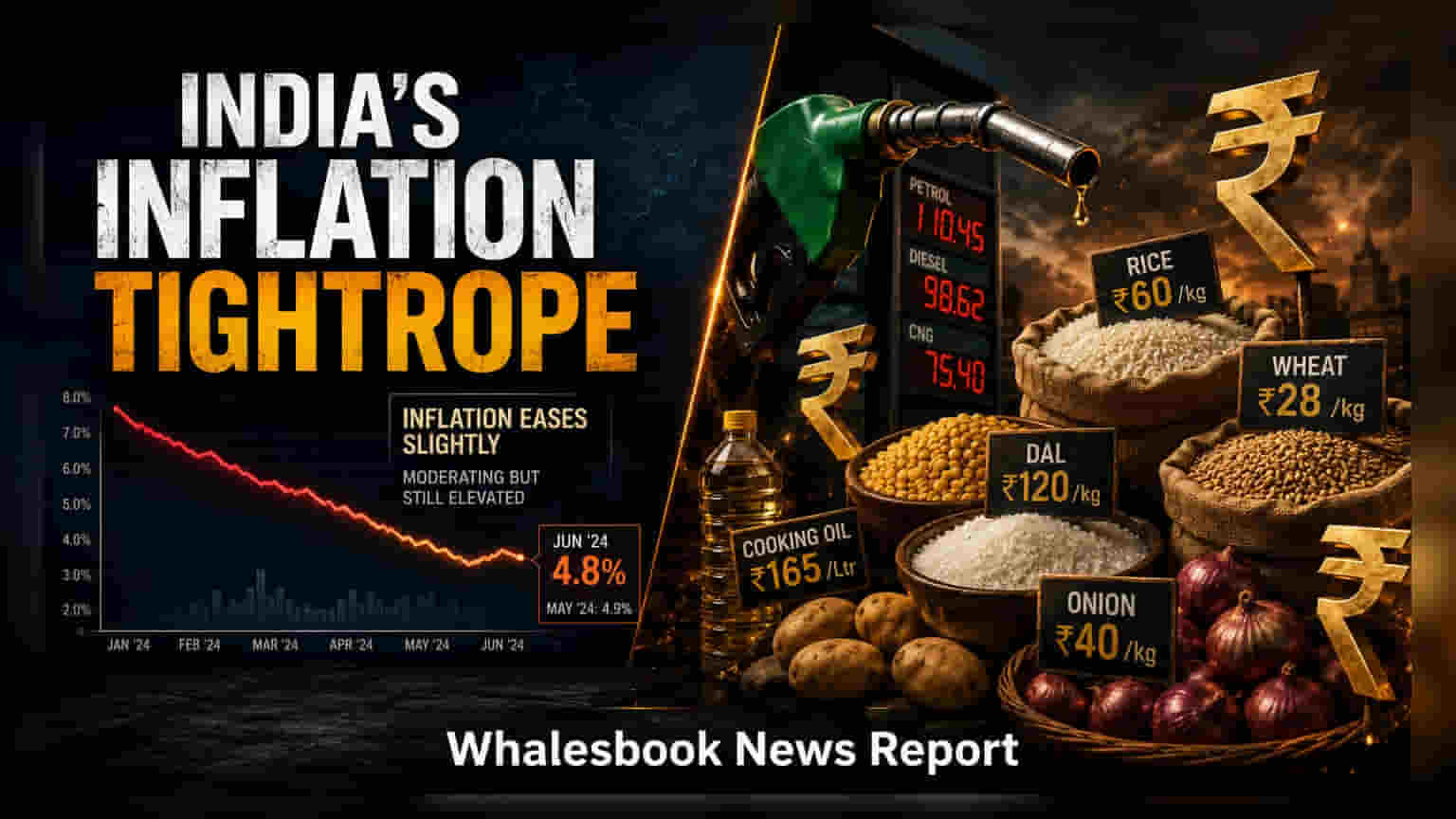
India's wholesale inflation eased slightly to 9.78% in July 2026 from 9.87% in June, helped by a cooling in fuel prices. Despite the overall dip, rising costs in food and manufactured goods continue to signal input price pressures, which investors track for their potential impact on corporate profit margins and future interest rate trends.
India’s wholesale inflation, measured by the Wholesale Price Index (WPI), recorded a slight moderation in July 2026, falling to 9.78% from 9.87% in the previous month. This data, released by the government on Friday, offers a mixed view of the economy as different sectors show varying price pressures.
The most significant contributor to the cooling trend was the Fuel and Power category. Inflation in this segment eased notably to 20.05% in July, compared to 27.41% in June. This decline provided some relief to the overall index. However, the relief was partially offset by price increases in other areas, complicating the inflation outlook.
Investors typically watch WPI data because it reflects the cost of inputs for businesses. When wholesale inflation remains high, it acts as a leading indicator of raw material costs. For many companies, particularly those in the manufacturing sector, rising costs for basic metals, chemical products, and non-food articles can create pressure on profit margins. If companies are unable to pass these higher costs on to consumers due to competitive pricing or weak demand, their bottom line may be affected.
The Food Index presents another area of attention. It climbed to 6.65% in July, up from 6.14% in June. This rise is important because food prices are a significant component of the Consumer Price Index (CPI), or retail inflation. While the central bank primarily targets retail inflation for monetary policy, persistently high food prices at the wholesale level often filter through to retail shelves. If retail inflation remains high or rises, it limits the space for the Reserve Bank of India to consider interest rate adjustments.
Beyond food and fuel, the Primary Articles segment and Manufactured Products also saw their inflation rates rise to 8.52% and 8.29%, respectively. This suggests that price pressures are not limited to a single sector but are spreading across key industrial inputs.
Looking ahead, investors will likely monitor how these wholesale cost pressures influence upcoming corporate quarterly results. Specifically, market participants will observe whether companies can manage their margins effectively or if they are forced to adjust prices to protect profitability. Additionally, future CPI readings will be crucial to understand if the wholesale trend is creating sustained pressure on household budgets, which could influence future interest rate decisions.