

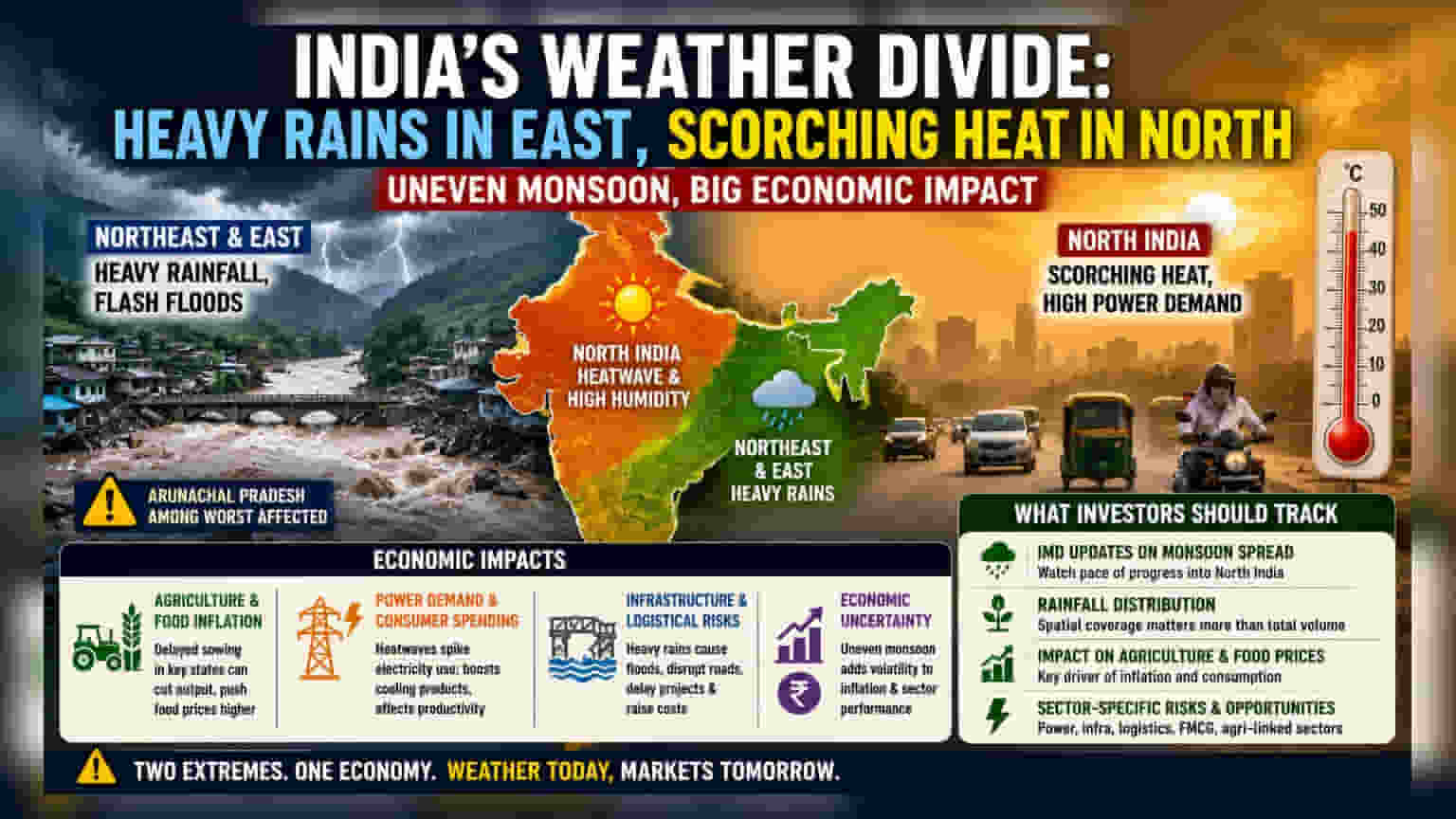
India’s uneven monsoon progress and persisting heatwaves are creating a split economic picture. While heavy rains in the Northeast pose risks to infrastructure, high temperatures in the North keep power demand elevated. Investors are monitoring these weather patterns as they influence agricultural sowing, food inflation, and consumer spending trends across the country.
What Happened
India is currently facing a sharp divide in weather conditions, with the southwest monsoon showing highly uneven progress. While states in the Northeast and East are dealing with heavy rainfall and flash floods—particularly in Arunachal Pradesh—North India is still experiencing oppressive heat and humidity. This pattern creates two different challenges: excessive rainfall causing potential damage in some areas, and a lack of timely rain preventing the cooling effect needed in major agricultural and industrial belts. For the economy, this divergence is a critical factor to watch as the country progresses through the start of the monsoon season.
Impact on Agriculture and Food Inflation
The most significant economic impact of an uneven monsoon is on the agricultural sector. The June-September monsoon is crucial for the Kharif crop season, which includes staples like rice, pulses, and oilseeds. If the monsoon does not establish itself uniformly, it can delay sowing operations. Delays or deficiencies in rainfall in key farming states like Uttar Pradesh and Bihar can lead to lower output, which often puts upward pressure on food prices. Investors track rainfall data closely because food inflation directly affects the household budget and, by extension, the overall consumption demand in the economy.
Power Demand and Consumer Spending
Persistent heatwaves in Northern and Eastern India keep electricity demand elevated. High temperatures often lead to increased usage of cooling appliances like air conditioners and refrigerators. This creates a specific demand pattern for power generation and distribution companies. However, this is a double-edged sword; while power demand is high, the sustained heat can also impact labor productivity and logistics in the affected regions. Additionally, consumer spending patterns change based on weather. Extreme heat typically drives sales of beverages and cooling products, while flood-hit regions often see a temporary drop in non-essential retail activity as supply chains face disruption.
Infrastructure and Logistical Risks
Heavy rainfall, such as that currently affecting the Northeast, poses immediate risks to infrastructure. Flash floods and intense downpours can disrupt road connectivity, halt construction projects, and affect mining or logistical operations. When weather-related damage occurs, companies operating in these regions often face cost overruns or project delays. For instance, reports of flash floods in the Keyi Panyor district of Arunachal Pradesh illustrate how sudden weather events can create local economic disruptions. Investors in infrastructure, cement, and logistics companies usually keep a close eye on these events, as they can lead to short-term operational hurdles.
What Investors Should Track
Moving forward, the primary monitorable for investors is the India Meteorological Department's (IMD) updates regarding the monsoon's spread. If the monsoon covers the heatwave-affected regions in North India quickly, it could normalize agricultural sowing and help cool off energy demand. Conversely, if the current pattern of heavy rain in some areas and dry heat in others persists, it may lead to uncertainty in inflation data and sector-specific performance. Investors typically watch the spatial distribution of rainfall—not just the total volume—to understand how it impacts different parts of the country and their respective industrial and agricultural contributions.