 Whalesbook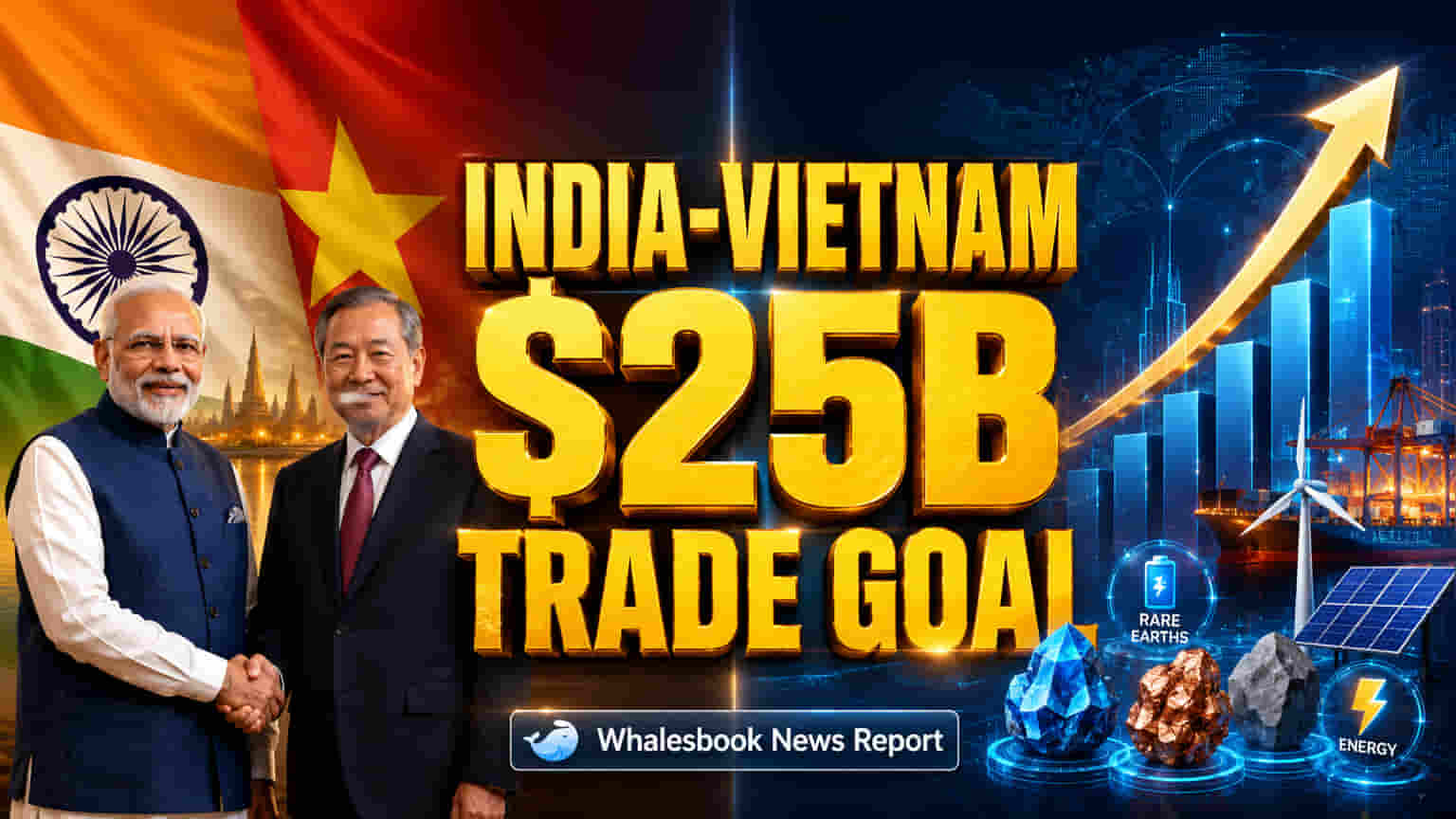


Strategic Pivot to Critical Minerals
The recent elevation of India-Vietnam relations to an 'enhanced comprehensive strategic partnership' signifies more than just an ambition for increased trade. The $25 billion trade target for 2030, up from over $16 billion in the fiscal year ending March 2026, centers on critical minerals, rare earths, and energy cooperation. This focus aims to strengthen economic security and supply chain resilience, making Vietnam a key partner in India's Indo-Pacific strategy. The partnership seeks to diversify essential resource streams and reduce dependence on major global suppliers, mirroring a global trend towards securing supply chains.
Vietnam's Mineral Wealth and India's Goals
Vietnam's position is bolstered by its significant critical mineral reserves, especially rare earth elements, ranking second globally after China. This makes Vietnam a key target for nations looking to diversify away from Chinese supply chains. India's National Critical Minerals Mission, launched in January 2025, shows its dedication to boosting domestic exploration and processing, alongside seeking international deals. India's membership in the Minerals Security Partnership (MSP), alongside countries like the US and Australia, highlights its goal to build a secure supply chain. Cooperation with Vietnam in these areas is a strategic match, combining Vietnam's resources with India's demand and processing capacity. While trade between India and Vietnam has grown significantly under agreements like the ASEAN-India Trade in Goods Agreement (AITIGA), this new focus adds a vital strategic resource dimension, extending beyond traditional trade in electronics, machinery, and agriculture.
Challenges and Risks Ahead
However, significant challenges remain for the partnership. Vietnam's critical minerals sector faces hurdles like logistics issues, processing technology gaps, and high capital needs for value addition. Despite vast reserves, Vietnam depends on China for advanced refining, a dependency this partnership aims to reduce, not eliminate. India also faces a historical trade deficit with ASEAN nations like Vietnam, requiring careful management of bilateral trade flows. Achieving the ambitious $25 billion target needs sustained effort and policy alignment. Past trade agreements like AIFTA have faced criticism for favoring ASEAN exports to India. Geopolitical pressures and competition from other major economies also risk limiting India's access to Vietnam's mineral output. Success depends on overcoming these implementation challenges and ensuring critical mineral cooperation leads to genuine supply chain diversification and economic security, not just higher trade volumes.
Long-Term Vision and Impact
The 'enhanced comprehensive strategic partnership' provides a strong framework for deeper cooperation in areas like digital technology, pharmaceuticals, and energy, complementing the focus on critical minerals. Experts expect this alliance to speed up trade goal achievement and integration into Indo-Pacific supply chains. The critical minerals focus points to a long-term vision for mutual prosperity and regional stability, creating resilient supply chains that could reshape the regional economic and geopolitical balance.