

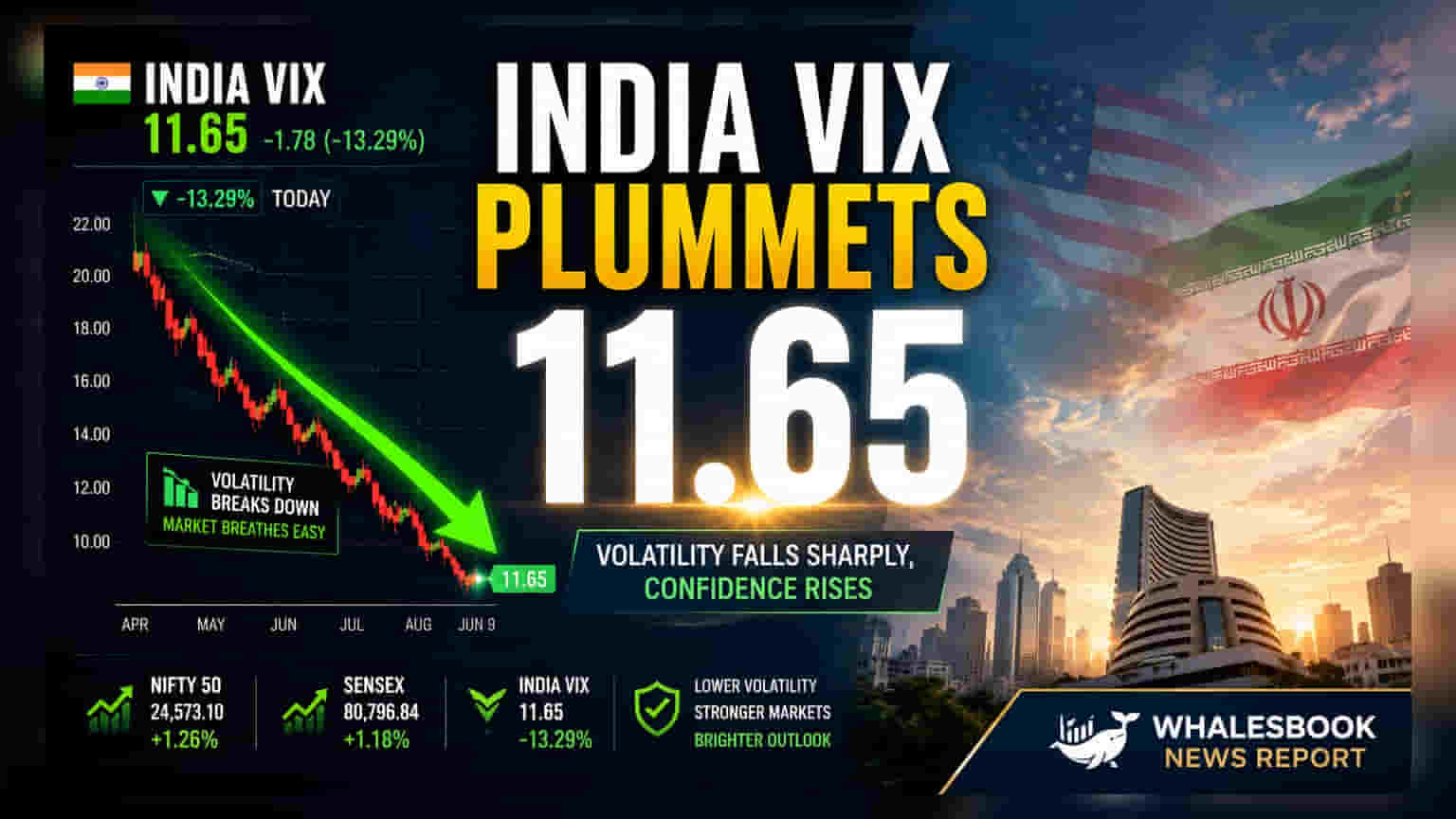
The India VIX, a measure of market expectation for volatility, fell 5.2% to 11.65 on Friday, returning to levels seen before the West Asia crisis. This decline reflects calmer sentiment as international geopolitical tensions between the US and Iran have de-escalated. Investors often view lower VIX levels as a sign of reduced near-term uncertainty in the stock market.
What Happened
The India VIX, widely known as the market's "fear index," closed at 11.65 on Friday, marking a 5.2% decline in a single session. This is the lowest level the index has reached in over four months, effectively unwinding the spike in market anxiety that began when the West Asia conflict intensified. The index had previously climbed as high as 28.9 on March 30, driven by global instability. With the current reading, the volatility gauge has retreated nearly 60% from that March peak, signaling a shift toward more stable market conditions.
Why The Fear Index Matters
The India VIX is a mathematical calculation that represents the market's expectation of volatility over the next 30 days based on Nifty 50 options prices. When the index is high, it usually means market participants are paying higher premiums for options because they expect sharp price swings. Conversely, a lower VIX indicates that traders expect the market to remain relatively calm. For investors, a falling VIX often suggests that the sharp reactions seen during periods of geopolitical or economic uncertainty are moderating, allowing market fundamentals to take center stage.
Impact on Market Sentiment
The stabilization in the VIX has occurred alongside a recovery in global and domestic stock indices. Following the diplomatic progress between the US and Iran, including a peace agreement finalized on June 17, the uncertainty that had weighed on global trade and investor sentiment has started to fade. On Friday, the benchmark NSE Nifty 50 responded to this calmer environment by gaining 0.5%, trading near the 24,300 level. This move reflects a broader trend of markets absorbing the geopolitical news and focusing on domestic economic stability.
Historical and Sector Context
While the VIX has collapsed from its March highs, it remains approximately 26.5% higher on a year-to-date basis, indicating that market participants are still mindful of potential risks. Analysts often look at these levels to gauge the comfort zone for derivative traders and institutional investors. A decline toward the 10.5 level, as noted by market observers, would signify a return to the long-term averages typically seen during periods of lower market stress.
What Investors Should Track
Investors may keep an eye on how the VIX behaves in relation to key Nifty support and resistance levels. As volatility stays low, the market’s focus often shifts back to quarterly earnings, domestic macroeconomic data, and central bank policies. While a lower VIX is generally seen as a sign of reduced panic, it does not remove the underlying risks in the global economy. The key for investors is to monitor whether this stability holds during future policy updates or earnings announcements, which are the primary triggers for market movement when geopolitical concerns recede.