

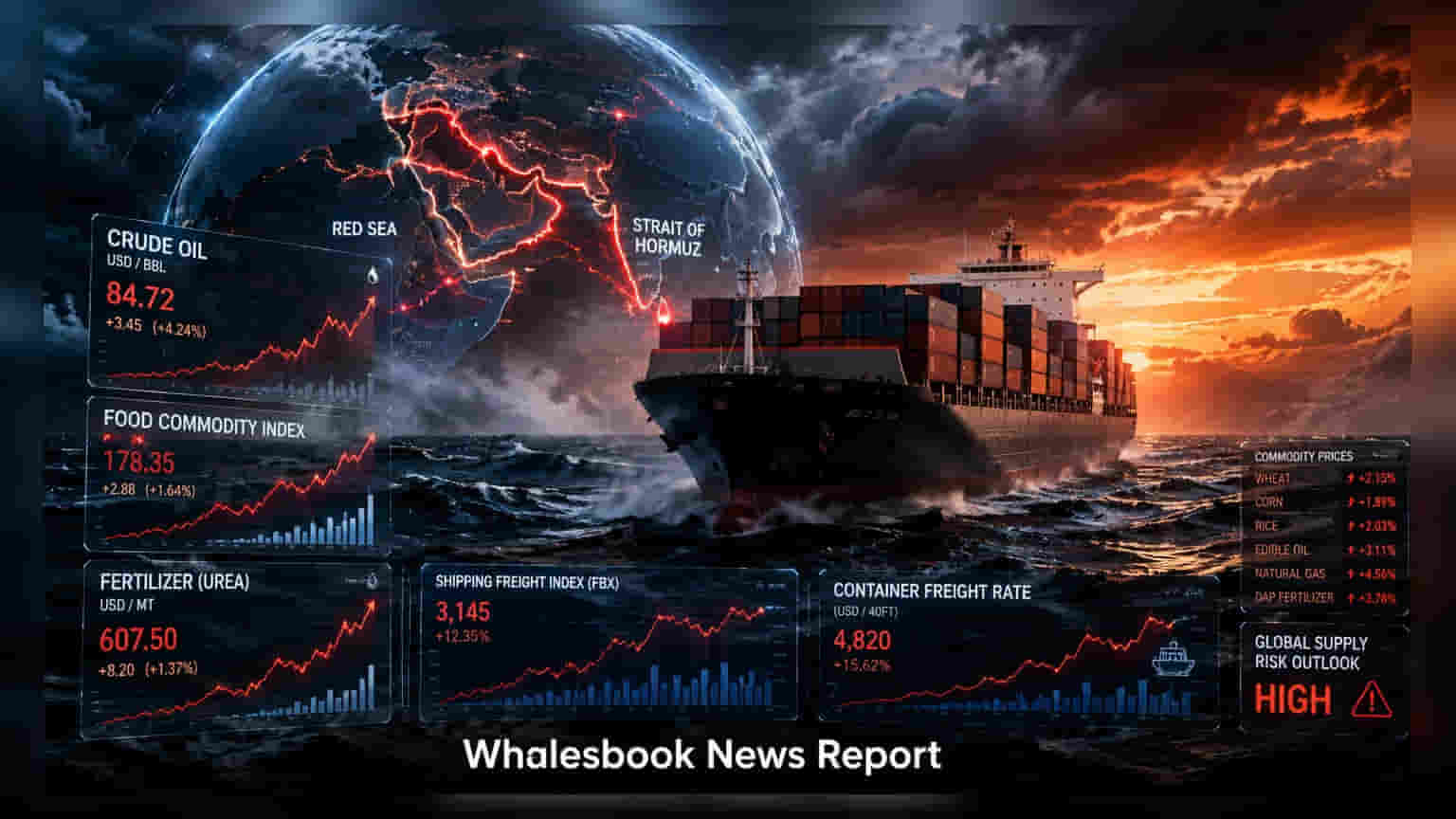
India has formally asked the United Nations to protect critical maritime trade routes, warning that conflict is destabilizing food, fuel, and fertilizer supplies. This request follows warnings from global institutions regarding a potential supply crisis by 2027. Investors are monitoring how these ongoing logistical disruptions may impact freight costs, import-dependent Indian industries, and agricultural input prices.
India has formally urged the United Nations Security Council to prioritize the safety of maritime trade routes, citing that regional conflicts are creating severe bottlenecks for essential commodities. Representing India, Ambassador Harish Parvathaneni warned that the weaponization of sea lanes—particularly in areas like the Red Sea and the Strait of Hormuz—is disproportionately hurting developing economies that rely on steady imports for energy, fertilizers, and food.
The global economic outlook is facing mounting pressure as supply chain fragility becomes a structural issue rather than a temporary problem. Beyond the immediate call for international cooperation, reports from major global financial institutions, including J.P. Morgan, have raised concerns about a potential global food supply crisis by 2027. These projections point to a combination of geopolitical tensions, erratic weather patterns, and ongoing disruptions to critical trade corridors as significant risks for import-dependent nations, including India, Brazil, and Indonesia.
For Indian markets, this development highlights a clear risk related to supply chain costs. Companies that rely heavily on imported raw materials, particularly in the fertilizer and agriculture sectors, face potential margin pressure if freight rates remain volatile or if transit times continue to be extended due to conflict-driven rerouting. When shipping lanes become unstable, freight insurance premiums and transit costs often rise, which eventually increases the landed cost of goods for manufacturers.
To mitigate these risks, India is exploring alternative logistical strategies, such as testing the Northern Sea Route, to reduce dependence on traditional and highly volatile maritime corridors. However, in the short term, the reliance on established routes remains high. The primary investor monitorables include tracking trends in global shipping freight indices, the landed cost of imported fertilizers, and energy price volatility. Companies with high exposure to international trade and those with limited pricing power to pass on increased logistics costs may see more immediate impact from these global developments.