

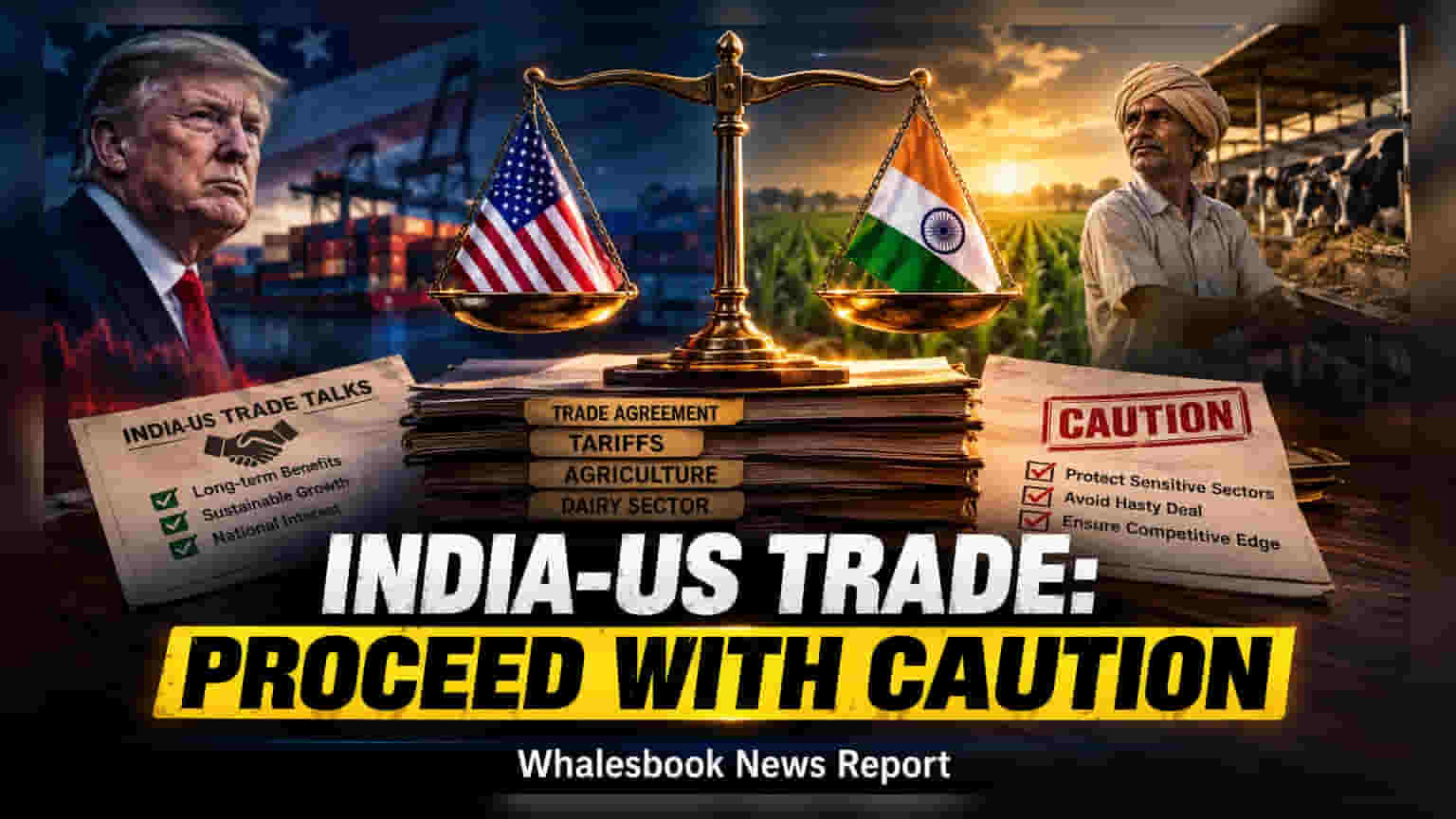
Sanjeev Sanyal of the Economic Advisory Council has advised against rushing the US-India trade agreement. The government remains focused on securing competitive terms, particularly for sensitive sectors like agriculture and dairy.
The Economic Advisory Council to the Prime Minister (EAC-PM) has advised that India should not rush to finalize its trade agreement with the United States. Sanjeev Sanyal, a member of the council, recently emphasized that protecting long-term national economic interests must take precedence over the speed of negotiations.
While trade discussions are ongoing, the government is focusing on ensuring that the final pact offers clear, sustainable benefits. This cautious approach comes as India continues to navigate complex global trade dynamics, where traditional multilateral systems are losing their effectiveness, making bilateral agreements more critical.
Sensitivity in Key Sectors
A major focus of these discussions is the protection of sectors that are politically and economically sensitive for India, such as agriculture and dairy. Negotiators are being urged to exercise patience to ensure these areas are not compromised. The government has drawn parallels to past agreements, such as the India-US civil nuclear deal, to highlight the importance of achieving broad political consensus when domestic livelihoods are at stake.
Navigating Tariff Policy Uncertainty
The trade environment between the two nations faces challenges beyond the negotiation table. Recent developments, such as the implementation of US safeguard tariffs on Indian quartz surface products, have created friction. As of mid-August 2026, India has initiated consultations at the World Trade Organization (WTO) regarding these tariffs, underscoring the ongoing regulatory complexities.
Trade officials have noted that while the first phase of a bilateral trade deal is effectively ready, it remains conditional. The government has made it clear that the agreement will only be signed once India secures a competitive advantage, particularly against regional rivals. For many export-oriented industries in India, this uncertainty creates a wait-and-see environment, as businesses monitor how tariff policies and trade stability might impact their future access to US markets.
What Investors Should Monitor
For investors, the pace and content of these trade talks are important to watch, particularly for companies in export-heavy sectors like textiles, manufacturing, and agricultural processing. A trade deal that provides stable, long-term market access could be a positive catalyst for these industries. Conversely, continued uncertainty regarding tariff policies and trade barriers could impact profit margins and operational planning for companies heavily dependent on US demand. The key monitorable will be official statements regarding the finalization of the first phase of the deal and any resolution to ongoing tariff disputes.