

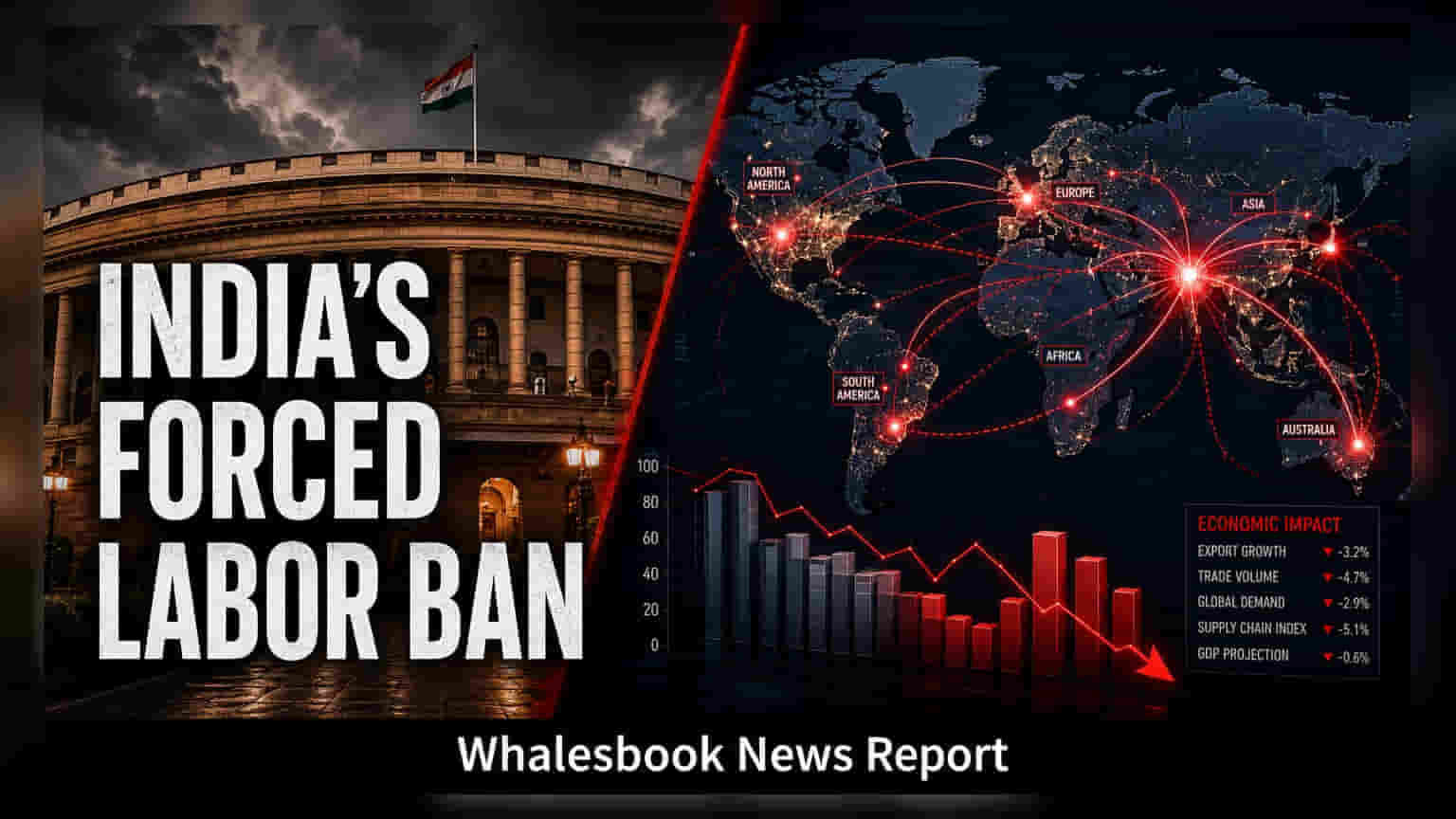
India is introducing a new clause in its Foreign Trade Policy to prohibit imports linked to forced labour. The move aligns domestic regulations with international standards to address ongoing scrutiny from the U.S. Trade Representative's office. This change empowers the Directorate General of Foreign Trade to identify and block specific goods entering the Indian market.
India is amending its Foreign Trade Policy to include a formal mechanism for blocking the entry of goods produced through forced labour. This initiative grants the Directorate General of Foreign Trade (DGFT) the authority to notify and restrict the import of specific products or raw materials if they are identified as being linked to forced labour practices.
Aligning with Global Standards
The government has decided to formally adopt the definition of forced labour established by the International Labour Organization (ILO). Under this framework, forced labour is defined as any work or service extracted from an individual without their voluntary consent, often under the threat of a penalty. By integrating this internationally recognized standard into domestic law, India aims to create a transparent and robust legal framework to govern its supply chains.
Responding to U.S. Trade Investigations
This policy shift comes during an active period of international trade monitoring. The U.S. Trade Representative’s (USTR) office has been conducting a Section 301 investigation concerning several countries, including India, regarding their effectiveness in curbing imports associated with forced labour. While the USTR has evaluated over 50 nations, India has contested the charges of inaction. The new notification, expected to become effective within 30 days, serves as a proactive measure to address these international concerns and potentially resolve trade disputes through clear domestic enforcement.
Potential Impact on Trade and Supply Chains
For Indian businesses, the new regulations may require enhanced due diligence to ensure that imported inputs comply with these standards. The move is viewed as a strategic step to bolster India’s position in global trade negotiations. By demonstrating a firm commitment to policing forced labour, the government seeks to strengthen its bargaining power in market access talks and mitigate the risk of additional tariffs that could arise from the ongoing U.S. investigation. Commerce officials have indicated that ongoing dialogues with U.S. counterparts will continue to address these trade probes. Moving forward, investors and industry participants should track how the DGFT implements these notifications and whether this framework leads to smoother trade relations with key international partners.