 Whalesbook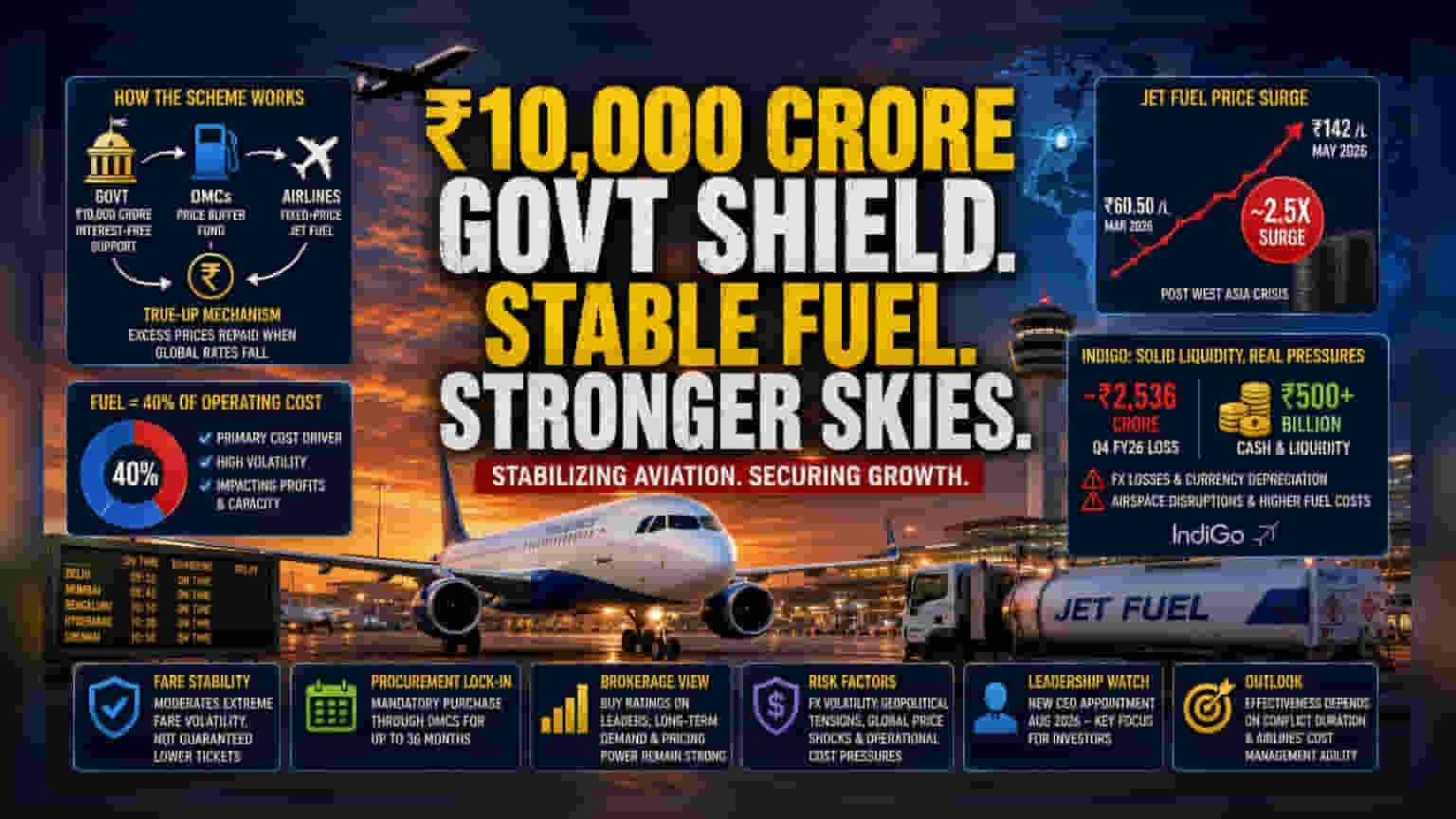


The Mechanism of Stability
The government’s decision to commit Rs 10,000 crore in interest-free budgetary support creates a revolving buffer rather than a permanent subsidy. By channeling these funds through oil marketing companies (OMCs), the administration enables a fixed-price fuel arrangement for scheduled airlines. Under this framework, if international import parity prices for jet fuel surpass a predefined benchmark, the government-backed corpus absorbs the difference. Conversely, when global rates soften, OMCs are required to repay the advances, effectively creating a self-correcting true-up mechanism designed to shield the aviation ecosystem from extreme price spikes without creating a permanent fiscal drain.
Impact on Operational Costs
Aviation turbine fuel represents approximately 40% of an airline’s operating expenditure, making it the primary driver of financial volatility. Following the West Asia crisis, jet fuel prices surged nearly 2.5 times, rising from approximately Rs 60.50 per liter in March 2026 to Rs 142 per liter in May 2026. This escalation, compounded by longer flight paths due to regional airspace closures, forced major carriers to curtail domestic and international capacity. While the intervention aims to provide predictability for planning, analysts remain cautious; industry experts suggest the fund will likely moderate extreme fare volatility rather than trigger a broad, permanent reduction in ticket prices for the average consumer.
The Bear Case: Structural Risks
Despite the government's intervention, the aviation sector faces significant headwinds. IndiGo, the market leader with approximately 64% domestic share, recently posted a fourth-quarter fiscal loss of Rs 2,536 crore, driven not only by fuel costs but by significant foreign exchange losses and operational disruptions. Unlike smaller, more leveraged peers, the market leader maintains a strong liquidity position of over Rs 500 billion, yet the company remains exposed to currency depreciation—every one-rupee fall against the dollar creates substantial mark-to-market losses. Furthermore, the mandatory procurement clause within the government's scheme binds participating airlines to OMCs for up to 36 months, limiting their ability to seek alternative sourcing if market conditions shift favorably for independent procurement strategies.
Future Outlook and Sector Sentiment
Brokerage sentiment remains bifurcated. While firms like Motilal Oswal and Goldman Sachs retain buy ratings on industry leaders, citing the sector's long-term capacity shortages and inherent pricing power, risks persist. Management focus has shifted toward improved hedging programs to mitigate currency exposure, with the upcoming appointment of a new CEO in August 2026 serving as a critical focal point for investors. The effectiveness of the price stabilization fund will ultimately be tested by the duration of the geopolitical conflict and the agility of airlines in managing their remaining cost structures beyond fuel.