

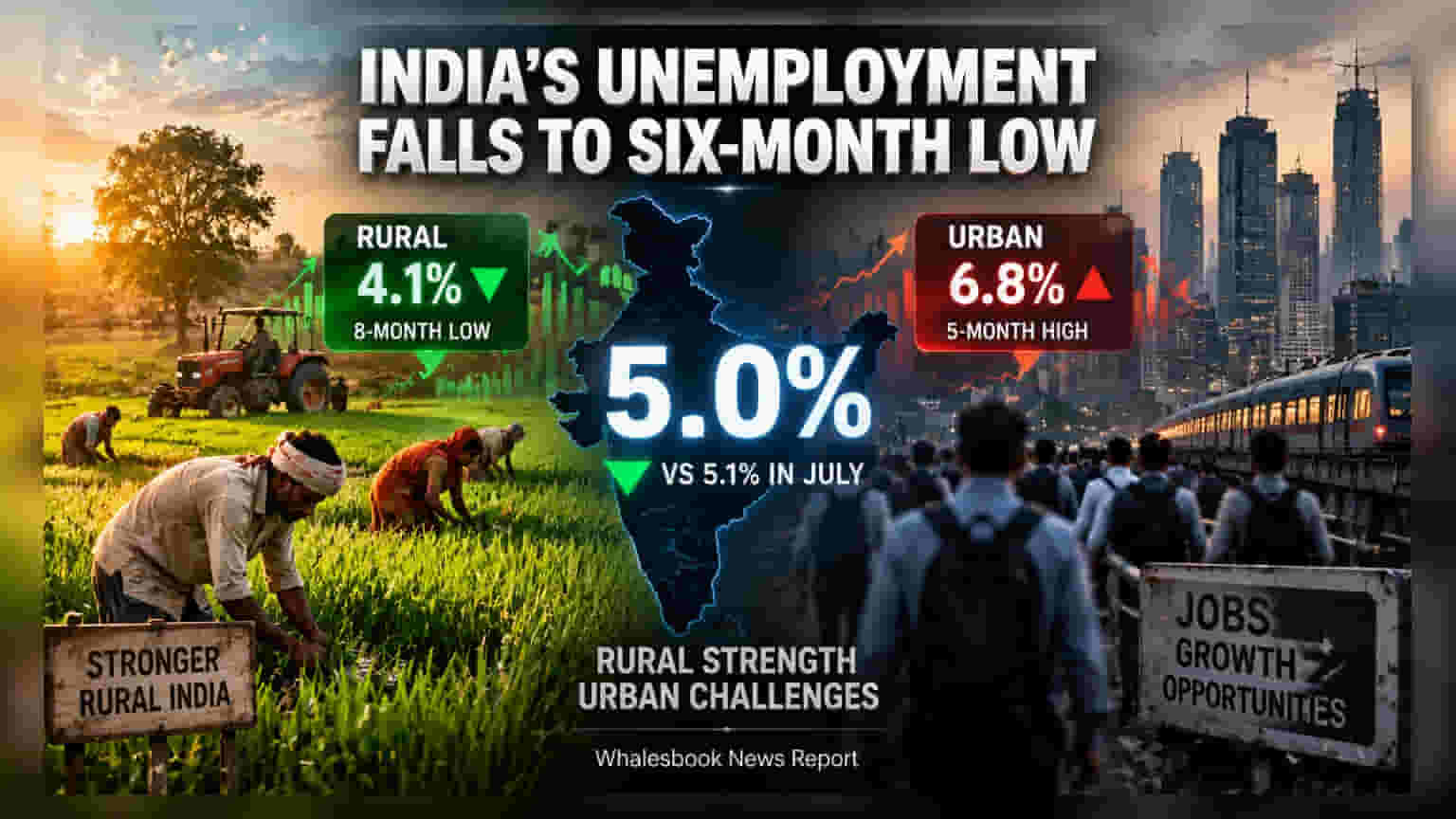
India’s unemployment rate improved to 5% in August 2026 as rural job gains offset urban challenges. While labor participation increased, domestic markets fell due to global economic headwinds.
India’s unemployment rate declined to a six-month low of 5% in August 2026, marking a marginal improvement from the 5.1% recorded in July. This shift highlights a recovery pattern led primarily by the rural economy, where job availability saw a noticeable uptick. Government data indicates that rural unemployment dropped to 4.1%, reaching an eight-month low, which significantly supported the overall national figure.
However, the labor market remains uneven. While rural areas reported stronger employment trends, urban job markets faced continued pressure, with unemployment rising to 6.8% in August, reaching a five-month high. This difference between rural and urban performance reflects a divided economic recovery. On the positive side, broader labor market participation increased. The Labor Force Participation Rate, which tracks the portion of the population that is either working or actively seeking work, rose to 55.6%. Additionally, the Worker Population Ratio, a measure of the proportion of the population that is employed, reached 52.8%, its highest level since March 2026.
Despite the positive signals from the labor market, Indian equity markets reacted negatively on September 15, 2026. Both the Sensex and Nifty 50 indices closed nearly 2% lower. Investors focused more on global economic concerns than domestic employment data. Rising global bond yields, firm oil prices, and market expectations of a potential rate hike by the US Federal Reserve dampened sentiment. The Indian Rupee also reflected this global uncertainty, hitting an over one-month low during the session, while market volatility indicators, such as the India VIX, rose by over 10%.
The key challenge for the economy will be whether the rural momentum can sustain itself and if the urban labor market can improve in the coming months. Investors may monitor whether domestic consumption remains steady despite the current global pressures and the ongoing divide between rural and urban employment trends. The mismatch between positive labor data and the recent market downturn highlights how global factors, such as interest rate expectations and currency fluctuations, often carry significant weight in the immediate trading environment.