 Whalesbook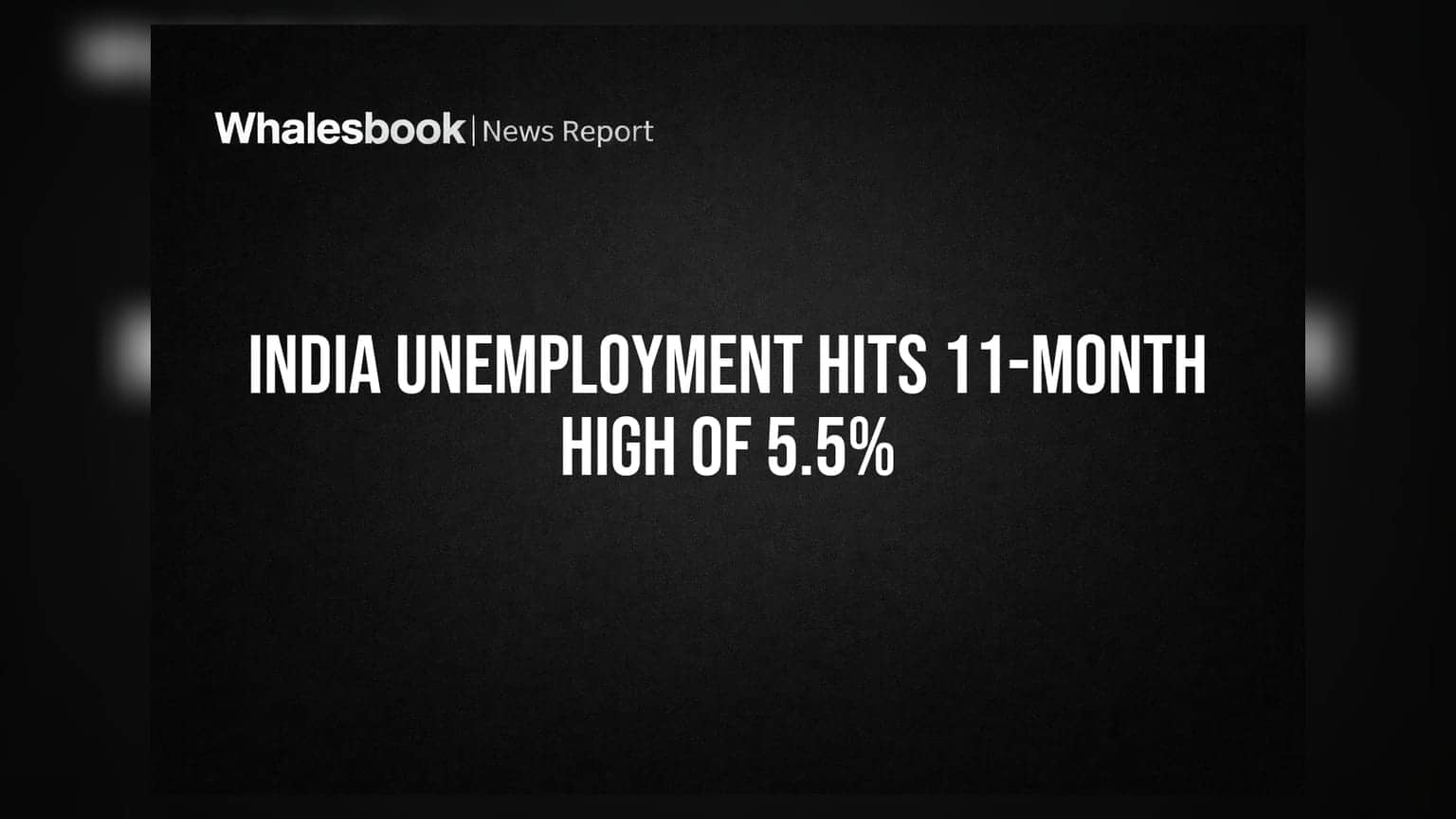


India’s unemployment rate climbed to 5.5% in May 2026, marking four consecutive months of growth. The rise, driven by a slump in rural hiring, could impact consumer spending trends. Investors should track how this affects consumption-linked sectors.
What Happened
India’s unemployment rate rose to 5.5% in May 2026, according to the latest Periodic Labour Force Survey. This is the highest level observed in eleven months and continues a steady upward trend that began earlier this year. The rate has climbed sequentially from 4.8% in February to 5.5% in May. This development highlights ongoing challenges in the labor market as the economy navigates current seasonal and structural pressures.
The Rural Versus Urban Divide
The data reveals a clear split between rural and urban job markets. The primary factor behind the rising national unemployment rate was a sharp increase in rural joblessness, which reached 5.1% in May—a twelve-month peak, up from 4.6% in April. In contrast, urban areas showed a different pattern, with the unemployment rate easing slightly to 6.4% from 6.6% in the previous month. This suggests that while city job markets have shown a degree of resilience, the rural economy is facing more immediate employment headwinds.
Why This Matters For Investors
The health of the labor market is a key indicator for consumer spending. When unemployment rises, particularly in rural areas, it often leads to more cautious spending by households. For investors, this creates a potential pressure point for sectors that rely heavily on consumption.
Companies in the Fast-Moving Consumer Goods (FMCG) and two-wheeler segments often see their sales volume correlated with rural income levels. If rural employment remains weak, it may affect the demand for entry-level products and daily essentials. Additionally, if the trend of lower labor participation persists, it may limit the growth of total household income, further impacting discretionary spending across the broader economy.
Labor Force Participation Trends
Beyond the headline unemployment rate, the data regarding participation is also relevant. The Labour Force Participation Rate (LFPR), which measures the proportion of the population that is either employed or actively looking for work, fell to 54.4% in May from 55.0% in April. Similarly, the Worker Population Ratio (WPR) dropped to 51.4% from 52.2%. A simultaneous decline in both participation and employment metrics often suggests that the economy is struggling to generate enough new jobs to absorb the available workforce, rather than just a temporary fluctuation.
What Investors Should Track
While seasonal factors are often cited for shifts in monthly labor data, the sustained four-month increase is a trend that requires observation. Investors may look for updates on rural demand in the upcoming quarterly results of consumer-facing companies. Management commentary from major FMCG, automobile, and retail firms regarding demand conditions in rural territories will be important. Furthermore, any shifts in government economic policy or changes in the trajectory of the labor data in the coming months will be key indicators of whether this is a temporary seasonal dip or a more persistent issue for the broader economy.