

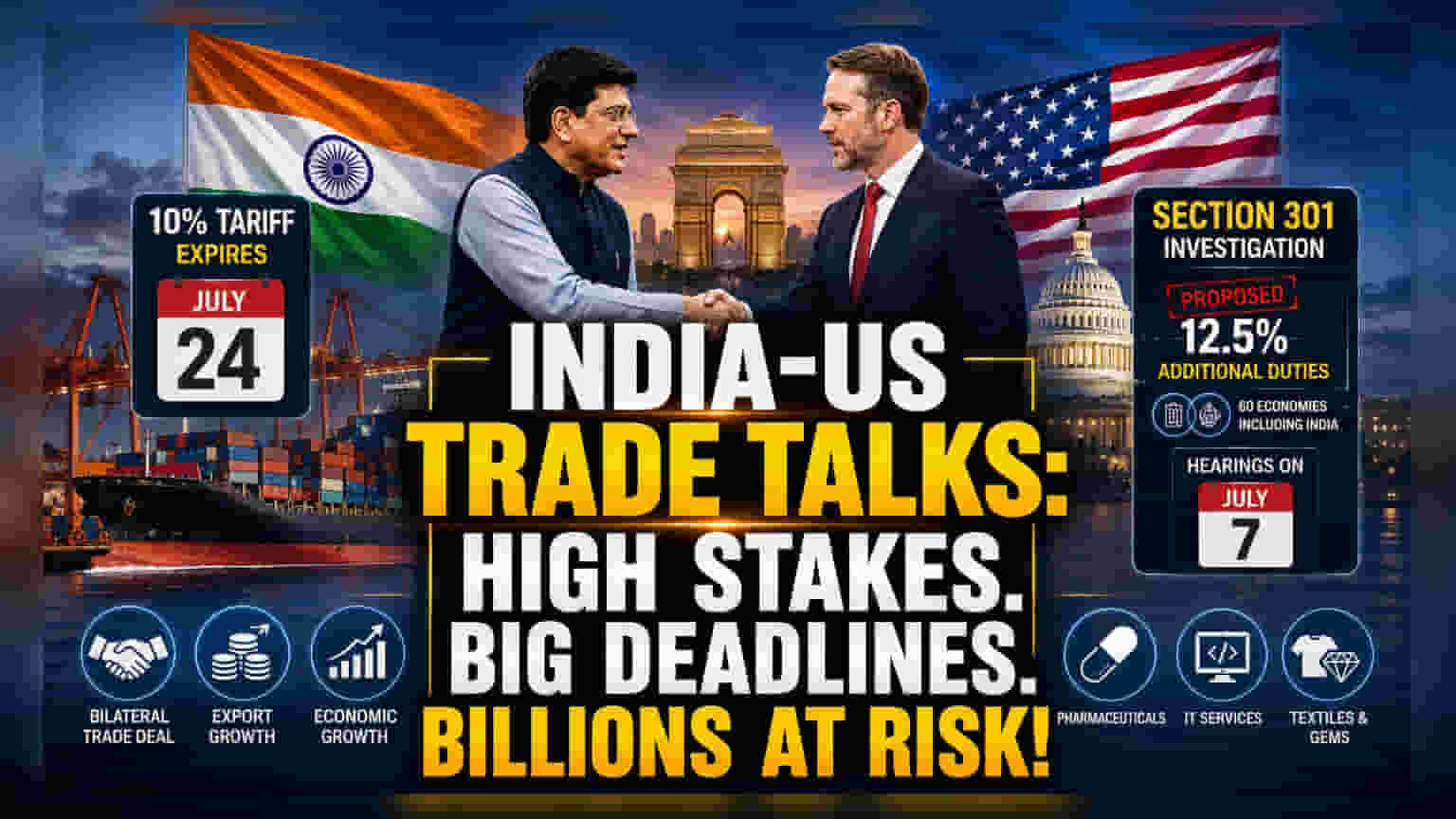
India and the US are meeting in Delhi this week to finalize a trade framework as the July 24 deadline for temporary tariffs nears. Investors are closely tracking these high-stakes negotiations, as the US reviews potential 12.5% duties on Indian goods under a Section 301 investigation regarding forced labor. The outcome could significantly influence export-heavy sectors like pharmaceuticals and information technology.
What Happened
Commerce and Industry Minister Piyush Goyal is meeting US Trade Representative Jamieson Greer in Delhi this week for critical bilateral trade talks. The primary objective is to finalize a new trade framework between the two nations. These discussions are high-stakes because a temporary 10% tariff currently imposed by the US on global imports is set to expire on July 24. A successful agreement could help both nations avoid uncertainty and define a stable tariff regime moving forward, which is essential for businesses that rely on smooth cross-border trade.
The Tariff Threat And Section 301
The negotiations are happening under the shadow of a US Section 301 investigation. The United States Trade Representative (USTR) has launched these probes into 60 economies, including India, alleging that these nations have failed to adequately prohibit the importation of goods produced with forced labor.
As a result of this investigation, the US has proposed additional duties of 12.5% on goods from 54 of these countries, including India. Public hearings for these potential tariffs are scheduled for July 7. Investors should understand that Section 301 is a tool used by the US to investigate and respond to practices it deems unreasonable or discriminatory. The outcome of these discussions will determine whether Indian exports face these additional costs or if a negotiated settlement can avert them.
Why Investors Should Track This
For investors, the trade talks are not just a diplomatic event; they have direct economic implications for India’s export competitiveness. The US remains India’s second-largest trading partner. While India recorded a trade surplus of $34.4 billion in 2025-26, any increase in tariffs would directly increase the landed cost of Indian goods in the US market.
This could reduce the price advantage that Indian companies currently enjoy. Companies with high exposure to the US market, especially those in the manufacturing, pharmaceutical, and technology sectors, face potential margin pressure if their products become more expensive for American buyers. A failure to reach an agreement could lead to retaliatory trade measures, further complicating the business environment for multinational companies operating in both countries.
Sectoral Sensitivity
Sectors that rely heavily on the US market are most sensitive to these developments.
- Pharmaceuticals: India is a major global supplier of generic drugs to the US. Any trade dispute or tariff increase can disrupt the supply chain or make Indian generic medicines less competitive.
- Information Technology (IT): While trade in services is different from merchandise trade, the broader diplomatic environment significantly impacts how IT firms manage their clients, compliance, and cross-border operations.
- Textiles and Gems: These labor-intensive sectors are often scrutinized regarding supply chain standards, making them particularly vulnerable to investigations related to labor practices.
What To Watch Next
Investors should monitor official statements from the Ministry of Commerce and Industry following the conclusion of the talks this week. The key monitorables include:
- The Framework Agreement: Whether both sides can finalize the framework, which could provide clarity on future tariff structures.
- July 7 Hearings: This date is critical as the US will hold hearings on the proposed 12.5% tariffs.
- July 24 Deadline: The expiry of the existing 10% temporary tariffs will likely create market volatility if no replacement agreement or extension is announced by then.
- Official Tariff Lists: Any updates from the USTR regarding which specific categories of goods may be targeted if the forced labor investigation leads to punitive action.