

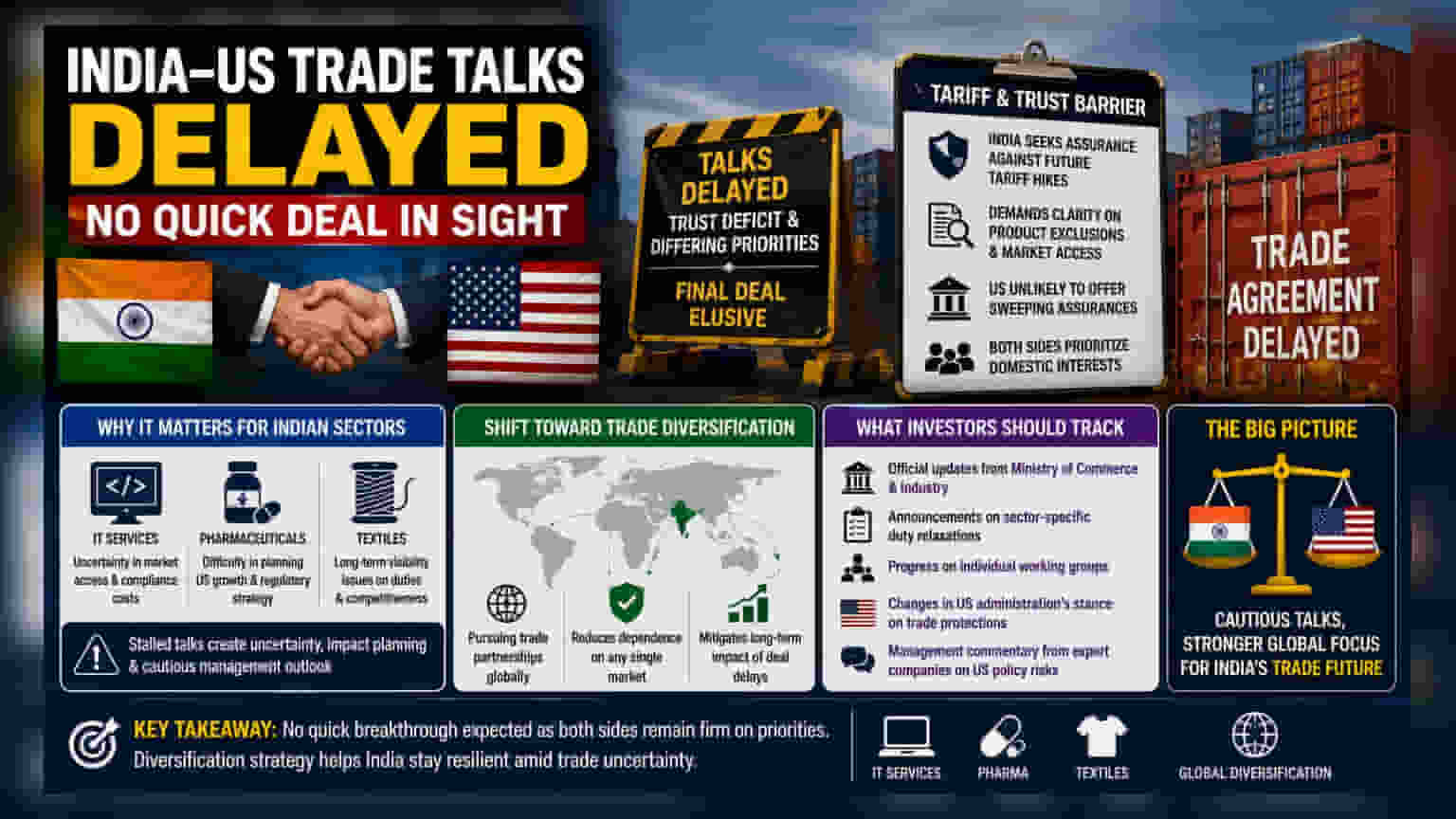
Negotiations for a trade deal between India and the US have hit a delay due to disagreements over tariffs and policy trust. This uncertainty creates a wait-and-see environment for Indian export-oriented sectors like IT, pharmaceuticals, and manufacturing. Meanwhile, India’s ongoing strategy to diversify trade partners is shifting the focus toward broader market access beyond the US.
What Happened
Trade negotiations between India and the United States are currently facing significant delays. While both nations continue to engage in high-level talks, experts note that a final agreement remains elusive. The current situation is characterized by a "trust deficit" and differences in key priorities, meaning a quick breakthrough is unlikely. The delay stems from conflicting expectations regarding tariff structures, where India is seeking specific assurances and clarity on product exclusions before moving forward.
The Tariff And Trust Barrier
A major hurdle in these negotiations is India's demand for protection against future tariff hikes. Indian negotiators are looking for competitive advantages and clarity on how specific goods will be treated in the US market. The current US administration appears unlikely to offer the sweeping assurances India is seeking. Because of this gap, both sides are stuck in a cautious phase, prioritizing their domestic economic interests over a rushed agreement.
Why This Matters For Indian Sectors
For investors, the lack of a clear trade framework creates uncertainty for companies that rely heavily on the US market. India’s major export sectors, including information technology (IT) services, pharmaceuticals, and textiles, often operate on long-term visibility regarding trade policies and costs. When trade talks stall, these companies face difficulty in planning for future market access, compliance costs, and potential regulatory changes. If trade relations remain in a state of flux, investors may observe cautious commentary from management teams in export-heavy industries regarding their US growth strategies.
The Shift Toward Trade Diversification
It is important to note that India is not solely dependent on the US. As highlighted by regional policy observers, India has been actively pursuing trade partnerships with other global regions. This strategy acts as a hedge, allowing Indian businesses to reduce their vulnerability to policy shifts in any single country. While the US remains a crucial market, the move toward a more diversified trade portfolio is a significant trend that may mitigate the long-term impact of any single trade deal stalling.
What Investors Should Track
Investors should look beyond the headlines and monitor official updates from the Ministry of Commerce and Industry rather than relying on informal reports. Key monitorables include any specific announcements regarding sector-specific duty relaxations, progress on individual working groups, and any changes in the US administration's stance on trade protections. Additionally, management commentary from large Indian export companies regarding their exposure to US policy risks will provide a clearer picture of how these businesses are navigating the current environment.