

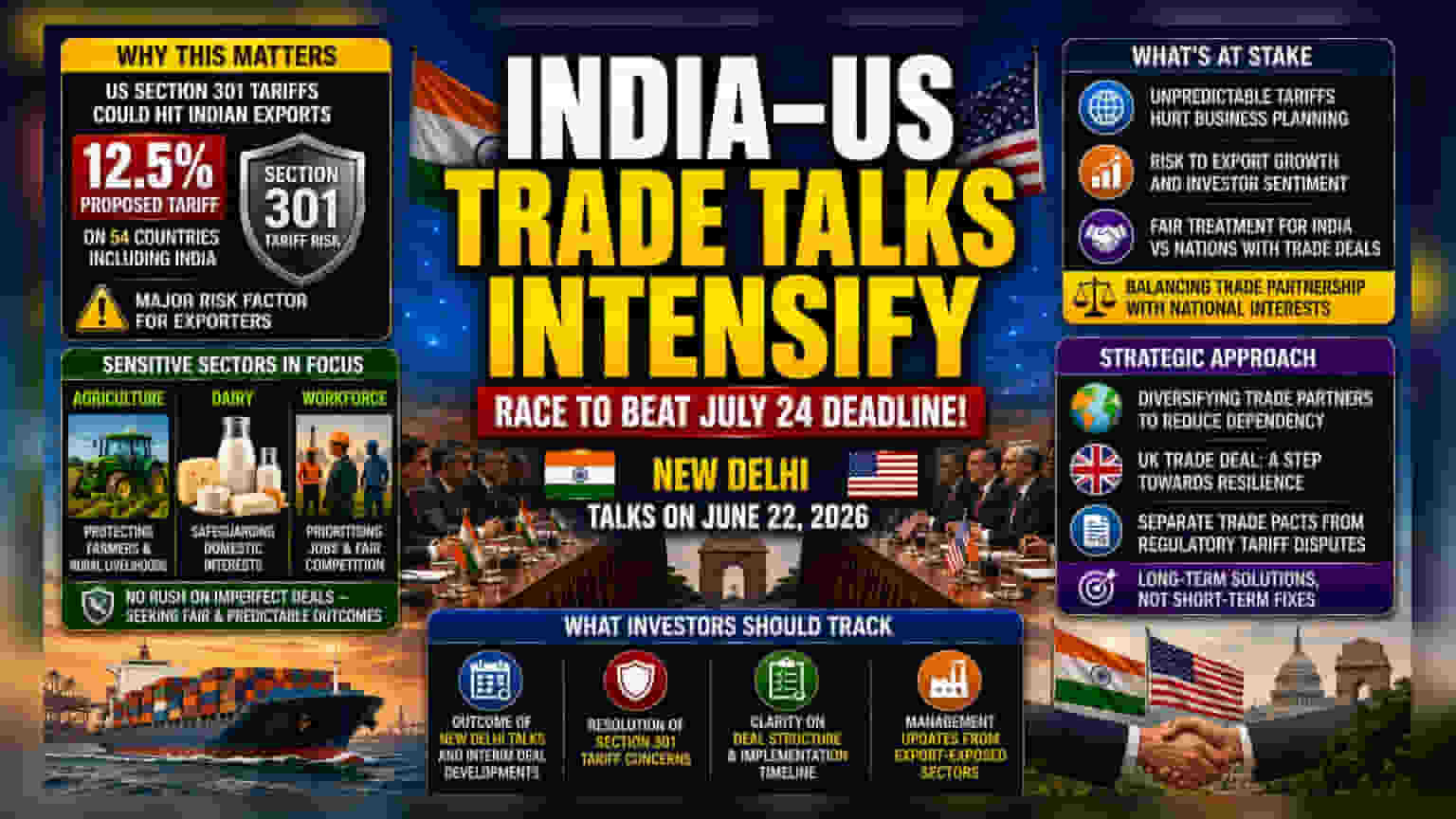
As India and the US hold crucial trade talks in New Delhi, the focus is on resolving uncertainties surrounding US Section 301 tariffs. Investors are closely monitoring whether a potential interim trade deal can provide stability for Indian exporters, particularly in the agricultural and dairy sectors.
What Happened
India and the United States are currently engaged in high-level trade negotiations in New Delhi. The discussions, which are taking place on Monday, June 22, 2026, are aimed at establishing an interim trade arrangement before a critical tariff deadline on July 24. A central point of concern is the ongoing uncertainty created by potential US Section 301 tariffs, which could affect trade relations. Commerce Minister Piyush Goyal has emphasized that resolving these outstanding tariff issues is a priority before any broader trade framework can be finalized.
Why the Tariff Uncertainty Matters
The core issue involves US investigations into trade practices, which could lead to additional duties under Section 301. These potential tariffs are viewed by trade experts as a significant risk factor for Indian exporters. The US Trade Representative has proposed a 12.5% tariff on goods from 54 countries, including India, following investigations related to forced labor concerns. For investors, this creates an environment of unpredictability, making it difficult for businesses to plan long-term export strategies to the US market.
Sensitivity of Key Sectors
Trade negotiations have highlighted the importance of protecting India's domestic interests, specifically in the agricultural and dairy sectors. Experts have cautioned that rushing into an imperfect agreement without clear assurances could disadvantage Indian farmers and workers. The demand is for a predictable trade policy that prevents India from being treated unfairly compared to nations that already have established trade agreements with the US. The government's stance reflects a broader effort to safeguard these sensitive areas while seeking a mutually beneficial trade partnership.
The Strategic Approach to Exports
Despite the pressure from potential US tariffs, India has been working to improve its export resilience by diversifying its trade partners. Recent agreements, such as the deal with the United Kingdom, demonstrate a strategic shift toward reducing dependency on any single market. Analysts from the Global Trade Research Initiative have suggested that India should approach these trade talks carefully, warning against accepting concessions that might function as temporary fixes rather than long-term solutions. They advise that trade pacts and regulatory tariff disputes should be handled as separate issues to ensure India does not sacrifice its broader economic interests.
What Investors Should Track
The immediate focus for the market will be the outcome of the ongoing New Delhi discussions. Investors should monitor official updates regarding the resolution of Section 301 tariff concerns, as this will directly influence export-oriented sectors. Furthermore, any clarity on the structure of a potential interim trade deal will be a key indicator of future trade stability between the two nations. The management commentary from companies with high exposure to the US market, particularly in textiles, agriculture, and dairy, may provide insights into how they are preparing for potential trade policy shifts.